
Let me tell you something, friends: This is something special. You’ll have to wait a while to read it, but trust me, you’ll want to.
The American National Biography is not as consistently good, but there are some fine entries there too. 📚
Currently reading: Lots of biographies from the Dictionary of National Biography. I love these: Detailed enough to be informative, but readable in one short sitting. Biographical short stories. 📚
Cities 5: a digression on longtermism
Not closely related to my main argument, but just a brief note:
Longtermism is the version of effective altruism that wants us to think about our ethical imperatives on a much vaster historical scale; it warns us against discounting the value of the lives of future people. (In his retelling of the Good Samaritan story, Phil Christman could have added a longtermist who would have scorned the Effective Samaritan for thinking only of the local and immediate. A longtermist, seeing a wounded man by the side of the road, would surely have “passed by on the other side.”)
Augustine is a kind of longtermist, in the sense that he thinks we should focus not on our immediate desires and concerns but on our eternal destiny. Thus his indifference to politics as we usually conceive of it: “As for this mortal life, which ends after a few days' course, what does it matter under whose rule a man lives, being so soon to die, provided that the rulers do not force him to impious and wicked acts?” (CD V.17)
C. S. Lewis is writing very much under the sign of Augustine when, in his great sermon “The Weight of Glory,” he says this:
It is a serious thing to live in a society of possible gods and goddesses, to remember that the dullest and most uninteresting person you talk to may one day be a creature which, if you saw it now, you would be strongly tempted to worship, or else a horror and a corruption such as you now meet, if at all, only in a nightmare. All day long we are, in some degree, helping each other to one or other of these destinations. It is in the light of these overwhelming possibilities, it is with the awe and the circumspection proper to them, that we should conduct all our dealings with one another, all friendships, all loves, all play, all politics. There are no ordinary people. You have never talked to a mere mortal. Nations, cultures, arts, civilization—these are mortal, and their life is to ours as the life of a gnat. But it is immortals whom we joke with, work with, marry, snub, and exploit — immortal horrors or everlasting splendours.
It is a view that, if does not consign politics to the realm of adiaphora, quite radically decenters it.
We often hear that evangelicalism — and, often, other forms of orthodox Christianity — has been “too heavenly-minded to be of any earthly good.” It has been so focused on “pie in the sky by and by” that it has neglected the prophets’ call to seek shalom — justice and peace in the City. And that critique is absolutely valid. But maybe we could use a little more longtermist decentering of politics these days.
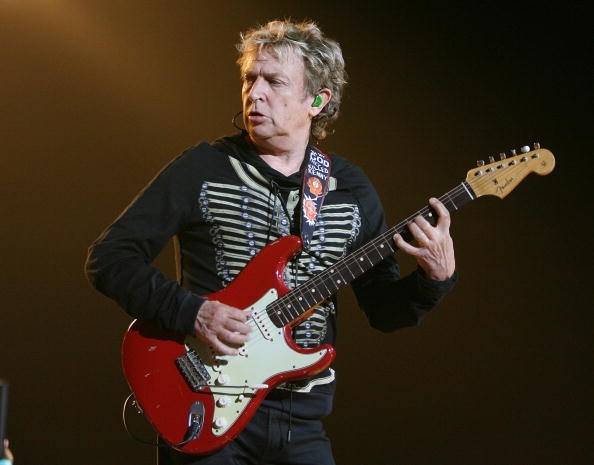
In an interview Andy Summers once said “If you’re using alternate tunings, you just don’t know enough chords.” Yeah, but Andy can do things like this with his chord-making hand. Not fair.
My friend Rick Gibson found this in an old issue of the Bell System Technical Journal.



Ezra Klein: “Jonathan Frankle, the chief scientist at MosaicML and a computer scientist at Harvard, described … the ‘boring apocalypse’ scenario for A.I., in which ‘we use ChatGPT to generate long emails and documents, and then the person who received it uses ChatGPT to summarize it back down to a few bullet points, and there is tons of information changing hands, but all of it is just fluff. We’re just inflating and compressing content generated by A.I.’” This is precisely where I think we’re headed.
Cities 3b: City and Church
My friend Brad East wrote with a partial dissent to something I say in this post:
When you say the City of God precedes the church, it seems to me you're making a semantic decision that determines your conceptual interpretation. Such a claim makes sense only if you have predetermined that “church” means something like “the visible institution begun at Pentecost and continued in the public apostolic succession of episcopal administration” (or whatever). But all kinds of Christian writers have used the term "church" to mean something different and larger than that. In which case it's not that the City of God isn't the church; it's that the church means something different than we often suppose in our colloquial speech.
Suppose “church” is coextensive with “the people of God,” which in turn is coextensive with “Abraham's children,” which in turn is coextensive with “God's children.” (You could add other convertible terms: “all the elect” and/or “all the saved” and/or “all who shall see God face to face.”) If that's true, then you no longer have to distinguish between “City of God” and “church,” arguing that in Augustine's or our usage the latter doesn't mean the former. Rather, the conceptual range of “city” clarifies and expands our ordinary, or at least theological, usage and definition of “church.” So that “the City of God is the church and vice versa” redraws the boundaries of the rather [crabbed] definition some of us presuppose when we use the word “church.” So that, further, Augustine is narrating the course of God's church from Adam/Abel to the Parousia and beyond into the new creation, it's just that Augustine is helping us to understand what “church” means, or should mean, in our concepts and speech.
To which I responded:
Let’s make a distinction between what we — seeking to speak rightly about God's Church — might want to say and what Augustine says. I’m just trying to understand Augustine, not make any claims myself. So what does he say about the relationship between City and Church?
Well, he’s not perfectly consistent. At one point he speaks of “the City of God, that is to say, God’s Church” (XIII.16), but I think that’s a moment of carelessness. Much more often he speaks of the Church as the part of the City that hasn’t yet come into its heavenly inheritance, that is still wayfaring. He often says that the angels are the larger part of the City of God, and “with us they make one City of God…. Part of this City, the part which consists of us, is on pilgrimage; part of it, the part which consists of the angels, helps us on our way” (X.7). And the angels are not the children of Abraham, nor are they the “elect.”
So I think on the Augustinian reading the City of God does precede the Church, because the angels (“all the company of Heaven”) precede the Fall, and it is with the Fall (exitus) that our pilgrimage (reditus) begins. Augustine believed, with virtually the whole Christian tradition, that (a) the serpent in the garden is to be identified with Satan and (b) Satan is a fallen angel. Q.E.D.
He also speaks fairly often of those who are part of the visible Church, who share the sacraments with the rest of us, but who will not inherit eternal life (I.35).
So for all those reasons I think Augustine does tend to make a fairly clear distinction between the Church — which we might define as “the faithful among the visible ekklesia, those who are genuinely on pilgrimage towards God” — and the City of God, which is a larger and older entity of which the Church (as just defined) is a part.
Reader, make your own decision!