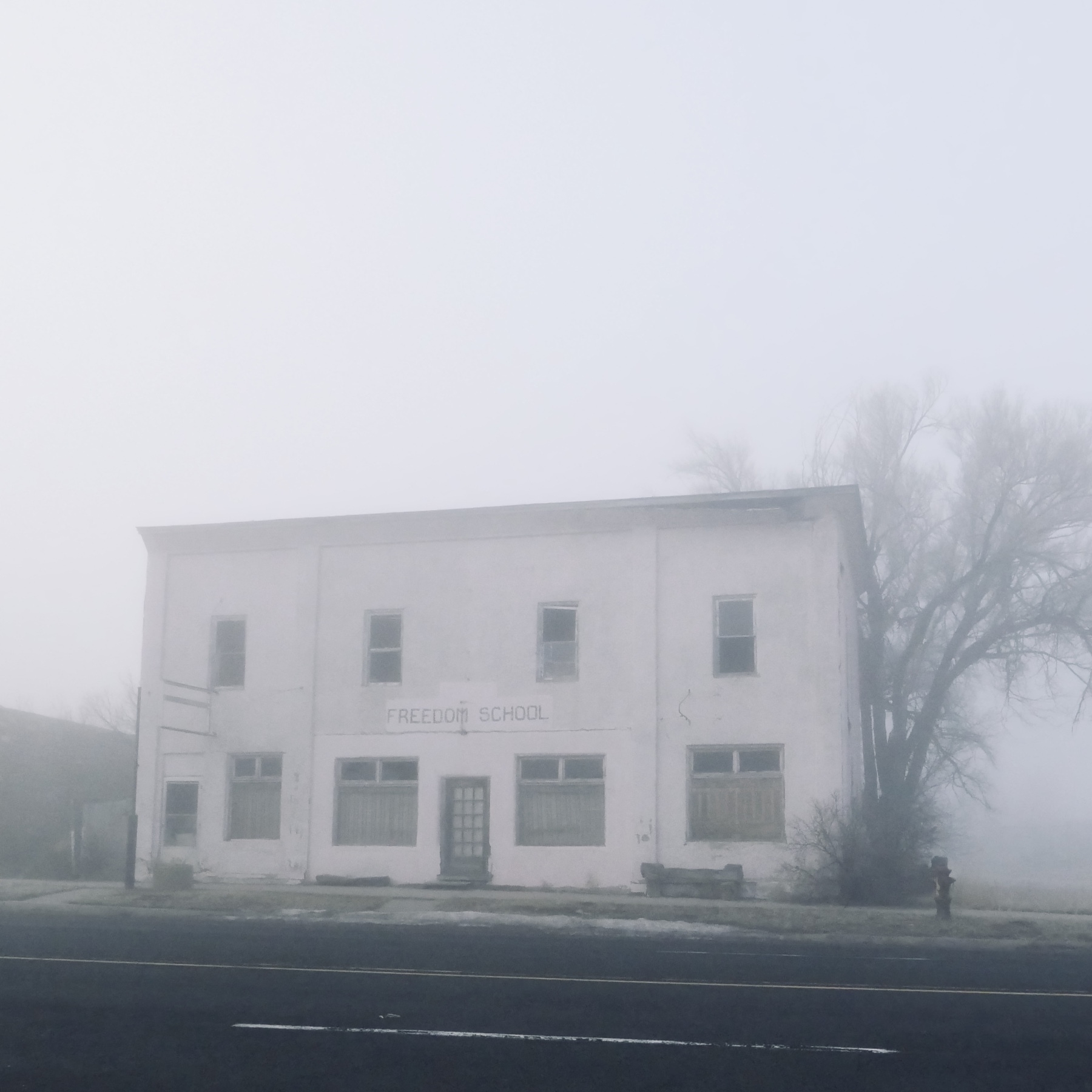
the sovereignty of mercy
In his sixth-and-lastly LOTR post, Adam Roberts graciously responds to my recent attempts to correct his errors, and this leads him into some fascinating territory, e.g. “the lack, or apparent lack, of the death penalty in Middle Earth.”
I can think of two examples in LOTR of a death penalty having been decreed, and they come close together: those who wander in Ithilien without the permission of the Lord Steward of Gondor, and those who come to Henneth Annûn, the Forbidden Pool, are alike to be killed. Yet Faramir overrides both decrees, in the full knowledge that his decisions, if his father hears about them, could cost him his own life. What underlies those decisions he explains to Sam, when the young hobbit rashly challenges Faramir’s treatment of Frodo:
‘Patience!’ said Faramir, but without anger. ‘Do not speak before your master, whose wit is greater than yours. And I do not need any to teach me of our peril. Even so, I spare a brief time, in order to judge justly in a hard matter. Were I as hasty as you, I might have slain you long ago. For I am commanded to slay all whom I find in this land without the leave of the Lord of Gondor. But I do not slay man or beast needlessly, and not gladly even when it is needed. Neither do I talk in vain. So be comforted. Sit by your master, and be silent!’
That is, Faramir has internalized the very standards that, as Adam notes, Gandalf articulates in the second chapter of the whole novel, “The Shadow of the Past”: the sovereignty (among moral imperatives) of pity and mercy. Gandalf on Bilbo: “It was Pity that stayed his hand. Pity, and Mercy: not to strike without need.” Faramir is indeed what his father accuses him of being: “a wizard’s pupil.”
“Sovereignty” is a key concept here, as Carl Schmitt realized when he said that the sovereign is whoever or whatever can “declare the state of exception.” Faramir assumes a local sovereignty when he overrides the death penalty in these two cases — as, by the way, do Eomer (when he allows Aragorn, Gimli, and Legolas to ride free in the Mark rather than bring them back to Theoden) and Háma, the doorward of Theoden, whose charge is to deprive visitors of their weapons:
‘The staff in the hand of a wizard may be more than a prop for age,’ said Háma. He looked hard at the ash-staff on which Gandalf leaned. ‘Yet in doubt a man of worth will trust to his own wisdom. I believe you are friends and folk worthy of honour, who have no evil purpose. You may go in.’
So you can see that one of the great themes in the middle two books of the novel is the necessity of wisdom — of prudential judgment that overrides the letter of the law. In the Nicomachean Ethics Aristotle says that any law is necessarily deficient because of its generality, so wise rulers will need to develop the virtue of ἐπιείκεια (epieikeia), a word impossible to translate: in many contexts it means clemency, gentleness, or, yes, mercy, but Aristotle seems to mean something broader: perhaps discretion is the best one-word translation. But discretion will typically, for Aristotle, involve relaxing or modulating the demands of the law. In any case, again and again in LOTR the success of our heroes depends on their encountering people in power who manifest such ἐπιείκεια.
But what is the origin of the laws they they thus relax? It seems that in every case they arise from personal decrees by rulers. (Denethor speaks and it is so.) Because the Shire doesn’t have a ruler, the hobbits who live there seem to depend not on law at all but rather custom. The law in any sense recognizable to us — an entity like the Code of Hammurabi or the Mosaic law — doesn’t appear to exist in Middle-Earth.
And I wonder if this absence of Law-as-such is related to the (oft-noted) absence of Religion-as-such. Our word religion comes from the Latin religio which in turn probably comes from religare, to bind. To be “religious” is to bind oneself to certain beliefs and practices. But in this context to bind is a reverberant notion: we may well think of the One Ring as the One Religion and One Law of Middle-Earth in the Third Age. It is noteworthy that most of the various decrees which good men exercise their ἐπιείκεια to relax were created in response to the increasing power and ambition of Mordor. Those who act wisely in this book seem to be aware, perhaps not quite consciously, that decrees made in order to respond to Mordor will likely be tainted by Mordor’s logic of power. Eomer and Háma and especially Faramir seem to intuit another logic, a greater logic of ἐπιείκεια that comes not from the decrees of the sovereign but rather … well, from where?
When I teach The Lord of the Rings I take my students through the book’s oddly pervasive use, in certain circumstances, of the passive voice. Gandalf tells Frodo that he and Bilbo were meant to find the Ring; Frodo asks, “Why was I chosen?” — by whom, we wonder; Elrond tells the council gathered at Rivendell that they were called there (“though I did not call you.”) There are many more examples. Says Gandalf, “Behind that” — Bilbo’s finding of the Ring — “there was something else at work, beyond any design of the Ring-maker.” But what? No one seems to know, though perhaps Gandalf does know and is reluctant (or forbidden) to say. But whatever it is, it seems to whisper of the sovereignty of mercy above that of legal decree. It shows us a world in which penalties of death are declared, but are then abrogated by the wise and kind. A world in which Schmitt’s “state of exception” is indeed instituted, but not by the power-hungry — rather, by the merciful, no matter what it costs them.

Claude Monet, The Thames below Westminster
Be ye not puckfoisted!

“What it will be Questioned When the Sun rises over Amarillo do you not see a series of metal pylons connected to the electrical grid O no no I see an Innumerable company of the Heavenly host raising their arms in praise and crying Holy Holy Holy is the Lord God Almighty.”
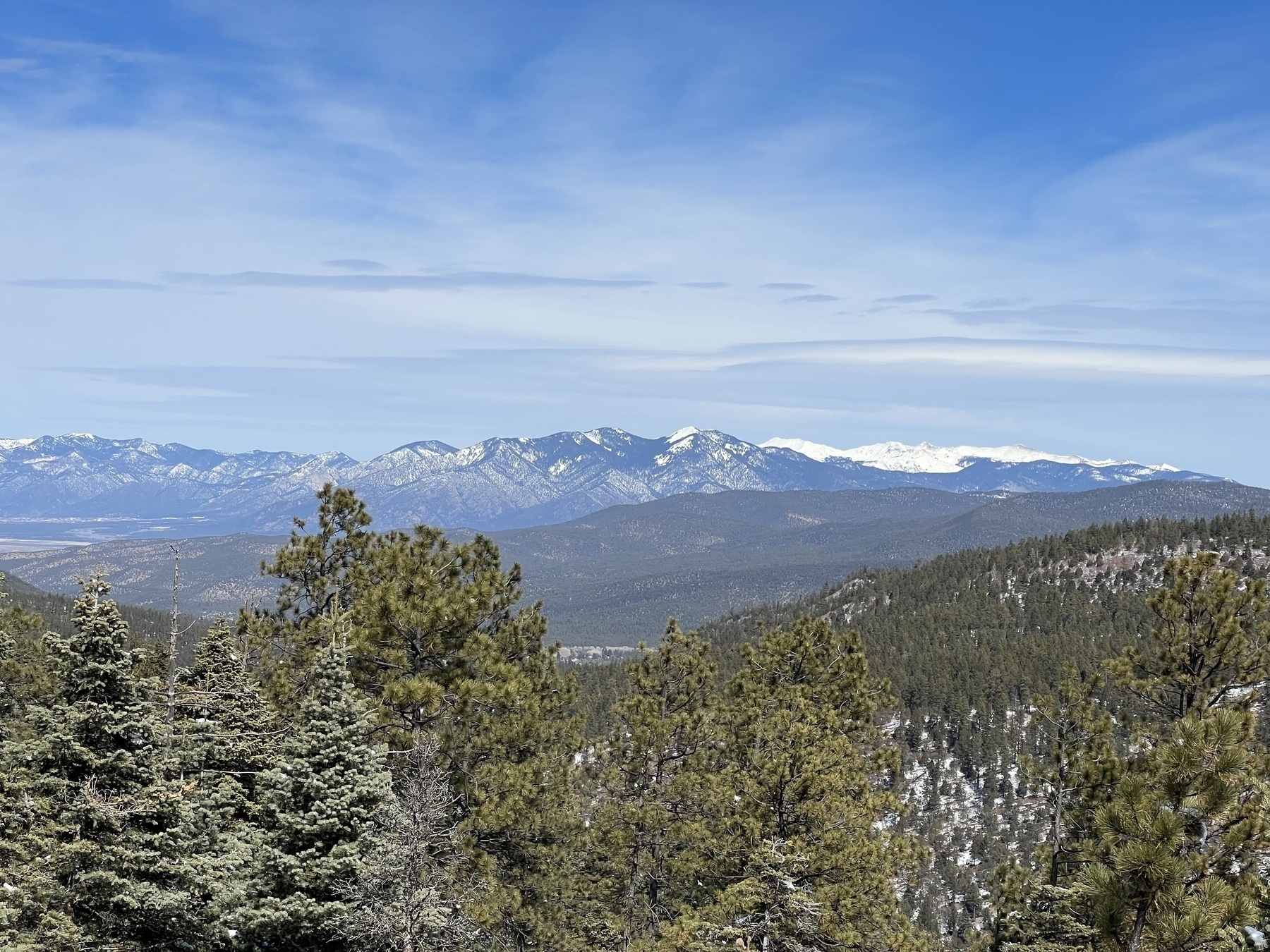
Above Taos.
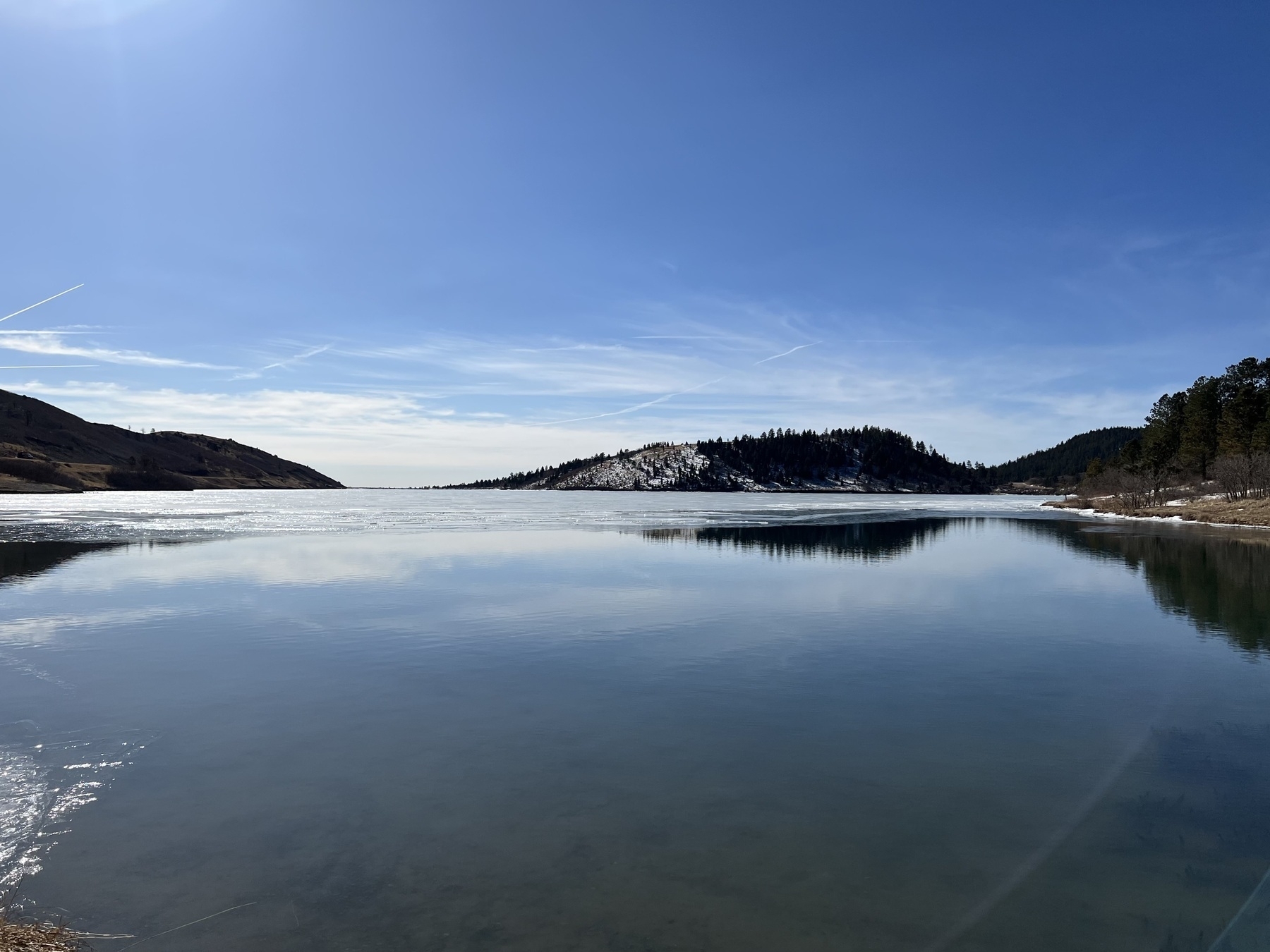
North Lake, in the Sangre de Cristo mountains.
The four pictures I posted today were all taken this morning in a bizarrely thick fog in northeastern New Mexico. But the images I most wanted to capture I couldn’t because it wouldn’t have been safe to stop the car.