Finished reading: War and Peace by Leo Tolstoy. Just as I had remembered it: brilliant and bombastic, magnificent and maddening. 📚

Home invasion:

For those of us who have been using Mastodon for a while (I started my own Mastodon server 4 years ago), this week has been overwhelming. I've been thinking of metaphors to try to understand why I've found it so upsetting. This is supposed to be what we wanted, right? Yet it feels like something else. Like when you're sitting in a quiet carriage softly chatting with a couple of friends and then an entire platform of football fans get on at Jolimont Station after their team lost. They don't usually catch trains and don't know the protocol. They assume everyone on the train was at the game or at least follows football. They crowd the doors and complain about the seat configuration.

It's not entirely the Twitter people's fault. They've been taught to behave in certain ways. To chase likes and retweets/boosts. To promote themselves. To perform. All of that sort of thing is anathema to most of the people who were on Mastodon a week ago. It was part of the reason many moved to Mastodon in the first place. This means there's been a jarring culture clash all week as a huge murmuration of tweeters descended onto Mastodon in ever increasing waves each day. To the Twitter people it feels like a confusing new world, whilst they mourn their old life on Twitter. They call themselves “refugees,” but to the Mastodon locals it feels like a busload of Kontiki tourists just arrived, blundering around yelling at each other and complaining that they don't know how to order room service. We also mourn the world we're losing. 

I’m a bit concerned about micro.blog — I don’t use Mastodon — for just this reason. That’s why I wrote a few months ago, “On micro.blog, you have absolutely no incentive to flex, shitpost, self-promote, or troll. You’re there to post interesting things and/or chat with people. Nothing else makes sense.” 

End-Times Tales

Venkatesh Rao — End-Times Tales:

We are drowning in a sea of reboots, reruns, and recycled stories on television and movie screens for the same reason dying people supposedly see their lives flash before their eyes. The story is ending. Despite living through arguably the greatest era of storytelling technology in history, we have no new stories to tell ourselves.

Now this is not entirely true. I’ve found the occasional fresh new story. Station 11 is an example, a lovely recent TV show, but rather tellingly, set in a post-apocalyptic world where for some reason the survivors perform budget Shakespeare reboot productions in a slightly nicer Mad Max world (really? the world ended and Shakespeare is still the source of the most interesting stories you can tell yourself?).

Yep: really. Anyone who’s ever seen a good production of a Shakespeare play — budget or otherwise — can confirm. Possibly the most powerful evening of art I have ever experienced was a performance of Measure for Measure, by a small company of actors on a bare stage surrounded by folding chairs. (Also, FYI: new performances of a play are not “reboots.”) 

Also, w/r/t this: "Despite living through arguably the greatest era of storytelling technology in history, we have no new stories to tell ourselves” — replace “Despite” with “Because we are” and the sentence makes an important point. 

From a really helpful essay by my colleague David Corey:

Some people I know worry that genuine friendship is less possible in a pluralist age than in contexts where citizens share a robust conception of the good, or of God. But this is not my view. From experience I have learned that friendship does not require that friends love all the same things, much less that they love the same ultimate things. Friendships based on such common loves of course do exist, and perhaps they are of a higher order than those in which ultimate truths are not shared. But friendship is possible where what is loved is simply the person, not the person’s metaphysics or theology. Pluralism thus need not be the death of friendships that are genuine and deep.

But if pluralism does not render meaningful friendships impossible, the tendency to understand politics as a form of war certainly makes them less likely. That was the claim I supported above by distinguishing between friendship and allyship. The second claim I made was that how one understands friendship can affect how one practices politics. Why would this be so? It is because the experience of genuine friendship, which is not merely an intrinsic good but a peak intrinsic good, cannot help but put politics in its place. Politics today makes great claims about its own importance. Yet politics cannot bring meaning to our lives — not deep meaning at any rate — because it is never more than an instrumental good.

excerpts from my Sent folder: angels

This is from an email conversation with my friend Adam Roberts about a recent post of his. N.B.: We’re in medias res here. 


It doesn’t take long to get into intractable difficulties, does it? I don’t know the solution to any of them, of course, but the most obvious one goes something like this, I think:

Though Milton’s God is not always identical with what I would call the Christian God, I do believe he’s in the general vicinity when he says that he made all the rational creatures “Sufficient to have stood, though free to fall.” This suggests that obedience can only be valuable and beautiful when a creature possesses the moral imagination to consider and reject disobedience. You could even say that this is what rational freedom is: the exercise of moral imagination. A creature cannot be virtuous unless it can imagine being vicious.

And imagining sin is not the same as doing it, which is to say that there is some distinction between imagination and will; and that in turn means (as everyone who reflects on these matters ultimately realizes) is it difficult to say when the Fall actually happens, for angels or humans. It’s the crossing of this invisible line from imagining something to willing it. For Milton’s Satan it seems to have happened at the moment that he “thought himself impaired.” (Presumably something very similar happens to all the other rebel angels — if they fell only because they were tempted by Lucifer, then presumably God would extend the same grace to them that he extends to humans.)

So:

  1. All rational creatures have both the strength to stand and the freedom to fall; 
  2. Their moral imagination allows them to understand what falling might be; 
  3. Satan and the other rebel angels move on their own from imagining to willing disobedience; 
  4. Adam and Eve also make that move, but as a result of external temptation; 
  5. Therefore, God extends grace to Adam and Eve but not to the angels. 

I think that’s coherent, if not necessarily convincing; though of course it leaves a thousand other questions unanswered (e.g. Milton gets himself into an enormous amount of trouble, I think, by having Eve so openly chafe against the authority of Adam).

But to pull back from this scene for a moment: The various scenarios you outline in a previous email — your delineation of (a) kinds created (b) numbers created (c) proportions of the Obedient and the Disobedient — confine themselves to this world, and we don’t know whether this world is the only one populated by rational creatures with moral imagination. So CSL imagines a whole solar system of such creatures and suggests that our world is the only fallen one. What if we extend that to the whole galaxy, the whole universe? Setting aside Fermi’s Paradox, this could be an unimaginably vast universe absolutely full of rational creatures praising their Creator and rejoicing in their obedience to Him … while we alone are the broken ones. Earth, then, becomes the cosmic version of the tiny closet in which the one poor child suffers in Omelas.

Currently reading: War and Peace by Leo Tolstoy 📚

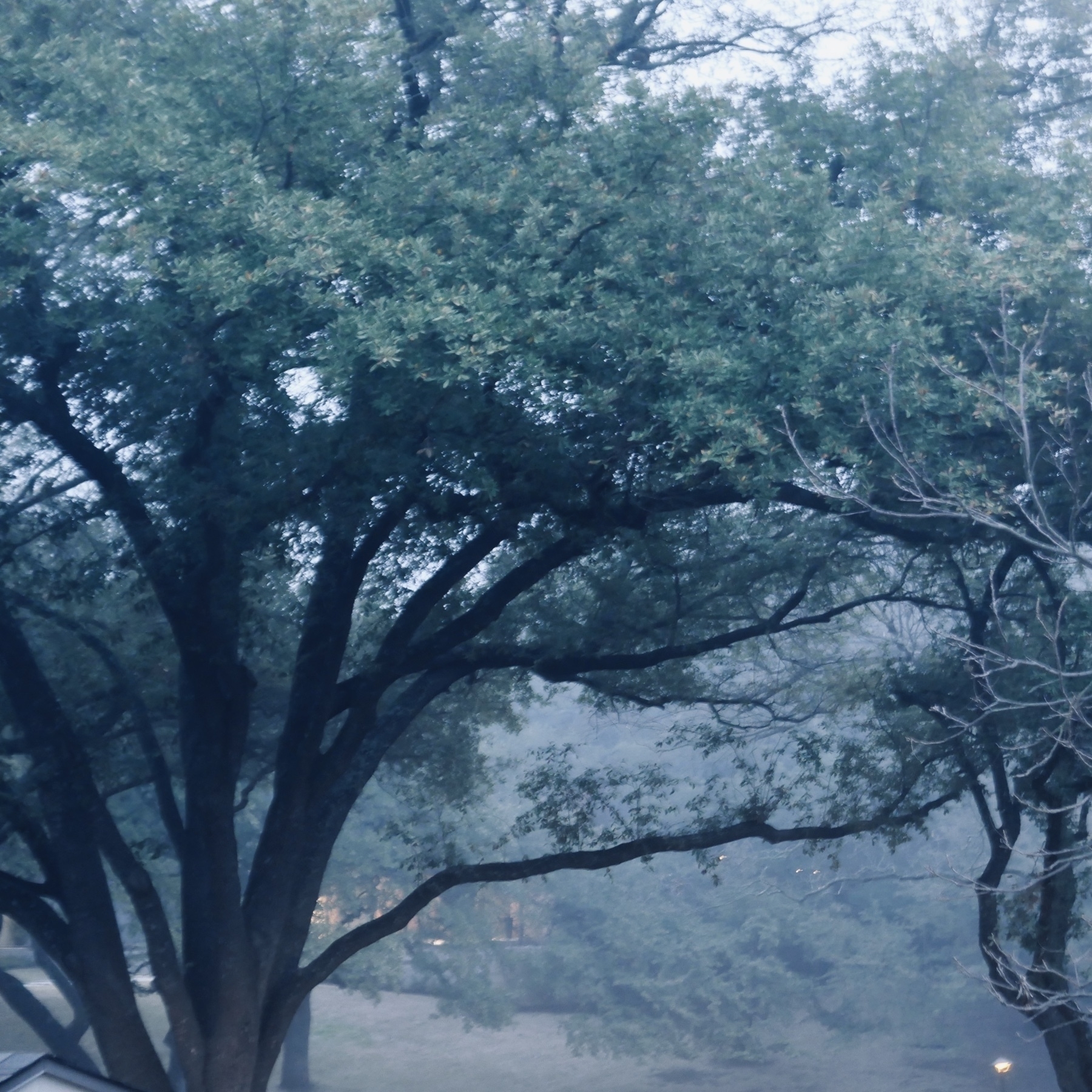
Very alien-invasion vibe to the pre-dawn walk in the fog.

a parable

Almost all of Tolstoy’s early stories were published by a journal called The Contemporary. Some of them focused on the miseries — and also the human dignity — of the serfs, whose emancipation Tolstoy fervently advocated. (Indeed, he freed his own serfs — he was a nobleman and a landowner — some time before universal emancipation was proclaimed by Tsar Alexander.) But The Contemporary fell under the influence of Nikolai Chernyshevsky, who, while praising Tolstoy’s ability, chastised him for being insufficiently devoted to the most radical political positions. Tolstoy, unwilling to alter his writing to conform to Chernyshevsky’s demands for political purity, took his work elsewhere and became, along with his contemporary Dostoevsky, one of the two greatest writers of the nineteenth century. Chernyshevsky, meanwhile, took over The Contemporary and banished all writers who did not conform to his political preferences; after his death, though he was always a clunking and tub-thumping writer, he became a great influence — perhaps the greatest single influence — on V. I. Lenin.