The thing I find most suspicious/fishy/smelly about the current hype surrounding Stable Diffusion, ChatGPT, and other AI applications is that it is almost exactly six months since the bottom dropped out of the cryptocurrency scam bubble.
This is not a coincidence.
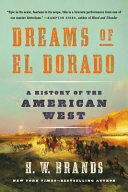
Finished reading: Dreams of El Dorado: A History of the American West by H. W. Brands. A brilliant book – a vibrant narrative about an immensely complex subject. 📚

Currently reading: Dreams of El Dorado by H. W. Brands 📚
Great, now I’m singing “If Nietzsche Were a Narwhal” to the tune of “If I Were a Rich Man.” Yubba dibba dibba dibba dibba dibba dibba dum.
Wilmore, Kentucky, is the kind of quaint town (population 6,027) you might drive through and forget. Perhaps if you stop at the intersection of Main Street and Lexington Avenue you may notice a white Presbyterian chapel and a redbrick Baptist church on opposite corners — reminders of a bygone era when America was staunchly Christian.Maybe someone should tell The Economist that those churches are not museums devoted to “a bygone era” — people today actually attend them.
If you’re going to read only one piece about the Asbury revival, make it this one by Ruth Graham. (I won’t let the fact that Ruth was once my student prevent me from saying that she’s the best religion reporter in this country, and it’s not close.)
I don’t have anything further to say about this event, though. Whether this is a genuine fruit-bearing revival is something that can’t be discerned now, and perhaps won’t ever be discernible. As George Eliot teaches us in the famous concluding words of Middlemarch, we don’t really understand the causes of the changes in our lives: sometimes the most important influences, and the most important people, work in ways too subtle for us to perceive. Maybe — and please, Lord, let it be so — this will be a great revival with lasting effects; but we’re unlikely to know what those effects are or how they have shaped people’s hearts. God works in a mysterious way His wonders to perform.
the evacuation of choice
A. O. Scott’s reflection in the NYT on the video record of the horrific murder of Tyre Nichols begins with a question that in so many ways encapasulates our cultural moment: “Do you have a civic duty to watch, or a moral obligation not to?” An important question! — because it has to be one or the other, doesn’t it?
I find myself thinking all the time — because the world I live in gives me constant cause so to think — about the moment early in The Once and Future King when Merlyn turns the Wart into an ant, and the Wart sees this inscription over the doorway to a tunnel:
EVERYTHING NOT FORBIDDEN IS COMPULSORY
And that’s our world, isn’t it? Everything not forbidden is compulsory.
You can see this playing out in the Education Wars conducted especially by this nation’s three most populous states. As David French pointed out in a recent episode of the Advisory Opinions podcast, the governors and legislatures of California, Florida, and Texas are engaged in a strenuous competition to see how thoroughly they can eviscerate the First Amendment rights of their citizens — especially, though not only, in educational contexts. Within public schools at all levels, no position on the hot-button issues of our time can be left to individual or professional discretion.
(Which, among other things, makes me grateful to be employed by a private university — where, by the way, we are also free, unlike this state’s public universities, to make our own decisions about whether people on campus can carry guns.)
Re: Ron DeSantis in particular, I have never — literally never — seen a politician so often and so consistently lied about, by the media and by his political opponents; but whatever your views about the Woke he wants to Stop, if you think him to be a defender of academic freedom you should think again. No, he doesn’t want to prohibit the study of Black people — as lies go that’s an especially stupid one — but he certainly does have an intellectual orthodoxy he wants to enforce. And these days, who doesn’t? What he compels, others would forbid; what he forbids, others would compel. There are limits to political horseshoe theory, but this is one arena where it definitely applies. Some good things may emerge from our current culture ward unscathed, but academic freedom is highly unlikely to be one of them.
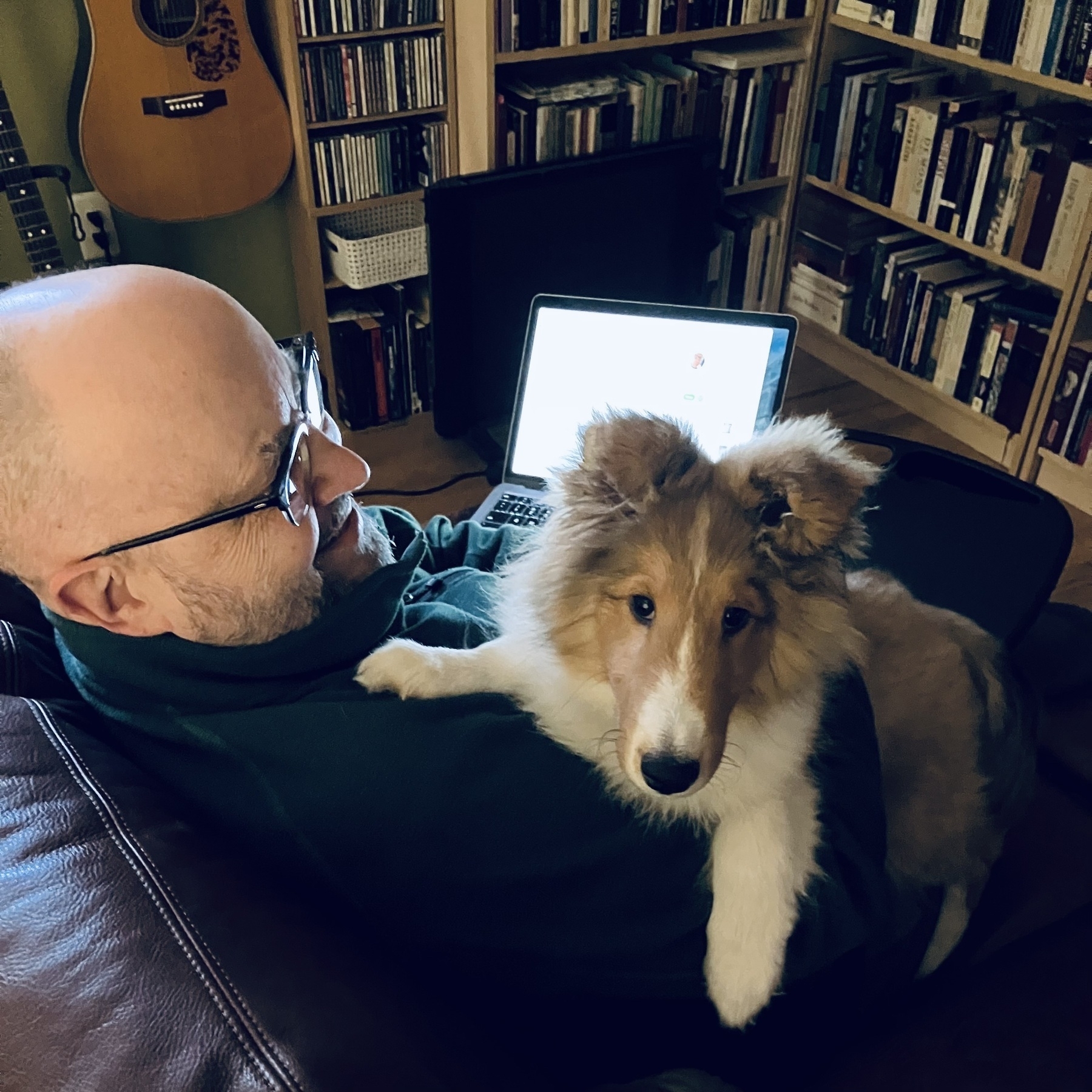
Was getting some work done when Angus discovered that he could climb up into my chair. This could end up as my personal equivalent of the moment when the velociraptors learned how to open doors.
Speaking about the prospect of “national divorce” on his radio program, Matt Walsh voiced what I fear is a typical view on the right: He rejects the idea on logistical grounds but is not entirely unsympathetic to it on cultural ones. “Can you name one shared value that binds Americans together?” he asks. “There really is nothing. … In what sense are we a people? The only thing is that we all happen to live within the same borders.” That is, of course, foolishness. If we could force Matt Walsh and Alexandria Ocasio-Cortez to live as neighbors in a village in rural Pakistan (and I do like the idea!), they would soon find out that they not only have a great deal in common but that as a cultural matter they have so much in common that they are very nearly identical.
Imagine if the Supreme Court threw caution to the wind and radically rolled back Section 230 protections; to the point where it became legally unviable to operate any sort of major platform that harvests attention using algorithmic-curation of user-generated content. In this thought experiment, Facebook disappears, along with Twitter, Instagram, Tik Tok, and even YouTube.
This certainly would devastate the tech sector for a while. It would also hurt the portfolios of those invested in these companies. But what would the impact be on the average internet user? It might not actually be so bad.
I would quaver a bit at the loss of YouTube, but … okay. You’ve got a deal. Sign me up.