
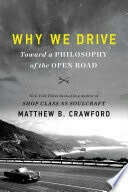
Currently reading: Why We Drive by Matthew Crawford 📚
Just give me one import from Latin


Nearly eight hundred people attended the Christmas Eve services at my church, St. Alban’s Waco — the most people ever for one day at this ordinary small-city Episcopal church. The mission of St. Alban’s is “to proclaim to all, in word and deed, the grace of God in Jesus Christ” — and that’s what Aaron Zimmerman, our rector, and the rest of the staff do, day after day. And because Christ is proclaimed, without reservation and without a political agenda, people come. I am so proud of our leaders and so grateful to God.
There’s no current soccer player I dislike as much as Cristiano Ronaldo, but if he had gone to Sporting KC I would’ve loved him. CR7, dude! You coulda been the next Graham Zusi! ⚽️
“Standards-based interoperability makes a comeback, sort of” – The best brief overview I’ve seen of the possibilities, limitations, and dangers of the decentralized social web.
removals: a few year-endish thoughts
One: I don’t do year-end lists, and I typically don’t read those of others. (Those of you who write them: Please forgive me!) I make note of books I’ve read, music I’ve listened to, and movies I’ve watched, but I do it in my paper planner. I like seeing my aesthetic experiences in their Lebenswelt: I watched The Awful Truth after making steak frites for my family; I read Trickster Makes This World while our floors were being refinished. To take those experiences out of those contexts seems, to me, to transform them into mere calculations. (I also record some of these experiences on my micro.blog page, but I’m not super-disciplined about it.)
This means that I also never have any idea how many books I’ve read or movies I’ve watched in any given period of time; and of course if I’m not keeping track of that, I can’t have any “reading goals.” And I don’t want any reading goals: it’s a matter of, again, the And Then What? problem. Some books should be savored — read slowly, meditated on, returned to — but if I’ve made it my goal to read X number of books or watch Z number of movies, then I won’t give such works the time they ask of me. I’ll rush through them so I can mark them off my list and move on to The Next Thing.
Two: There’s some good stuff in the Guardian, but there’s also a lot of incurious leftist reflexiveness, and, moreover, a pervasive (almost obsessive) anti-Americanism. I don’t mean critiques of American politics and American culture — Lord knows we deserve all of that we get, and more — but a kind of newspaper-wide tic, an inability to resist mocking and sneering at anyone and anything American, even when America and Americans have nothing to do with the subject at hand. (There’s a lot of that in the paper’s sports section.) At some point this year I got sick of it and simply removed every Guardian feed from my RSS reader. And you know what? I didn’t miss it. Not for one second.
This got me thinking about what I read and listen to by mere habit, even though I am frustrated by it. I decided to do a reverse Marie Kondo and ask, “Does this spark annoyance?” I went through my RSS feeds and deleted many more sites; I started realizing how many podcasts I subscribe to through an obscure feeling of duty but don’t really want to listen to. So let’s say I listen to one of them: and then what? Listen to some more just to cross them off my list? Why? I deleted a bunch of those subscriptions too.
Three: I made it through another year, my third in a row, without getting on an airplane. My wife, who has to fly several times a year, has commented that not only have passengers stopped wearing masks, they now don’t even cover their mouths when they cough — they’ve descended into a kind of barbarism. On her last trip she didn’t contract Covid, but she did pick up RSV and had a cough for a month. Passengers behaving badly, airline staff undertrained and impatient, delays and cancellations rampant, security theater now in its third decade of mindlessness … Why would I ever voluntarily subject myself to this kind of crap?
I do hope to travel overseas again, someday, and when I do I’ll gladly get on a plane. But I’m now seriously wondering if I can simply not fly within the U.S. any more, and drive whenever I need to get somewhere. The problem with this, of course, is that I live deep in the heart of Texas, and it is one hell of a long way to anywhere else. On the other hand, it’s a two-day drive from most places in this country I’d ever have a need to visit. (It’s almost exactly the same distance from Waco to Washington D.C. and to Los Angeles.)
I’ve twice made the drive to and from Charlottesville, VA, and while it’s no fun having to stop in a hotel overnight, I do enjoy the scenery, the thinking time, even the occasional audiobook (typically not my thing, but enjoyable on a long drive). And it’s nice simply to throw whatever I think I might need into the car, not worrying about having to go through security and getting sneezed on by strangers. Maybe it’s time for me to read Matt Crawford’s book on driving and embrace “the philosophy of the open road.”
So, you’ll note, 2022 was at least partly a year of removals, of excisions. I didn’t mean to, I didn’t plan to, but I eliminated a lot of noise, and therefore a lot of frustration. It has felt good, and I want to do more of the same in 2023.
at the movies
The “movies” tag at the bottom of this post will point you to what I’ve written about that artform on this blog, but I’ve published a few things elsewhere too:
- A reflection on the extravagant art of Jean-Luc Godard
- A meditation on Terrence Malick’s A Hidden Life
- A complicated argument about Citizen Kane, Pauline Kael, and newspapers
- An essay partly about Inside Out
I think there are others, but these are the ones that come to mind right now.