
Don’t know why this guy stands more than a foot higher than his friends, but he’s impressive. Maybe eight feet tall?

To say, as the Archbishop of Canterbury has, that the bishops at the forthcoming Lambeth Conference won’t be passing resolutions but rather “issuing Calls” is pretty much the ne plus ultra of rearranging the deck chairs on the Titanic. It is coupling the absurd to the ineffectual.
Machenesque and Menckenesque
From H. L. Mencken's obituary for J. Gresham Machen, the proto-evangelical:
There was a time, two or three centuries ago, when the overwhelming majority of educated men were believers, but that is apparently true no longer. Indeed, it is my impression that at least two-thirds of them are now frank skeptics. But it is one thing to reject religion altogether, and quite another thing to try to save it by pumping out of it all its essential substance, leaving it in the equivocal position of a sort of pseudo-science, comparable to graphology, "education," or osteopathy.
That, it seems to me, is what the Modernists have done, no doubt with the best intentions in the world. They have tried to get rid of all the logical difficulties of religion, and yet preserve a generally pious cast of mind. It is a vain enterprise. What they have left, once they have achieved their imprudent scavenging, is hardly more than a row of hollow platitudes, as empty as [of] psychological force and effect as so many nursery rhymes. They may be good people and they may even be contented and happy, but they are no more religious than Dr. Einstein. Religion is something else again — in Henrik Ibsen's phrase, something far more deep-down-diving and mudupbringing, Dr. Machen tried to impress that obvious fact upon his fellow adherents of the Geneva Mohammed. He failed — but he was undoubtedly right.
This has always struck me as the proper view of the matter. I could be Machenesque or I could be Menckenesque, but I could never be a theological Modernist.
The first person to demonstrate this to me was Nietzsche, in his great early essay “David Strauss, the Confessor and the Writer,” in Untimely Meditations. Nietzsche’s scorn for Strauss’s attempt to build a post-Christian religion on the foundation of Darwinism is eviscerating. Nietzsche shows that the Darwinian model of the cosmos is not exactly a consoling one — and yet Strauss wants to console, wants to be a kind of optimist. So:
Whereupon Strauss started the ‘soothing oil’ flowing, led on a God who errs out of a passion for error, and assumed for once the wholly uncongenial role of a metaphysical architect. He does all this because his ‘we’ are afraid and he himself is afraid – and here we discover the limits of his courage, even with respect to his ‘we’. For he does not dare to tell them honestly: I have liberated you from a helpful and merciful God, the universe is only a rigid machine, take care you are not mangled in its wheels! This he dares not do: so he has to call in the sorceress, that is to say metaphysics.
A metaphysics meant, essentially, to make his readers believe that the “rigid machine” of the cosmos is a kind of worship-worthy God, or at least the secure grounding of a new religion.
At bottom, then, the new religion is not a new faith but precisely on a par with modern science and thus not religion at all. If Strauss nevertheless asserts that he does have a religion, the reasons for it lie outside the domain of contemporary science. Only a minute portion of Strauss’s book, amounting to no more than a few scattered pages, treats of that which Strauss could have a right to call a faith: namely that feeling for the cosmos for which he demands the same piety as the believer of the old stamp feels towards his God. In these pages at least the scientific spirit is certainly not in evidence: but we could wish for a little more strength and naturalness of faith! For what is so extremely striking is the artificiality of the procedures our author has to adopt in order to convince himself he still possesses a faith and a religion at all: as we have seen, he has to resort to jabbing and cudgelling. It creeps weakly along, this stimulated faith: we freeze at the sight of it.
Nietzsche has a usefully clarifying effect on those of us who want to see what our actual choices are. Mencken was pretty good at that also.


From Agnes Giberne’s Sun, Moon, and Stars: A Book for Beginners (1879)


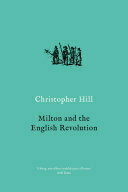
Currently reading: Milton and the English Revolution by Christopher Hill 📚
self-understanding and resistance
In The Gulag Archipelago Solzhenitsyn says that whenever people in the Soviet Union were arrested they all said the same thing: “Me? What for?” When he was arrested that’s what he said too. Then, when he was brought before an official, preparatory to being stuffed into an interrogation cell, he had some papers thrust under his nose which he was told to sign. He signed them, he says, because “I didn’t know what else to do.”
When reading this passage I think about a couple of things. First, I remember James Scott’s book Seeing Like a State and its emphasis on all the ways that modern nation-states make us “legible” to its functions – and, perhaps even more important, teach us to believe that such legibility is necessary and vital. Second, I remember the comment that the anthropologist Claude Lévi-Strauss makes in Tristes Tropiques that throughout history the primary function of writing has been to enable slavery.
So into the belly of the beast Solzhenitsyn goes, and remains for several miserable years – but then, at a certain point, he begins what he calls his “ascent.” And the beginning of the ascent is marked by one of the most famous passages in all of twentieth century writing:
It was granted me to carry away from my prison years on my bent back, which nearly broke beneath its load, this essential experience; how a human being becomes evil and how good. In the intoxication of youthful successes I had felt myself to be infallible, and I was therefore cruel. In the surfeit of power I was a murderer, and an oppressor. In my most evil moments I was convinced that I was doing good, and I was well supplied with systematic arguments. And it was only when I lay there on rotting prison straw that I sensed within myself the first stirrings of good. Gradually it was disclosed to me that the line separating good and evil passes not through states, nor between classes, nor between political parties either — but right through every human heart — and through all human hearts. This line shifts. Inside us, it oscillates with the years. And even within hearts overwhelmed by evil, one small bridgehead of good is retained. And even in the best of all hearts, there remains… an unuprooted small corner of evil.Bless you, prison, bless you for being in my life! For there, lying upon the rotting prison straw, I came to realize that the object of life is not prosperity, as we are made to believe, but the maturity of the human soul.
NOTE
If you want to know why Solzhenitsyn is truly great as a writer, you should take note of the very next sentence he writes: “(And from beyond the grave come replies: It is all very well for you to say that — you who came out of it alive!)”It is after this that Solzhenitsyn begins to describe, not only the change in him, but the change in his relations with others. He no longer simply accepts the imposed and inflexible laws of the Gulag, he and his colleagues began to form strategies of resistance. When asked “Why did you put up with all that?” he answers that many of the prisoners did not – but it is absolutely essential, if you want to understand Solzhenitsyn, to realize that he was able to resist constructively only after he acknowledged his own personal guilt, only after he began a long process of repentance.
That is, Solzhenitsyn makes it quite clear that meaningful resistance begins with self-understanding. You can only make an intelligent attempt to alter your circumstances if you understand who you are, which means understanding that your own innate human nature is not different from that of your captors.