

Lambeth 2022 and African Anglicanism – Covenant:
Whatever readers of this blog make of GAFCON, it constitutes a key segment of the Communion, too large to be ignored. While there is longstanding debate over whether or not the Lambeth Conference carries (or should carry) any binding authority, it has typically been taken as expressive of the mind of the Communion. The size of the Lambeth boycott, though, means that any decisions taken at Lambeth 2022 can be neither.
One possible olive branch lies, ironically, in the ongoing tragedy facing Nigerian Anglicans who have been harshly persecuted by Islamic militants for decades. Archbishop Welby has shown commendable concern for their plight. TEC has been far less vocal on the suffering of Nigerian Anglicans than the suffering, for example, of Palestinians (aside from protest at the abduction of the Chibok girls, which happened eight years ago). Were TEC and the wider Communion to give more solid support to persecuted Nigerian Anglicans, this would both be morally right and act as an olive branch to the Nigerian church. It would show that, though absent, Nigeria’s Anglicans remain of concern to those attending the Lambeth Conference.
Here in the U.S.A., there are no political points to be gained from compassion for Nigerians.

It’s a newslettery morning
bodies and stones
In Breaking Bread with the Dead, I write about Donna Haraway:
There's a fascinating early chapter in her book on human interaction with pigeons. Of course, that interaction has been conducted largely on human terms, and Haraway wants to create two-way streets where in the past these paths ran only from humans to everything else. How to get the pigeons to participate willingly in such a project is question without an obvious answer, but it's question that Haraway feels we must ask, a because “staying with the trouble requires making oddkin; that is, we require each other in unexpected collaborations and combinations, in hot compost piles. We become-with each other or not at all.”
But here's the complication: Who gets included in “each other”? Besides pigeons, I mean. Haraway says explicitly that her human kin are “antiracist, anticolonial, anticapitalist, proqueer feminists of every color and from every people,” and people who share her commitment to “Make Kin Not Babies.” “Pronatalism in all its powerful guises ought to be in question almost everywhere.”
I suspect that — to borrow a tripartite distinction from the psychiatrist and blogger Scott Alexander — most people who use that kind of language are fine with their ingroup (“antiracist, anticolonial, anticapitalist, proqueer feminists of every color and from every people”) and fine with the fargroup (pigeons), but the outgroup? The outgroup that lives in your city and votes in the same elections you do? Maybe not so much. Does the project of making kin extend to that couple down the street from you who have five kids, who attend a big-box evangelical church, and who voted for the wrong person in the last presidential election? And who, moreover, are a little more likely to talk back than pigeons are? (Even assuming that they might be interested in making kin with Donna Haraway, which, let's face it, is equally unlikely. Presumably they too would be more comfortable with the pigeons.)
I thought about these issues as I read an excerpt from James Bridle’s new book:
A system of laws and protections developed by and for humans, that places human concerns and values at its core, can never fully incorporate the needs and desires of nonhumans. These judicial efforts fall into the same category of error as the mirror test and ape sign language: the attempt to understand and account for nonhuman selfhood through the lens of our own umwelt. The fundamental otherness of the more-than-human world cannot be enfolded into such human-centric systems, any more than we can discuss jurisprudence with an oak tree.
Legal representation, reckoning, and protection are founded upon human ideas of individuality and identity. They may prove useful when we take up the case of an individual chimp or elephant, or even a whole species, but their limits are clear when we apply them to a river, an ocean, or a forest. A plant has no “identity;” it is simply alive. The waters of the earth have no bounds. This is both ecology’s meaning and its lesson. We cannot split hairs, or rocks, or mycorrhizal roots and say: This thing here is granted personhood, and this thing not. Everything is hitched to everything else.
The enactment of a more-than-human politics calls explicitly for a politics beyond the individual, and beyond the nation-state. It calls for care, rather than legislation, to guide it.
As regular readers might expect, this call for care, this ecological perspective, resonates powerfully with me. (It also resonates with something I wrote about in another book: Simone Weil’s insistence that if we need a collective declaration of human rights, we also, and perhaps more desperately, need a declaration of human obligations.)
But it is curious to me that many people are willing to entertain this line of thought, are immensely sympathetic to this line of thought, who also affirm that “in relation to the mind the body has no rights”; and that a fetus in the womb is but an insignificant “clump of cells.” I don’t think you can consistently hold all those views. If you are willing to ask, “What do we owe the more-than-human world?” then, I think, you must also be willing to ask, “What do we owe the fetus in the womb? What do we owe our own bodies?” If you’re not asking these questions, then I fear that the other affirmations are empty rhetoric — a make-believe extension of agency to things you can then safely ignore.
From my essay ”You Are Not a Server”, on Dickensian characters:
To begin to cite examples is a dangerous thing. Once embarked on that journey, how would one end it? How could one mention the circumlocutions of Mr. Tite Barnacle without also mentioning the unctuousness of Uriah Heep, the commitment to Fact of Mr. Gradgrind, the endless compassion of Little Dorrit? Lo, I have already commenced. They are all infinitely memorable because they are all infinitely excessive; they are, as it were, nothing but surplus. They always remind us of the possibility of living at an outsize scale, of being simply more than anyone could expect, more than any reasonable person would ask for. If they seem mere caricatures, that may say something more about our crimped and confined moment than about them. They are a constant encouragement to expand rather than contract one’s options.
And that is why we need to read Dickens, now more than ever.
I published this a couple of months ago, but I don’t think I mentioned it here?
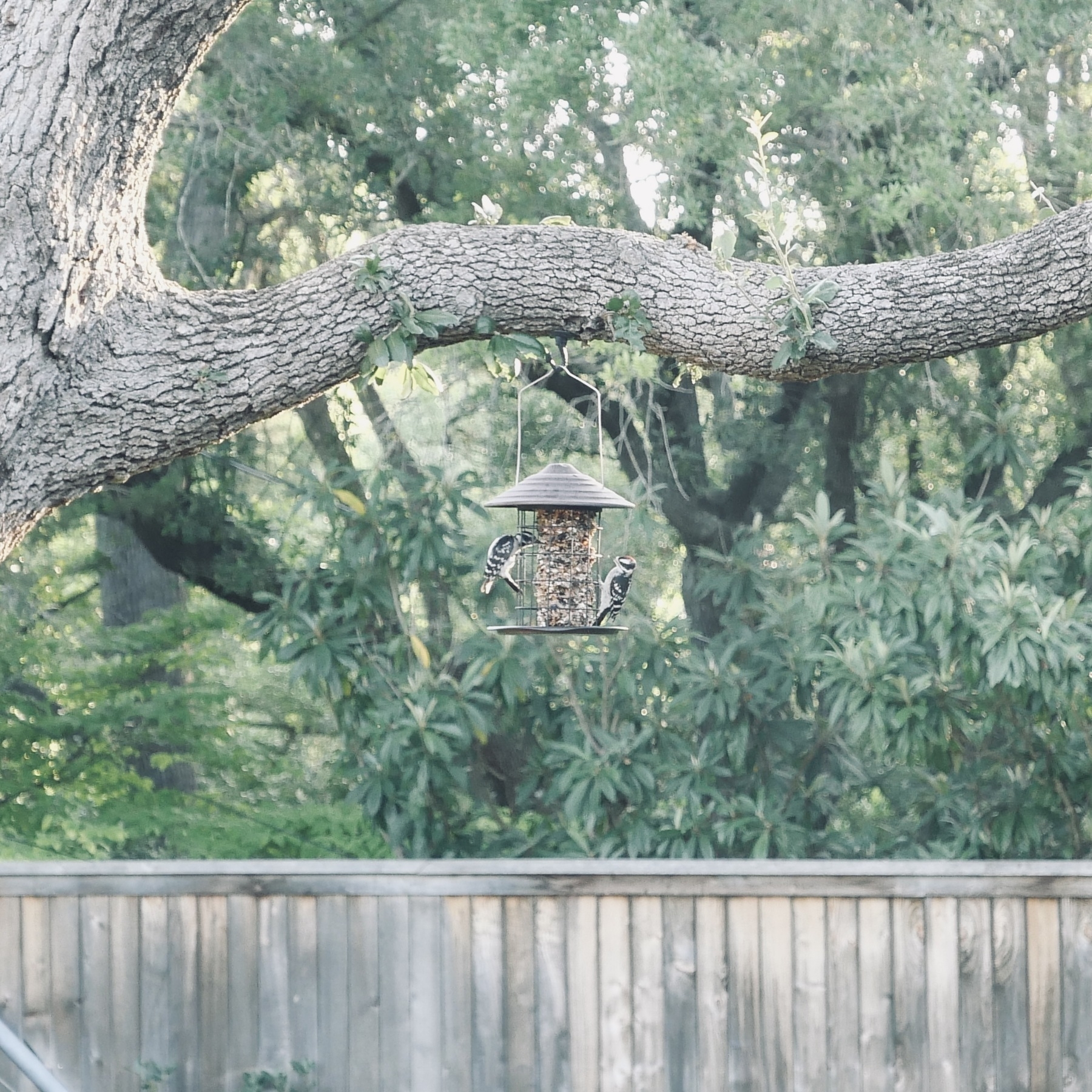
Currently listening: Aaron Copland, Appalachian Spring ♫
I’ve just revised and edited the page where I list the major themes of my big blog and link to the relevant tags. I don’t know whether this is useful to anyone else, but it’s useful to me. I’ve been writing that blog a long time, and sometimes I forget what’s there.