

two quotations on what has been lost
Could the greatest works of literature be undiscovered?:
For two millennia, we’ve been haunted by the idea that what has been passed down to us might not be representative of the vast corpus of literature and knowledge that humans have created. It’s a fear that has only been confirmed by new methods for estimating the extent of the losses.
The latest attempt was led by scholars Mike Kestemont and Folgert Karsdorp. The Ptolemies who created the library at Alexandria had a suitably pharaonic vision: to bring every book that had ever been written under one roof. Kestemont and Karsdorp had a more modest goal – to estimate the survival rate of manuscripts created in different parts of Europe during the middle ages.
Using a statistical method borrowed from ecology, called “unseen species” modelling, they extrapolated from what has survived to gauge how much hasn’t – working backwards from the distribution of manuscripts we have today in order to estimate what must have existed in the past.
The numbers they published in Science magazine earlier this year don’t make for happy reading, but they corroborate figures arrived at by other methods. The researchers concluded that a humbling 90% of medieval manuscripts preserving chivalric and heroic narratives – those relating to King Arthur, for example, or Sigurd (also known as Siegfried) – have gone. Of the stories themselves, about a third have been lost completely, meaning that no manuscript preserving them remains.
Tom Stoppard, Arcadia:
Thomasina: Oh, Septimus! — can you bear it? All the lost plays of the Athenians! Two hundred at least by Aeschylus, Sophocles, Euripides — thousands of poems — Aristotle's own library brought to Egypt by [Cleopatra’s] ancestors! How can we sleep for grief?
Septimus: By counting our stock. Seven plays from Aeschylus, seven from Sopocles, nineteen from Euripides, my lady! You should no more grieve for the rest than for a buckle lost from your first shoe, or for your lesson book which will be lost when you are old. We shed as we pick up, Like travellers who must carry everything in their arms, and what we let fall will be picked up by those behind. The procession is very long and life is very short. We die on the march. But there is nothing outside the march so nothing can be lost to it.
Not the most convincing consolation by Septimus.
14 Warning Signs That You Are Living in a Society Without a Counterculture: This is very good by Ted Gioia, as always, but I would contend that the past is our always-available counterculture, and it’s a rich one. Every minute you spend attending to something not-immediately-present, you are helping to build a counterculture.


Currently reading: Thomas Jefferson: A Biography of Spirit and Flesh by Thomas S. Kidd 📚
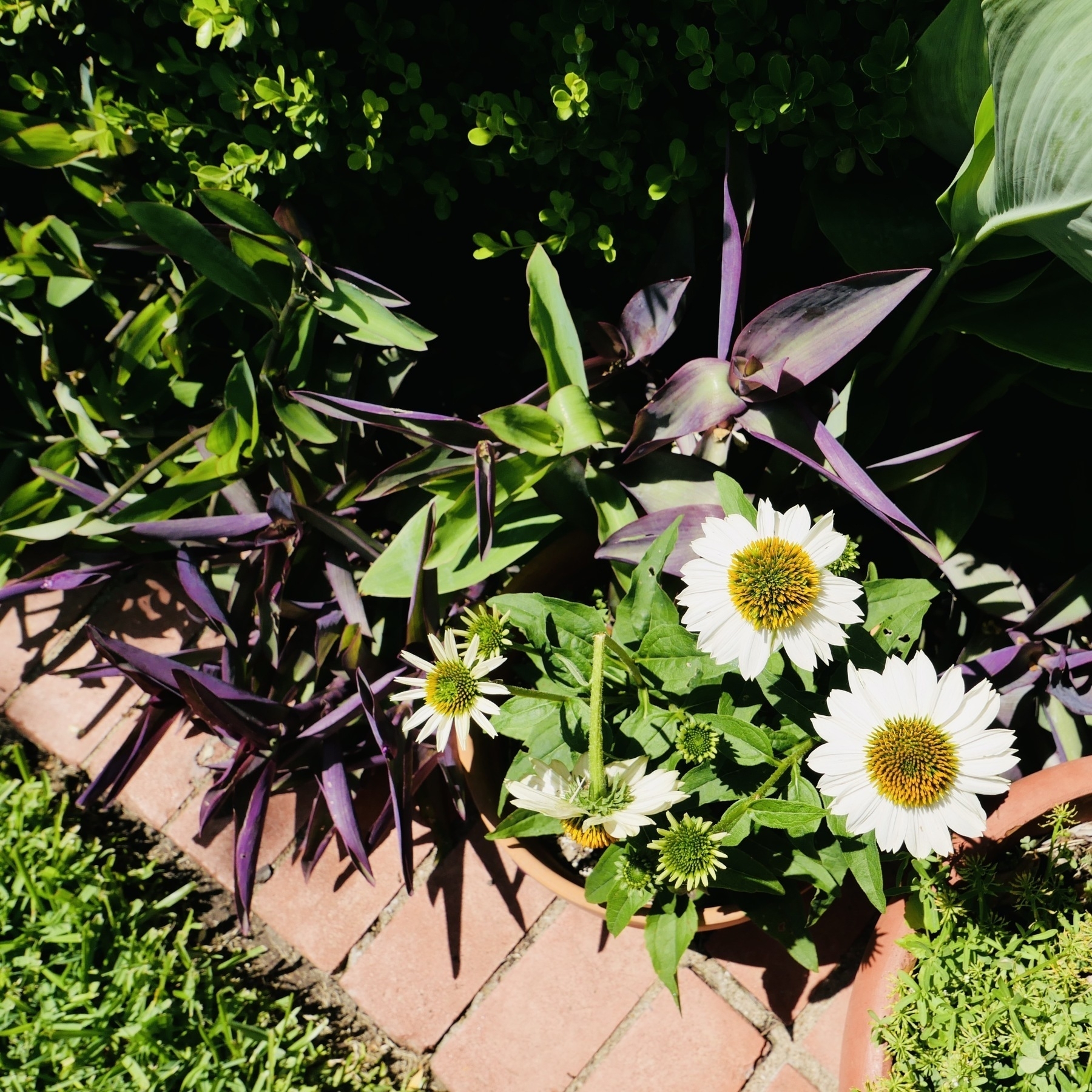
Good to see these guys back.

keeping things on my chest
Perhaps the key theme in C. S. Lewis’s book The Abolition of Man is his emphasis on the importance, in much classical and almost all medieval thought, of the chest as the seat, the location, of our moral intuitions and convictions. Our mind cognizes and analyzes, the rest of our body simmers with passionate humors, but the chest synthesizes thought and impulse and converts that synthesis into meaningful moral action.
One of the chief appeals of social media, for many of us, is the ease with which we can “get something off our chest.” But maybe there are feelings and convictions that ought to remain on our chest, even if their presence burns us.
I should put my cards on the table here: In the past week we have, in multiple ways, seen the pervasive moral corruption of the socially-conservative and at-least-nominally-Christian world of which I have been a part (though an often discontented and uncomfortable part) most of my life. It is impossible for any fair-minded person to deny that that world has surrounded itself with a vast fortress of lies within which it hopes to take refuge: lies about the 2020 election, lies about immigrants to the USA, lies about its own commitments to “traditional morality,” lies about its adherence to biblical authority, lies about its embodiment of genuine masculinity. From within that fortress the cry continually comes forth, The woke libtards are trying to destroy us! — to which the most reasonable reply is: You’re destroying yourselves faster than any external enemies ever could.
And that’s as far as I’m going to go by way of getting anything off my chest. I could certainly continue the denunciations, and continue at great length — there’s no shortage of material. But I don’t want to consume my anger and pain by shoveling them into a red-hot social-media furnace. Denunciations do no good.
I want to keep my anger and pain close to me, inside me, even though it hurts, and find some proper outlet for them — as I say, to synthesize my thoughts and my feelings into meaningful moral action.
On this blog I will continue to focus my attention on praising the praiseworthy and celebrating the good, the true, and the beautiful, because that’s my calling, that’s my lane. As Bob Dylan once said, “There’s a lot of things I’d like to do. I’d like to drive a race car on the Indianapolis track. I’d like to kick a field goal in an NFL football game. I’d like to be able to hit a hundred-mile-an-hour baseball. But you have to know your place.” And my place, vocationally speaking, is not to be a politician or a pundit. It is, rather, to invite my readers to join with me in a quest to repair the world — from the inside of us out, as it were. To change hearts; to heal and strengthen the seat of our affections.
But that doesn’t mean that I can take no political or social action in response to the pervasive corruption I see and lament. I am asking myself some questions that I think all of us would do well to ask in these times: If there were no social media — no Twitter, no Facebook, no blogs even — what would I do? Whom would I seek to address and how would I address them? Would I use words only, or would I take action? And if the latter, what would proper action be? Imagine that all the familiar means of “getting things off my chest” were denied to me — what would I do then?
In the coming days I will be pondering those questions. And meanwhile, on this blog, regular service will resume next week.
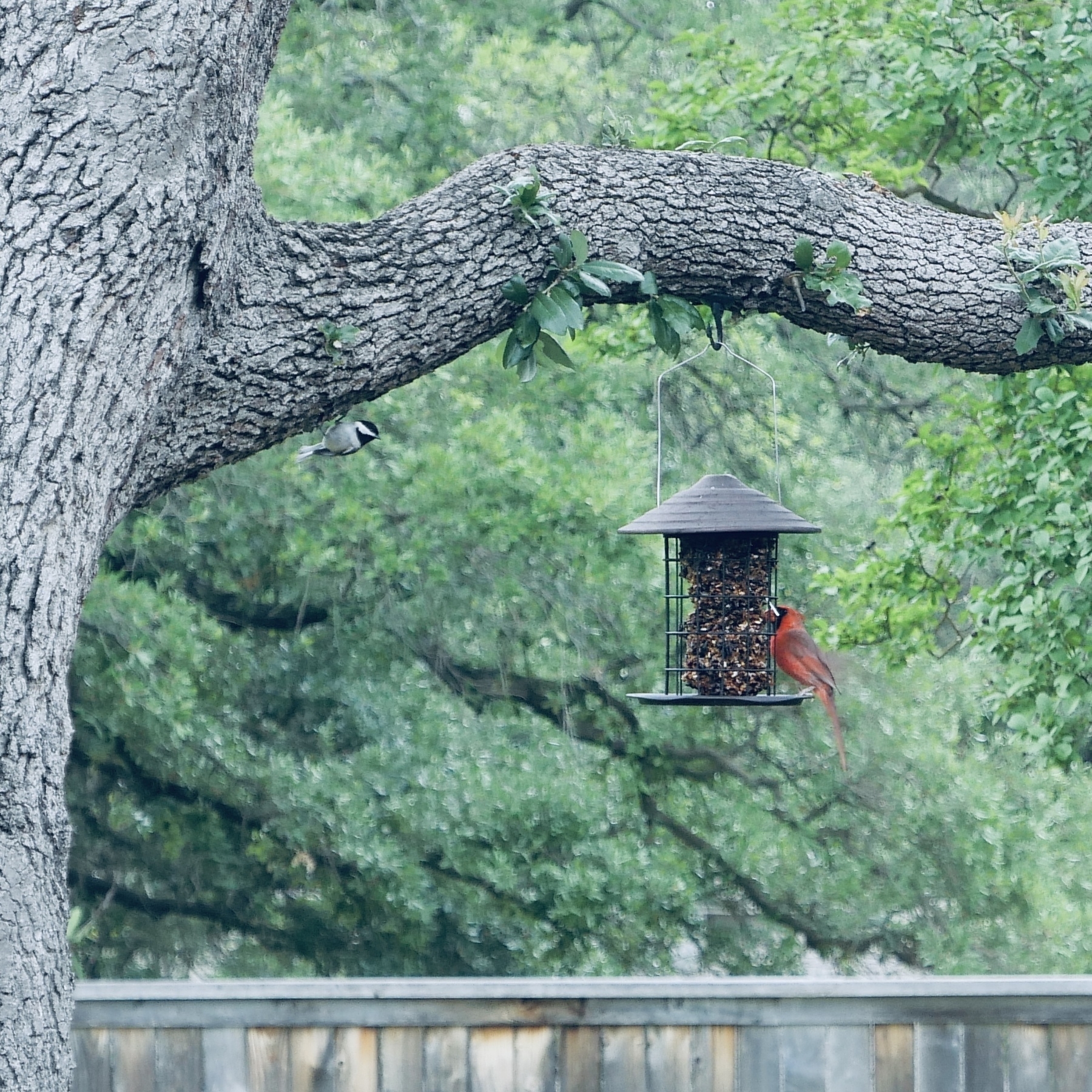
I spend a lot of time just watching these guys come and go.