Duty Boat
[caption id="" align=“aligncenter” width=“1418”]
Duty Boat (1940); © The Estate of Eric Ravilious. Artists Rights Society (ARS), New York – DACS, London[/caption]
a new theory of propaganda
(An idea for a book I’ll never write)
One of the most famous scenes of George Orwell’s Nineteen Eighty-Four begins this way: “It was nearly eleven hundred, and in the Records Department, where Winston worked, they were dragging the chairs out of the cubicles and grouping them in the centre of the hall opposite the big telescreen, in preparation for the Two Minutes Hate.” As the office workers gather around the television, the face of Emmanuel Goldstein, the great enemy of the state, appears on the screen. “The Hate had started.” And people know what to do: “Before the Hate had proceeded for thirty seconds, uncontrollable exclamations of rage were breaking out from half the people in the room.... In its second minute the Hate rose to a frenzy.... The Hate rose to its climax.” And then it is over. It is now time to chant a hymn of praise to Big Brother.
The scene has always been noteworthy for its disturbing power, but since the rise of social media it has become a central image of our time, and the phrase “Two Minutes Hate” is widely used to describe those moments when someone (usually inadvertently, though sometimes intentionally) arouses the outrage of some Twitter cohort or Facebook faction.
The relevance of the Two Minutes Hate to our social-media world is so obvious that we rarely pause to notice the fundamental difference between what happens in Orwell’s novel and what we do: no one organizes our sessions of loathing.
In Orwell’s novel, the Two Minutes Hate is a deliberate exercise created, scheduled, and enforced by the government for propagandistic purposes. It is a carefully designed strategy of negative reinforcement (loathing of Goldstein) followed immediately by positive reinforcement (love of Big Brother). But nothing like that happens in our world. We all know that Big Brother does not exist, and yet we feel his presence all around us. No centralized political force pulls our puppet-strings, and yet we feel pulled upon nonetheless. No one organizes a Two Minutes Hate, and yet Two Minutes (or Several Hours) of Hate we have, day after day after day. We affirm one another in key responses and exclude those who fail to exhibit those responses. (Note that what’s happening here is the performance of responses, not beliefs as such.) We monitor, we police the boundaries.
And it’s not just about Hate. It’s all the other emotions as well, experienced in some mysteriously synchronized collectivity. Some studies suggest that when people sing together in a choir their heartbeats synchronize; when they shout together on Twitter their emotions do the same. We live in a world of propaganda that succeeds beyond the imaginings of the propaganda-masters of the past, and yet no one has designed it. No one is organizing or scheduling it. It seems just to be happening, somehow. The propaganda of our world is emergent and ambient, and those two traits make it harder to understand and harder to combat.
In the preface to his justly famous book on propaganda, Jacques Ellul wrote, “Propaganda is called upon to solve problems created by technology, to play on maladjustments, and to integrate the individual into a technological world.” And he continued,
In the midst of increasing mechanization and technological organization, propaganda is simply the means used to prevent these things from being felt as too oppressive and to persuade man to submit with good grace. When man will be fully adapted to this technological society, when he will end by obeying with enthusiasm, convinced of the excellence of what he is forced to do, the constraint of the organization will no longer be felt by him; the truth is, it will no longer be a constraint, and the police will have nothing to do. The civic and technological good will and the enthusiasm for the right social myths — both created by propaganda — will finally have solved the problem of man.
We have clearly not reached the point at which the police have nothing to do; but in many respects, certainly among our cultural elites, Ellul’s forecast has largely come true. Without anyone directly telling them or persuading them to do so, they have, as their “enthusiasm for the right social myths” demonstrates, come to love Big Brother. Propaganda has ceased to be the function of government and become instead a kind of collective self-soothing, with social media networks the primary instruments.
Future historians of propaganda will not be able to do without Ellul’s book but will need to reconsider its significance in light of the realization of some of the prophetic elements of the book. His definition — “Propaganda is a set of methods employed by an organized group that wants to bring about the active or passive participation in its actions of a mass of individuals, psychologically unified through psychological manipulations and incorporated in an organization” — will need to be revised.
And for those who wish to use rather than merely understand propaganda: Deliberate propaganda in the future will, if it wishes to be effective, need to mimic the character of emergent propaganda. Anything more direct will seem too, too crude.
thoughts on Glass
And by Glass I mean this.
- Holy cow is it beautiful. I’ve seen people saying “This is what Instagram used to be” — no. Instagram never looked this good, this clean. Photographs are all you see unless you swipe to get more details.
- I’m just following a few photographers right now, none of whom I know — I just used the discovery page and followed the ones whose photos caught my eye. But the result already is an infinite scroll of beautiful photographs.
- I am not nearly photographically skilled enough to be on the site … but now I sort of want to be.
- That said, I am an open-web and (better still) indie-web kind of guy, and Glass is not that. You can only see the photographs from within the app. It’s another walled garden, if not yet a walled factory.
- So while I’ve posted a few photos there, I’m not likely to invest any further, except maybe to try cross-posting from micro.blog, where I currently post my photos.
the Stupids
More than the parade of people walking into lampposts while gawking at their phones; more than the insatiable appetite for any kind of technologically enhanced spectacle, to the extent that political conventions, big-ticket sporting events, and megachurch services are virtually indistinguishable from one another or from a Nuremberg rally in their obsessive reaching for the unreal; more than the open disdain for science; more than the oxymoronic statement “I believe in science” — I know of no more definitive expression of stupidity than proudly professing a total inability to understand an opponent’s position on a controversial issue. That a fetus is an integral part of a woman’s body and thus under her sovereign moral control, that a fetus is a form of human life entitled to certain protections, that in a world where maniacs go around shooting schoolchildren it’s a good idea to get rid of guns, that in a world where maniacs go around shooting schoolchildren it’s a good idea to get a gun — “I simply can’t understand how anyone can think like that.” Really? Can’t agree with it, sure. Can’t accept its basic premises, fine. But can’t understand it? And yet I catch myself saying this all the time, and what is more, I think I might be telling the truth. Because after a while the refusal to understand becomes the inability to understand. Chronic stupidity is not the result of injury or genetics; it’s a learned behavior. We acquire it like a microwave or a suntan.
A decade ago, when I thought things were getting bad — oh how naïve I was in those days — I wrote an essay “Against Stupidity” in which I argued for the canonization of St. Jonathan Swift and even wrote a collect for his feast day.
Gather around, friends — and please join us, Mr. Keizer — and let’s bow our heads and say together,
Almighty and most wrathful God, who hate nothing You have made but sometimes repent of having made Man; we thank you this day for the life and work of Your faithful servant Jonathan Swift, who constantly imitated and occasionally exceeded Your own anger at the folly of sin, and who in his works excoriated such folly with a passion that brought him nigh unto madness; and we pray that You may teach us to be imitators of him, so that the follies and stupidities of our own time may receive their proper chastisement; through Christ our Lord, who reigns with You and the Holy Spirit, one God, now and forever. AMEN.
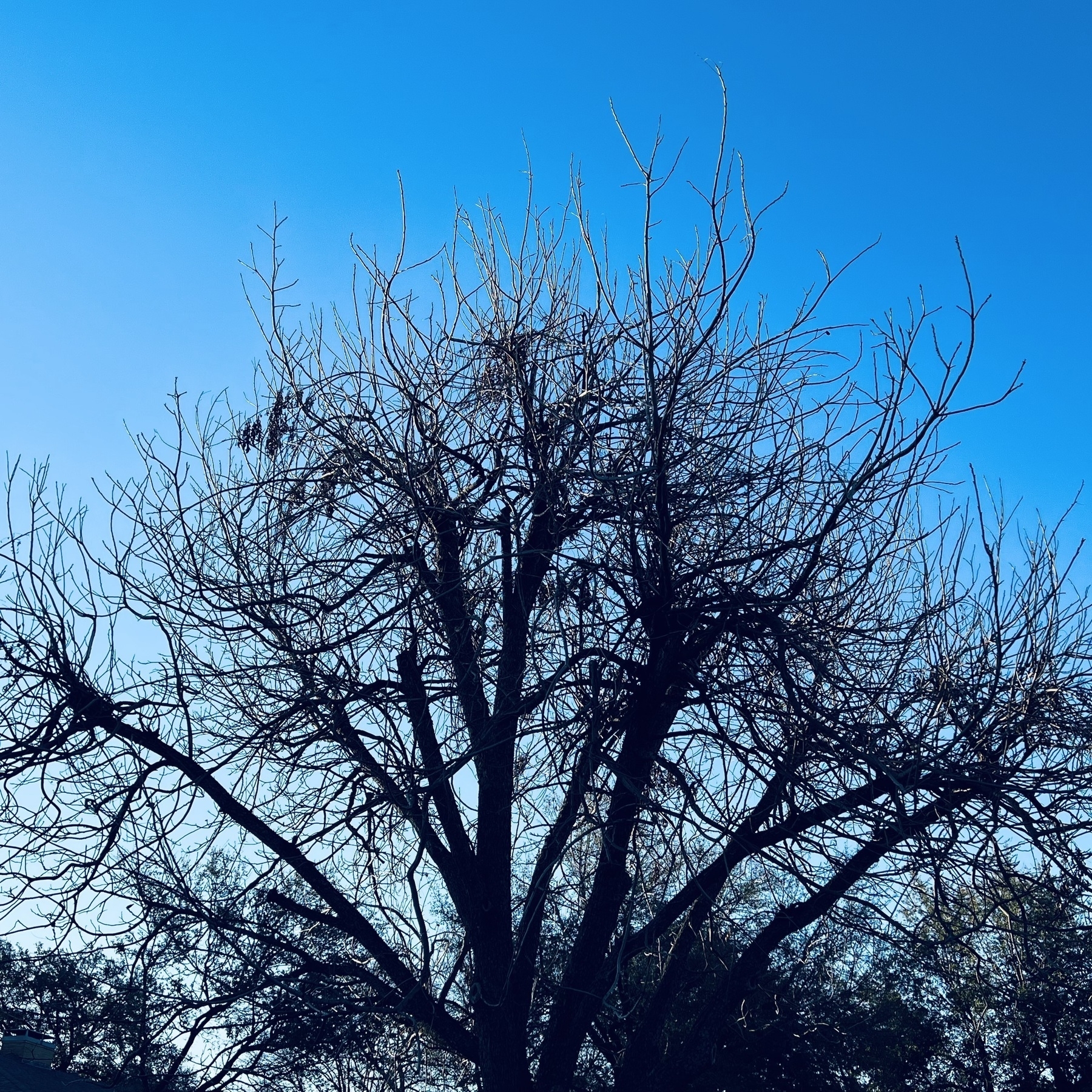
We thought the nightmarish winter storm we had in February had killed our oleander, but we cut it all the way back and waited to see … and now we see!
Maybe it’s time to bring these out of mothballs?
two quotations on innovation and influence
Facebook is full of ugly memes and boring groups, ignorant arguments, sensational clickbait, products no one wants, and vestigial features no one cares about. And yet the people most alarmed about Facebook’s negative influence are those who complain the most about how bad a product Facebook is. The question is: Why do disinformation workers think they are the only ones who have noticed that Facebook stinks? Why should we suppose the rest of the world has been hypnotized by it? Why have we been so eager to accept Silicon Valley’s story about how easy we are to manipulate?
Within the knowledge-making professions there are some sympathetic structural explanations. Social scientists get funding for research projects that might show up in the news. Think tanks want to study quantifiable policy problems. Journalists strive to expose powerful hypocrites and create “impact.” Indeed, the tech platforms are so inept and so easily caught violating their own rules about verboten information that a generation of ambitious reporters has found an inexhaustible vein of hypocrisy through stories about disinformation leading to moderation. As a matter of policy, it’s much easier to focus on an adjustable algorithm than entrenched social conditions.
I find it bizarre that the world has decided that consumer internet is the highest form of technology. It’s not obvious to me that apps like WeChat, Facebook, or Snap are doing the most important work pushing forward our technologically-accelerating civilization. To me, it’s entirely plausible that Facebook and Tencent might be net-negative for technological developments. The apps they develop offer fun, productivity-dragging distractions; and the companies pull smart kids from R&D-intensive fields like materials science or semiconductor manufacturing, into ad optimization and game development.
The internet companies in San Francisco and Beijing are highly skilled at business model innovation and leveraging network effects, not necessarily R&D and the creation of new IP. (That’s why, I think, that the companies in Beijing work so hard. Since no one has any real, defensible IP, the only path to success is to brutally outwork the competition.) I wish we would drop the notion that China is leading in technology because it has a vibrant consumer internet. A large population of people who play games, buy household goods online, and order food delivery does not make a country a technological or scientific leader.
This juxtaposition offers much to reflect on, but one brief comment: The idea that Silicon Valley is meaningfully innovative and the idea that Silicon Valley shapes our social order are the products of the same PR machine, and so perhaps should be subjected to what Con Law calls “strict scrutiny.” As Wang often points out in his fascinating analytical work, one of the biggest differences between China and the USA is that China thinks technologies made of Atoms are more important, and more worthy of major investment, than technologies made of Bits. As Dan Wang says elsewhere — oh crap, I’m ruining my #twoquotes post with a third quote, oh well — anyway, this is a good point:
The internet is important, and we’re likely still underrating its effects. But I don’t think that we should let innovation be confined entirely to the digital world, because there’s still too much left to build. The world isn’t yet developed enough that everyone has access to shelter, food, water, and energy at a low share of income. Hundreds of millions still live in extreme poverty, which means that manufacturing and logistics haven’t overcome the obstacles of delivering cheap material comfort to all.
I am not in any way rescinding, or even questioning, my long-held view that Facebook is evil and should be destroyed. But if Bernstein is right, then Facebook is more of a symptom than a cause of our social afflictions, and we are even more screwed than I have thought we are. And if Wang is right, then smart people who have some influence need to turn their attention to technologies of Atoms.
All this is of course related to my recent posts on climate change and geoengineering.
Permanent Crisis
Paul Reitter and Chad Wellmon’s Permanent Crisis: The Humanities in a Disenchanted Age will be on sale tomorrow, and it’s an absolutely essential book for anyone who cares about the humanities — or even just thinks about the humanities. You may read the introduction (as a PDF) here, and also read an interview with Paul and Chad here. I expect to have more to say about the book later, but just for now I want to make a couple of introductory points about what I consider to be the two chief themes of the book — themes woven together skillfully in the development of the argument.
The first key theme is obvious from the title: It is the nature of the modern humanities to be always in crisis. From the Introduction:
One of our chief claims is that the self-understanding of the modern humanities didn’t merely take shape in response to a perceived crisis; it also made crisis a core part of the project of the humanities. The humanities came into their own in late nineteenth-century Germany by being framed as, in effect, a privileged resource for resolving perceived crises of meaning and value that threatened other cultural or social goods as well. The perception of crisis, whether or not widely shared, can focus attention and provide purpose. In the case of the humanities, the sense of crisis has afforded coherence amid shifts in methods and theories and social and institutional transformations. Whether or not they are fully aware of it, for politically progressive and conservative scholars alike, crisis has played a crucial role in grounding the idea that the humanities have a special mission. Part of the story of why the modern humanities are always in crisis is that we have needed them to be.
I don’t think you could read this book with any care and come away doubting the truth of this claim. The second major claim I want to call attention to may seem at first to be rather different, but in fact is closely related to the first. From Chapter Seven:
For decades, the humanities have arrogated to themselves critique and critical thinking, and thus they asserted a privileged capacity to demystify, unmask, reveal, and, ultimately, liberate the human from history, nature, or other humans. Whether as Judith Butler’s high-theory posthumanism or Stephen Greenblatt’s historicist communion with the dead, the humanities have claimed sole possession of critique and cast themselves as custodians of human value. In order to legitimize such claims and such a self-understanding, the modern humanities needed the “disenchantment of the world” and needed as well to hold the sciences responsible for this moral catastrophe. Only then could their defenders position themselves as the final guardians of meaning, value, and human being.
The success of the sciences — and more particularly, I would say, of the technocracy that arose from the explosion of scientific knowledge over the past two hundred years — provides the entire context for understanding the character of the modern humanities: the account of the virtues and goods the humanities claim to be the unique guardians of, and the account of their guardianship as being under constant existential threat.
But this raises a crucial and uncomfortable question: Can the humanities relinquish their crisis narrative without also relinquishing their unique guardianship of humane values such as “critical thinking”? We could scarcely envy a model of humanistic learning that wasn’t in crisis only because, like Othello, it’s occupation’s gone.
In the interview linked to above, Len Gutkin asks whether the humanities can get along without a crisis narrative, and Reitter replies: "Can the humanities do without crisis talk? Probably not, unless there was some massive reorganization of society where there didn’t seem to be a fundamental tension between the pace of capitalism and the pace of humanistic thinking.” This is perhaps more bluntly pessimistic than the book itself, which tries in its Conclusion to suggest some resources that could lead to a Better Way, notably (a) Edward Said’s reading of Erich Auerbach and (b) Max Weber’s Wissenschaft als Beruf — which Reitter and Wellmon have recently edited, in a new translation by Damion Searls.
I’d like to make another suggestion, based on a theme Reitter and Wellmon contemplate early in Permanent Crisis but don’t pursue at the book’s end:
Recent efforts among scholars to establish the history of humanities as a distinct field started with a question: “How did the humanities develop from the artes liberales, via the studia humanitatis, to modern disciplines?” Our question is slightly different: Have the continuities linking the humanist scholarship of the faraway past to that of today been stretched thin? Or have they, or some of them, remained robust? These are, of course, big questions, and we won’t treat them comprehensively, let alone try to resolve them. But we do begin with the premise that the continuities between the modern, university-based disciplines collectively known as the humanities and earlier forms of humanist knowledge such as the studia humanitatis have been exaggerated. The modern humanities are not the products of an unbroken tradition reaching back to the Renaissance and, ultimately, to Greek and Roman antiquity.
I think this is correct. But I also think Reitter and Wellmon are correct when they write, elsewhere in the book, “The current institutional arrangement of university-based knowledge — with its particular norms, practices, ideals, and virtues — was not necessary; it could have been otherwise.”
So here’s what I’m getting at: It may well be that the humanities are chained permanently to their crisis narrative as long as they function within “the current institutional arrangement of university-based knowledge.” That is: If we do not get the kind of “massive reorganization of society” that Reitter mentions, it’s likely that the humanities can only have a self-understanding not dependent on a crisis narrative if they learn to operate outside the structures of the modern research university. And if that were to happen, then the old ways of the studia humanitatis might turn out to be more relevant than they have been in the past several centuries.
thinking and rationality
Reading this Joshua Rothman piece about rationality, I finally realized how my account in How to Think differs most significantly from the models of thinking advocated by the “rationalist community.” The chief difference is this: they proceed by excision, and I proceed by inclusion. Rationalists focus on clearing away those contents of the mind that they believe to be impediments: they’re about “overcoming bias,” about eliminating subjectivity – cognitive errors to them are always about unwarranted intrusions into the rational process. They operate under the (as far as I can tell unacknowledged and undefended) assumption that if you strip away everything that is not rationality as they define it — like the sculptor carving away everything that doesn’t look like an elephant — then you will be able to reach more reliable conclusions about what is true or what you should do.
I don’t believe in that story. Charles Taylor talks about metaphysical “subtraction stories,” that is, accounts of the role of religious belief that assume that if you subtract religion from the human mind and human experience then what will be left is Reason. The rationalist community tells the same subtraction story, though extending the content of what’s to be subtracted from “religion” to “irrationality” of all kinds; it just doesn’t seem to know that that’s what it’s doing. And it doesn’t seem aware of the possibility that taking away bad things does not necessarily leave behind good things. It might be rather that good things need to be built up.
My approach to thinking does not involve excision but rather inclusion: addition and amplification. I don’t believe in getting rid of biases, but rather trying to understand, as Gadamer put it, which of my biases and prejudices are conducive to knowing what’s true and good and which ones impede or disable me from knowing what’s true and good. After all, some of my prejudices are true. Why is that? I don’t think of my emotional responses as violations of objectivity to be eliminated, but rather additional factors to consider in trying to assess whether I’m growing closer to the truth or moving farther away from it. My biases and prejudices and feelings sometimes lead me in the right direction. Why is that? For me, excellent thinking does not require me to strip away portions of my humanity but rather to bring all my resources to bear on the quest for truth and right action — and therefore requires me to enhance my emotional life as well as my purely ratiocinative abilities.
Rothman’s essay is critical not of reason itself but rather of the rationalist movement in some useful ways. He points out that “talking like a rationalist doesn’t make you one,” and sympathizes with Tyler Cowan’s view that “the rationality movement has adopted an ‘extremely culturally specific way of viewing the world.’” As Rothman rightly concludes, “It’s the culture, more or less, of winning arguments in Web forums.”
But there’s something odd about his conclusion, which goes like this:
The realities of rationality are humbling. Know things; want things; use what you know to get what you want. It sounds like a simple formula. But, in truth, it maps out a series of escalating challenges. In search of facts, we must make do with probabilities. Unable to know it all for ourselves, we must rely on others who care enough to know. We must act while we are still uncertain, and we must act in time — sometimes individually, but often together. For all this to happen, rationality is necessary, but not sufficient. Thinking straight is just part of the work.
Isn’t relying on others, if they are reliable others, one of the forms of “thinking straight”? This is a major theme of How to Think: the wisdom of knowing your own limits, and the necessity of, instead of always trying to “think for yourself,” finding trustworthy people to think with. It’s odd that Rothman seems to have absorbed an account in which doing this is something other than rationality, something other than thinking straight.
A random note: early in Shakespeare’s Henry V, the Archbishop of Canterbury constructs an elaborate simile comparing human society to a colony of honeybees, and speaks of “the singing masons building roofs of gold.” Two things struck me as I read that line: it’s one of the most gorgeous lines of verse I have ever read, and nobody but Shakespeare would have written it. The singing masons building roofs of gold.