
disparities
If Ibram X. Kendi did not exist, it would be necessary for a certain kind of conservative to invent him. But because he does exist, whenever someone wants to talk about the actual sufferings of black people in America, then a certain kind of conservative can reply, “Look, I don’t claim that America is perfect, but did you see this crazy thing Ibram X. Kendi said??”
I was going to write a longer post about this, but today’s David French newsletter says it for me:
On the right it often seems that if we can effectively rebut the radicals, we act as if our rhetorical work is done. Debunk critical theory, reject various definitions of systemic racism, and then move along. Back to business as usual (with the conventional and obligatory “to be sure” paragraphs noting that a few racists still haunt American life)….
Broken and breaking systems can still leave powerful, enduring legacies. If you take any population of human beings, treat them as property for 245 years, actively, legally, and violently discriminate against them for 99 more, and only give them the necessary legal tools to effectively fight back 56 years ago, then you’re going to still see significant consequences — and those consequences are going to be very hard to ameliorate.
I was interested to see that a number of readers commented on my Sunday newsletter about the disparities between the disproportionately white, rich private school I advised and the nearby much-poorer, disproportionately black public school down the road and said that the relevant difference was wealth, not race. But when you’re talking about a community that was afflicted by all the systems of 1619 (including within the lifetimes of thousands of residents), why would anyone think that wealth disparities would vanish by 2020 — or that the racial history that created the initial disadvantage would no longer be relevant?
If your economic starter pistol goes off after your neighbor’s — and they’re also running as fast as they can to achieve prosperity — doesn’t it stand to reason that even as you run as hard as you can, the gap might persist? And isn’t that largely the tale of the tape in black/white income and wealth disparities?
French provides an intelligent critique of the left also, but I was especially encouraged to see him acknowledge that certain racial disparities in income, and social success more generally, are deeply embedded in our social order. It would be helpful if the people talking most loudly about race, on the right and left alike, spent less time making empty symbolic statements and more time thinking about practical solutions to this enormously challenging and indeed tragic affliction in American life.
I’m a huge fan of Leuchtturm notebooks, but I’m a little concerned about their pricing.

lessons for activists from Edmund Burke
We do not draw the moral lessons we might from history. On the contrary, without care it may be used to vitiate our minds and to destroy our happiness. In history a great volume is unrolled for our instruction, drawing the materials of future wisdom from the past errors and infirmities of mankind…. History consists, for the greater part, of the miseries brought upon the world by pride, ambition, avarice, revenge, lust, sedition, hypocrisy, ungoverned zeal, and all the train of disorderly appetites, which shake the public with the same “troublous storms that toss / The private state, and render life unsweet.” These vices are the causes of those storms. Religion, morals, laws, prerogatives, privileges, liberties, rights of men, are the pretexts. The pretexts are always found in some specious appearance of a real good…. As these are the pretexts, so the ordinary actors and instruments in great public evils are kings, priests, magistrates, senates, parliaments, national assemblies, judges, and captains. You would not cure the evil by resolving, that there should be no more monarchs, nor ministers of state, nor of the gospel; no interpreters of law; no general officers; no public councils. You might change the names. The things in some shape must remain. A certain quantum of power must always exist in the community, in some hands, and under some appellation. Wise men will apply their remedies to vices, not to names; to the causes of evil which are permanent, not to the occasional organs by which they act, and the transitory modes in which they appear. Otherwise you will be wise historically, a fool in practice.
— Burke, Reflections on the Revolution in France (1790)
the failings of biographers
In this interview, C. S. Lewis’s stepson Douglas Gresham reveals facts about his upbringing, and especially about his brother David, that he has kept secret for more than half a century:
For decades, despite a booming cottage industry of Lewis biographies and endless academic theorizing about the last years of Lewis’s life, Douglas kept to himself the fact that Lewis struggled mightily to help his mentally ill stepson. “We didn’t tell anybody,” he told me. “The only reason I’m releasing it now is because people should know what Jack put up with and what Warnie put up with and how heroic they were to do it at all.” It is time, he added, “that people understand what Jack and Warnie went through. Jack and Warnie didn’t know what the heck to do.”
Gresham tells more harrowing tales, and then at the end we get this:
“Nobody seems to know that David was ever there,” Gresham told me. “He seems to have faded out of existence… the biographies that I’ve encountered about Jack, for example, hardly mention my brother.” For Gresham, it’s a signal that the biographers haven’t dug deep enough.
So the biographers haven’t dug deep enough to discover … what Gresham himself has made a special point of keeping hidden all these years, including in his own memoir of his years in Lewis’s house. What does he think we should have done, tied him down and administered truth serum? Threatened him at gunpoint? (I set aside the question of whether biographers of C. S. Lewis are obliged also to be biographers of David Gresham.)
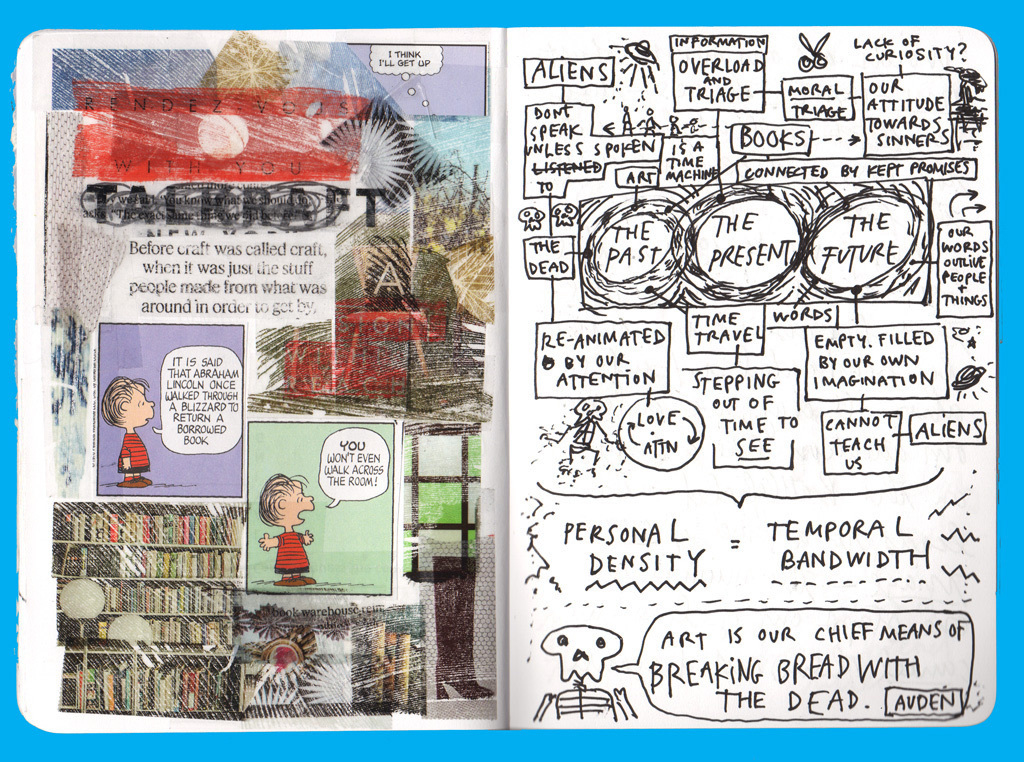
Tomorrow!
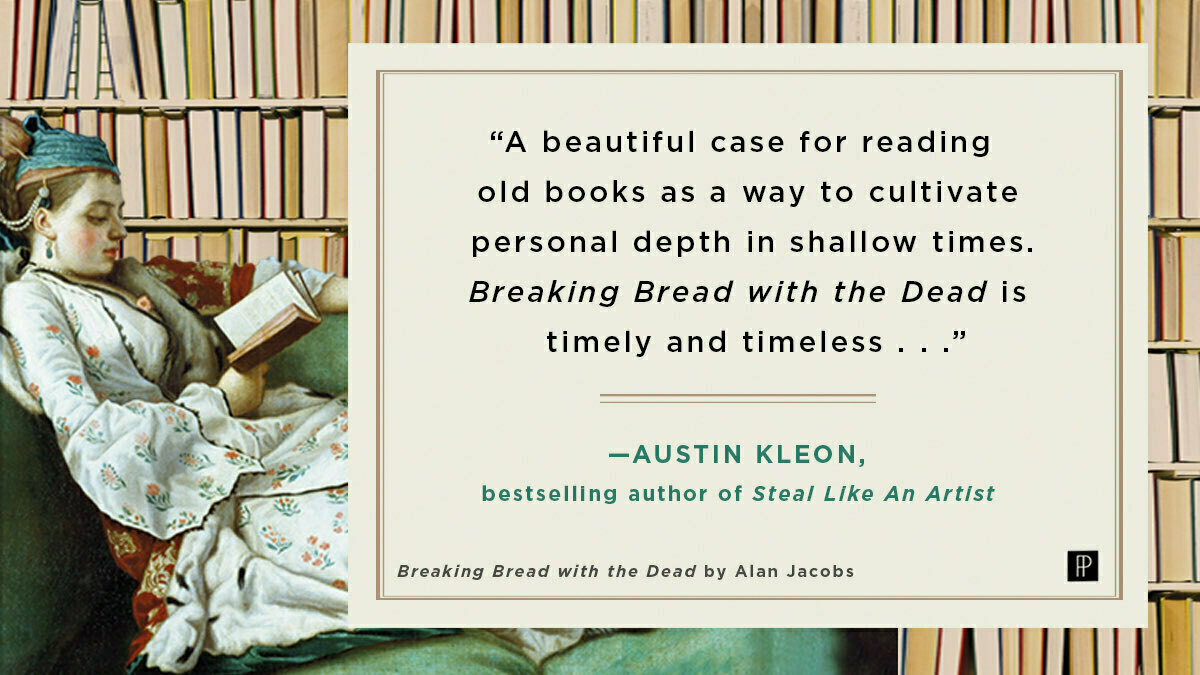
Coming Tuesday!
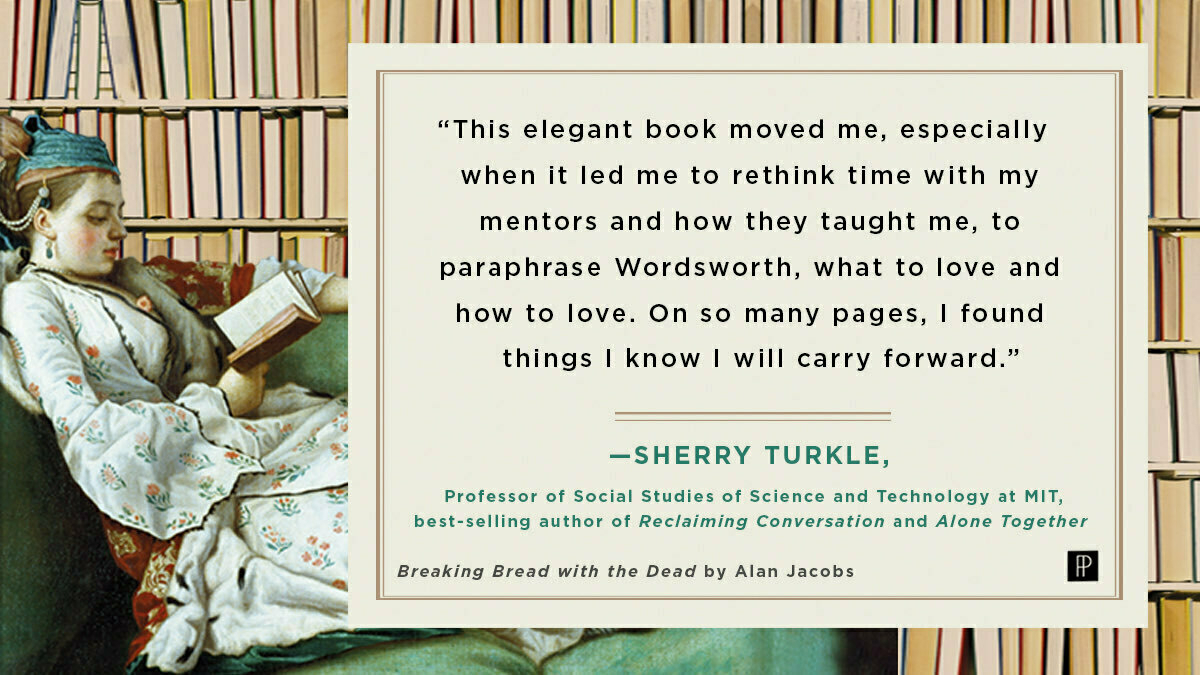
sexual politics
When I canvassed working-class northern neighbourhoods for Labour in the 1980s men told me they voted Labour because their ancestors had always voted Labour.
“And how will your wife vote?” I added.
“She’ll vote as I tell her.”
I remember at another election a sturdy old woman of Somerset, with a somewhat menacing and almost malevolent stare, who informed me on her own doorstep that she was a Liberal and I could not see her husband, because he was still a Tory. She then informed me that she had been twice married before, and both her husbands had been Tories when they married her, but had become Liberals afterwards. She jerked her thumb over her shoulder towards the invisible Conservative within and said, "I'll have him ready by the 'lection." I was not permitted to penetrate further into this cavern of witchcraft, where she manufactured Liberals out of the most unpromising materials; and (it would appear) destroyed them afterwards.
brand partnerships
The testimonies I collected last week made one thing clear: institutions attempting in-person instruction know they’re going to shut down. They’re just desperately trying to make it past the day when they can refuse requests for a semester refund. Those testimonies — and spiking case numbers, from Illinois State University to University of Alabama — speak truth to the lie that in-person instruction of thousands of undergrads is possible without significant community spread.I am so glad that I can be proud and excited about what we do in the Honors College here at Baylor. Otherwise this could be a profoundly discouraging time for me.Brooklyn and Bailey’s COVID diagnosis does the same, but it also highlights something slightly different. “Brand partnerships,” after all, can’t exist without two brands. And that’s what American higher ed has become: a slew of brands, eager to partner with other brands (aka the contemporary student) who will heighten the visibility and desirability of their institution and the lifestyle they could have there. Community colleges have no compunction about going to online instruction. They know exactly what service they provide: an education, full stop. But public and private colleges and universities, who’ve yoked themselves to the idea of college as a lifestyle experience, have no other choice, even when that lifestyle is a COVID accelerant.
fascist architecture
Continuing my recent habit of seeing The Lord of the Rings as the, um, One Analogy to Rule Them All….
I’ve been invoking the Gandalf Option, and I want to return to the passage from The Lord of the Rings that generated that phrase, but to explore a different aspect of it. Here are the words that Gandalf utters to Denethor, Steward of Gondor, when Denethor accuses him of wanting to rule Gondor himself:
“The rule of no realm is mine, neither of Gondor nor any other, great or small. But all worthy things that are in peril as the world now stands, those are my care. And for my part, I shall not wholly fail of my task, though Gondor should perish, if anything passes through this night that can still grow fair or bear fruit and flower again in days to come. For I also am a steward. Did you not know?”What interests me today is Gandalf’s concluding question: “Did you not know?”
What do we know about Gandalf, at least if we have read the appendices to LOTR? We know that he is not a human being but rather one of the Maiar, an order of immortal creatures somewhat less powerful than the Valar who shaped Middle Earth, but still considerably more powerful than human beings. Five of these Maiar were sent by the Valar to Middle-Earth to aid in the struggle against Sauron, and these were known as the Istari, the Wise Ones — or, in the common way of speaking, wizards.
And what do we know about Denethor? Gandalf at one point says of him that “he is not as other men of this time … by some chance the blood of Westernesse runs nearly true in him, as it does in his other son, Faramir, and yet did not in Boromir. He has long sight. He can perceive, if he bends his will thither, much of what is passing in the minds of men, even of those that dwell far off. It is difficult to deceive him, and dangerous to try.” Tolkien writes in one of his many letters filling out the history of Middle-Earth that even Sauron could not “dominate” Denethor through the Palantir, the seeing-stone that Denethor keeps in his chambers, and had to content himself with attempts at suasion and deceit.
So here’s my question, a slight revision of Gandalf’s question: Does Denethor really not understand who Gandalf is? The history of the Istari is not known to the hobbits, for instance, so they wonder what exactly Gandalf is; but surely it is known to this long-sighted and powerful Steward of Gondor. Or rather, was known. For I think the import of Gandalf’s “Did you not know?” is, “What have you done to yourself that you have forgotten what I truly am?”
One of Bruce Cockburn’s best songs is “Fascist Architecture,” which begins with this line: “Fascist architecture of my own design.” It’s a song about building an impregnable fortress around yourself, a structure meant to frighten others and protect you, but which ends up becoming your prison. You made it, you live in it — and you cannot now escape it. Cockburn says only love has the power to break the Cyclopean walls of your mental/emotional/spiritual fascist architecture.
The last conversation between Gandalf and Denethor occurs as the Steward is about to take his own life and, if he can manage it, the life of his surviving son as well. In desperation Gandalf asks Denethor what he wants, what he would have if he were free to choose it, and Denethor replies,
“I would have things as they were in all the days of my life … and in the days of my longfathers before me: to be the Lord of this City in peace, and leave my chair to a son after me, who would be his own master and no wizard’s pupil. But if doom denies this to me, then I will have naught: neither life diminished, nor love halved, nor honour abated.”He built his fascist architecture to protect himself from all change — including, among other things, the kind of change that occurs when a son becomes a man with his own will and judgment; and when that did not work, he chose death (naught) rather than risk the hope of renewal. He sealed himself off every voice that might have challenged the sovereignty of the one voice he continued to entertain: that of Sauron. And eventually he forgot much that he once had known, and came to perceive as an enemy and a threat the figure who could have been his best counselor, and to whom he himself could have been a great ally: Gandalf.
“Did you not know?” Yes: once he did. But not any more.
I’m seeing a lot of people, these days, following Denethor’s example: forgetting what they once knew about their neighbors and fellow citizens, practicing the fear of change and difference, responding to that fear by building fascist architecture of their own design.