iPad update
Herewith an update to this post.
Since I still don’t have a Mac I can easily use without broiling my fingers, I have continued to work on being a better user of the iPad. I’m running the iPad OS 14 beta, and am find it very useful to create Shortcuts for common actions and put them among the other widgets and also directly on the Home screen. For instance, here are my widgets:
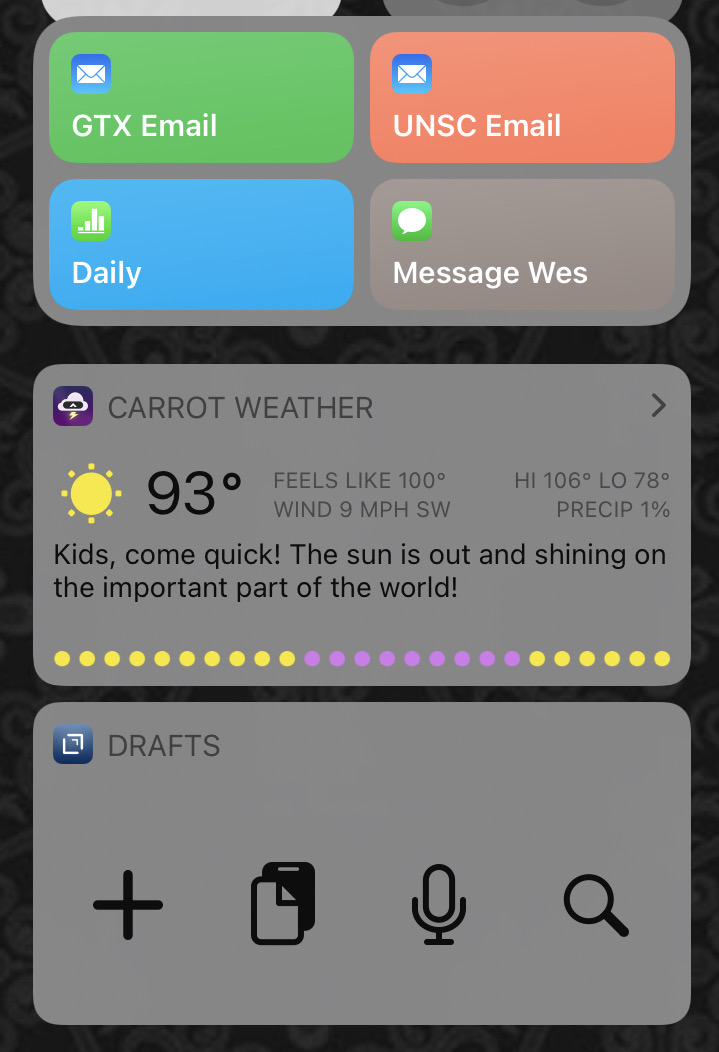
For those top two I created emails addressed to myself with the students in those classes BCC’d. So when I need to email my classes, as often I do, I just tap the relevant widget and an already-addressed compose window appears. Then I type the email, hit send, and I’m back where I was. Very neat.
The Daily widget opens a spreadsheet in Numbers where I keep track of various daily activities (exercise, food, and the like). I don’t need an additional app for that kind of thing because the one-tap access to a particular file fulfills that function.
Yeah, it’s hot in Texas.
The Drafts widget allows instant access to an app that I have come to love and rely on heavily. The library of add-ons for Drafts makes the app almost infinitely customizable and automatable. Most of what I write starts in Drafts, and many things finish there as well, because I can send text messages directly from Drafts and likewise post directly to my micro.blog page. (Posting directly to this blog from Drafts doesn’t seem possible right now but I am working on it.)
Here are some Shortcuts I’ve added to my Home Screen:
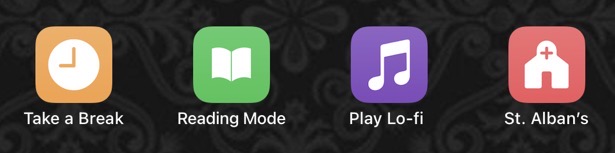
The “Reading Mode” shortcut is one from Apple that I have edited to meet my needs. When I tap it, it (a) puts my iPad in Do Not Disturb mode for a pre-set number of minutes, (b) starts up my preferred background sound in Portal, and (c) opens my Kindle app. The “St. Alban’s” shortcut also puts the iPad in Do Not Disturb mode and opens my parish’s YouTube page. I do this each weekday morning at 7:30 — well, okay, most weekday mornings at 7:30, which is the time when one of our priests, either our rector Aaron Zimmerman or our associate rector Neal McGowan, says Morning Prayer for his socially-distanced flock. Note that Apple allows me to choose an appropriate glyph for my “church app.”
There are still some things I need to do that I can’t do from the iPad, or can do only with great difficulty, but those are growing fewer in number. Certainly I’ve never had a Mac that was as precisely calibrated to my needs as this iPad is, though I suppose I could have had one if I had devoted enough attention to apps like Keyboard Maestro, or to the power of AppleScript. But Drafts and Shortcuts make automation very, very simple. It wouldn’t be easy for me to abandon the system I have developed over the past few months.
so sue me
I have developed a theory about academic life in America today, one that started as a kind of joke but has developed into a genuinely held view. Here’s my theory: A great many university administrators want to get sued, or at least to get seriously threatened with lawsuits.
Many university administrators are under heavy, heavy pressure from politically agitated students and faculty to combat racism by introducing speech codes, implementing racial quotas in hiring, expelling noncompliant students, firing noncompliant faculty members even when they’re tenured, compelling speech in favor of their policies, and essentially creating an enormous panoptic surveillance state to discipline and punish. The whole business is logistically impossible and would be a nightmare to build and an even worse nightmare to maintain.
Fortunately for these administrators, almost all of the proposed remedies for racism are legally forbidden to public institutions, and many of them are forbidden to private ones as well. When organizations like FIRE show up to remind administrators of that, those administrators have a card to play in their tense poker game with protestors. FIRE has actually had a good deal of success in getting colleges and universities to rescind fundamentally illiberal and often illegal policies, and the success has come through meaningful threats to take the universities to court. (FIRE itself has no standing to sue, of course, but its lawyers can represent those who do have such standing.)
My theory is that many administrators love it when FIRE shows up, or when other plausible threats of legal action come across their desk. Then they can go to the protestors and say, I did everything in my power to create Social Justice U, and I would’ve gotten away with it too, if it hadn’t been for that pesky Bill of Rights!

wokeness as Counter-Reformation
My old friend Jody Bottum thinks that the various Woke movements amount to a kind of post-Protestantism. I think this is wholly wrong. Wokeness is aspirationally Roman Catholic in its structure. It already has:
- magisterial teaching that one must hold de fide in order to belong
- the pronouncing of anathemas upon those who dissent from that magisterial teaching
- a distributed Inquisition devoted to unearthing and prosecuting heresy
- an ever-growing Index of Prohibited Books
Wokeness despises the fissiparousness of Protestantism and wants to replace it with Real, Substantial, and Visible Unity under its banner. It’s basically a secularized Counter-Reformation.
a message to my students
I have been starting school each August for the past fifty-six years. A great many things have changed in my life over the decades, but not that. And here we are in August 2020 and school is about to start … but not in a way I have ever experienced before.
If we were beginning an online semester, I would find the experience less familiar but also less disturbing. I learned a lot last semester about teaching online, and if we need to go back to online teaching and learning again, I will be prepared. Fair warning: I don’t do it the way most of your teachers do it. I won’t use Canvas at all, and I think there are better tools than Zoom for the kind of teaching I do — though I would be happy to use Zoom to chat with y’all individually. (Zoomy office hours aren’t a bad thing at all.)
But for now we’re coming to class together, physically. I have argued that, with proper precautions in place, this is a good idea, but I have to admit that as the time draws nearer I doubt my position more. I try not to worry — and when worry creeps in I pray for the peace that surpasses understanding, a practice that I would recommend to you all — but while I have absolutely no health issues that I know of, my wife has some quite serious underlying conditions that would make contracting COVID-19 very, very dangerous for her. So I have to be exceptionally attentive to all risks. I will be spending as little time as possible on campus — basically I will be coming in to teach our classes and then heading back home again — but I promise that you will find me accessible and responsive to you.
A related point: I humbly but fervently ask your cooperation with all of Baylor’s precautionary policies, even when you think they’re extreme. Your compliance or non-compliance could make a big difference in the lives of others, and maybe in your own as well.
And one more thing. I’m hearing from a number of students who are themselves concerned about their health, and who want me to make various adjustments for them. You need to understand that this is not possible. A great many things have changed, but one thing that has not changed is that there are many more of you (the students) than there are of us (your professors). Plus, we teachers are all having to plan and prepare for two very different ways of conducting our classes, and furthermore must be ready to take over for colleagues if they get sick. (All of us have had backup teachers assigned to our classes, and have been assigned as backup teachers for others.) This is definitely the most demanding and stressful period of preparation for a semester that I have ever had.
I mention that because y’all need to understand that if we can’t make the kinds of accommodations and adjustments that you want, that’s not because we are mean and selfish, but rather because we are finite human beings with limited amounts of energy and a fixed number of hours in each day.
So let’s be patient with one another. I will try not to ask more of you than is reasonable in the circumstances, and I hope you will do the same for me. And I would encourage you all to keep in mind, as we begin this strange term, these words from the Apostle Paul’s letter to the Colossians: “Bear with one another and, if anyone has a complaint against another, forgive each other; just as the Lord has forgiven you, so you also must forgive. Above all, clothe yourselves with love, which binds everything together in perfect harmony. And let the peace of Christ rule in your hearts, to which indeed you were called in the one body. And be thankful.”
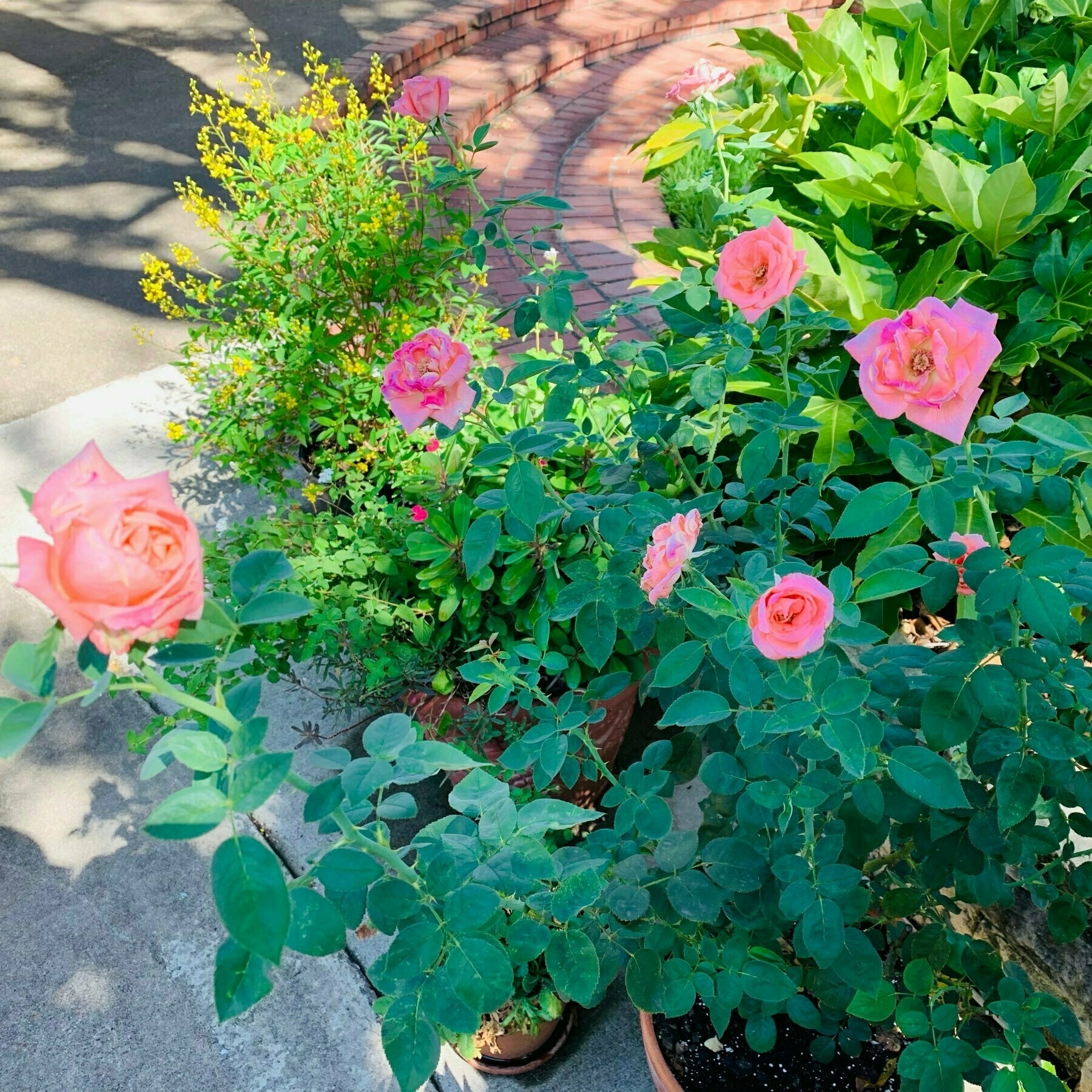
This spindly rose bloomed a bit in the spring, after which it offered no blooms at all for three months. Recently it decided to announce itself again.
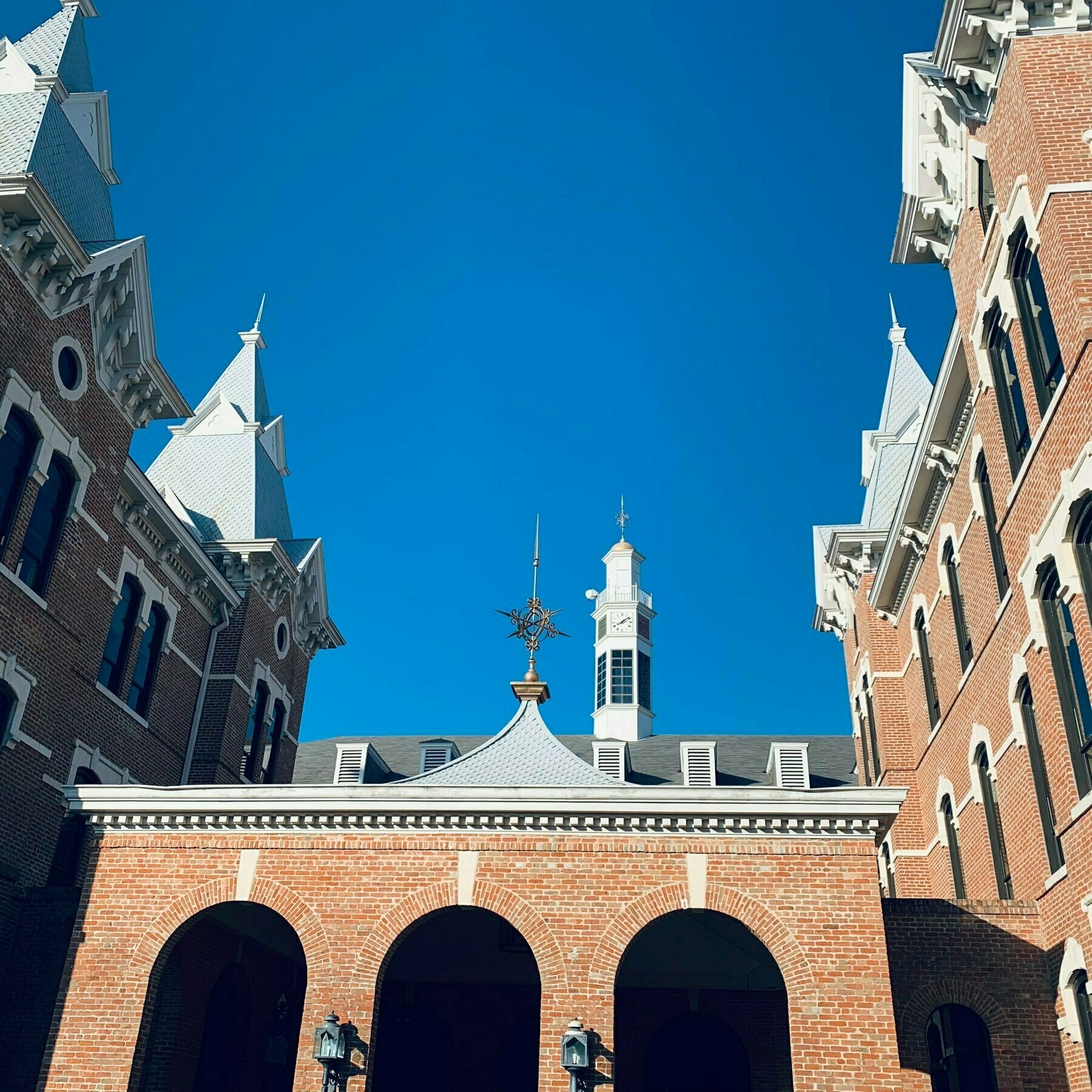
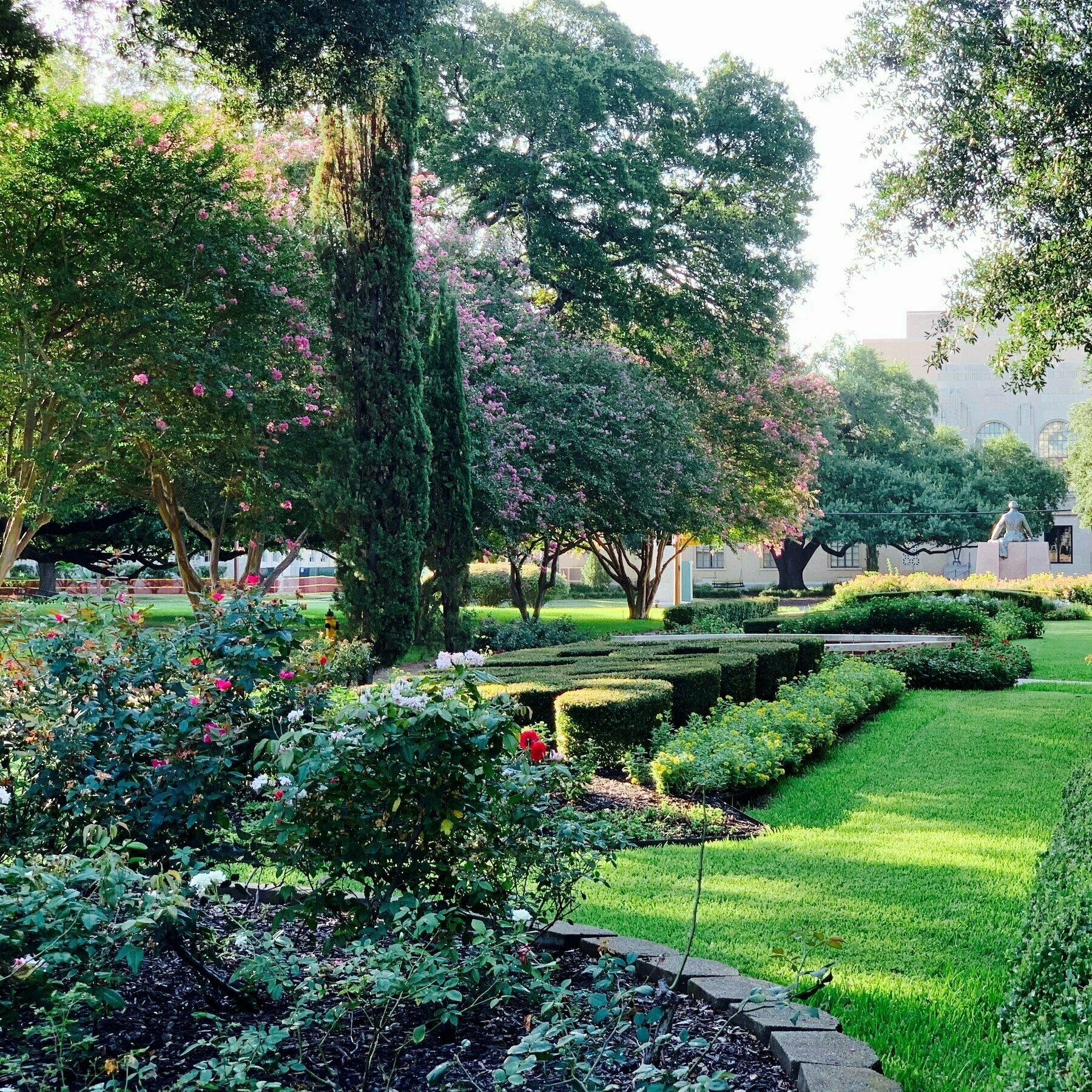
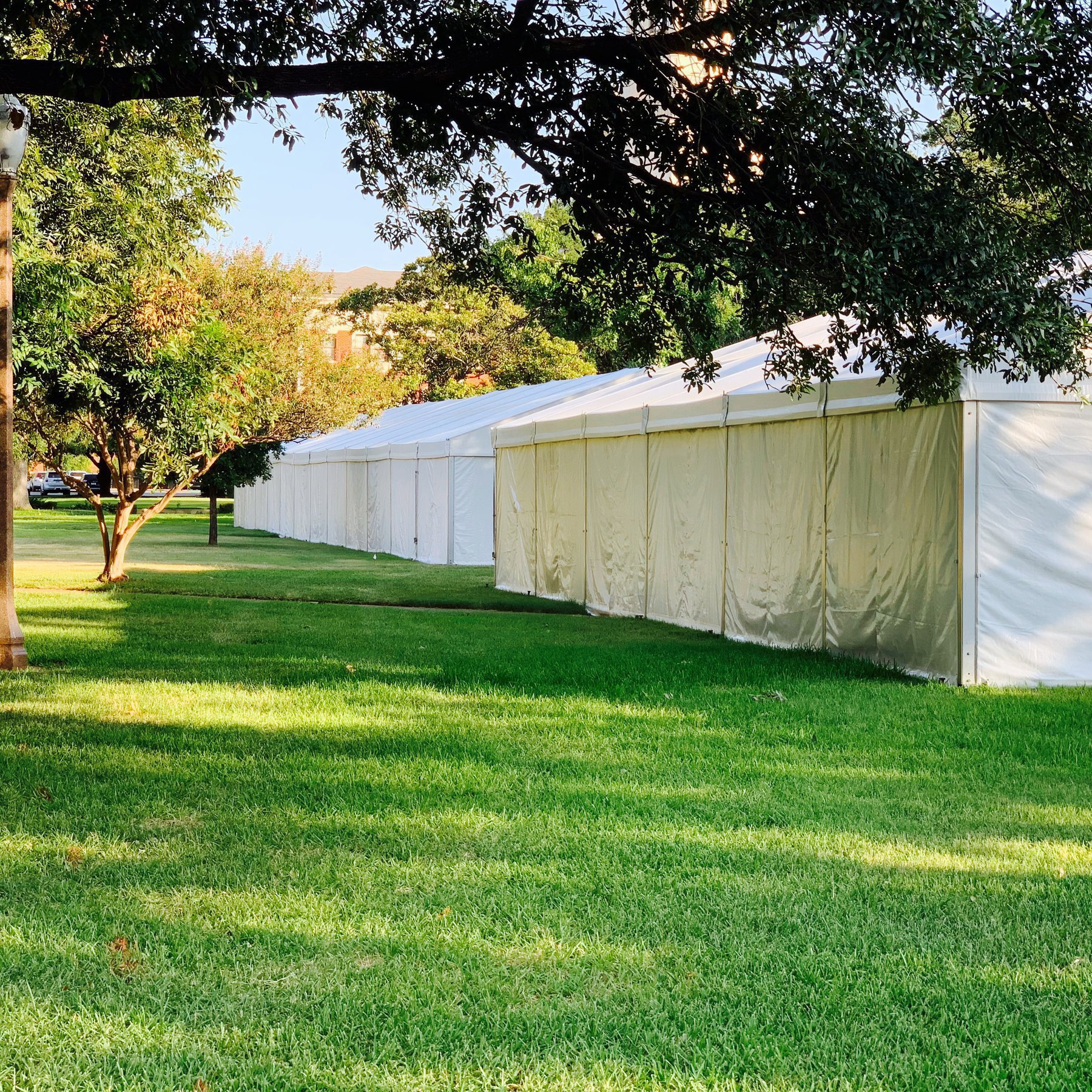
Campus was looking lovely this morning except for the ongoing construction of tent cities.