


Texas City

The official death count for the Texas City explosions was 581, but there’s good reason to believe that many more died. And Stephen Harrigan, in Big Wonderful Thing: A History of Texas, adds this mournful postscript:
Of the 468 bodies deposited at the local funeral home and at a makeshift morgue in the garage of a gas station, 63 could not be identified. It was decided that they would be buried in the same location, with best guesses made about which body parts should go into which coffins. Preliminary arrangements were made for a parcel of land a few miles away in the town of Hitchcock to be used for the burial, but the citizens there wanted to know beforehand whether there were any black people among the dead. When they were told there were, they canceled the deal.
hoisting the flag
I mentioned on my micro.blog that I’ve been reading Stephen Harrigan’s magnificent Big Wonderful Thing: A History of Texas. (The title comes from the painter Georgia O’Keefe, a native of Wisconsin who remembered her first coming to west Texas: “I couldn’t believe Texas was real. When I arrived out there, there wasn’t a blade of green grass or a leaf to be seen, but I was absolutely crazy about it…. For me Texas is the same big wonderful thing that oceans and the highest mountains are.”) As I said over there, the book is full of passages like this one:
The Edwards brothers, and Martin Parmer, another outraged colonist who called himself the Ringtailed Panther, launched a rebellion, wrote yet another declaration of independence, designed yet another flag, and established yet another evanescent republic. This one was called the Republic of Fredonia, a brand-new country that in the Edwardses’ mind included not just the territory of his former colony but the greater part of Texas itself. Though it was at heart an Anglo rebellion, Haden Edwards managed to enlist a smattering of Cherokee allies, under the leadership of Richard Fields, who was a tireless advocate of the tribe despite his run-of-the-mill Anglo American name and his one-eighth measure of Cherokee blood. “The flag of liberty,” Edwards exulted, “now waves in majestic triumph on the heights of Nacogdoches and despotism stands appalled at the sight.”The rhetorical flamboyance of Edwards’s description of what he had achieved — alas, Fredonia lasted just a few months — makes me smile. Maybe you had to have a lot of energy, in those days, to try to make a go of it in Texas, and that energy manifested itself not least in your language.
Such vibrancy could be terse — as in Davy Crockett’s famous farewell to Tennessee politics: “You may all go to hell and I will go to Texas” — or elegant — as when the magnificently named second President of the Republic of Texas, Mirabeau Buonaparte Lamar, offered his hopes for the country: “Our young Republic has been formed by a Spartan spirit — let it progress and ripen into Roman firmness, and Athenian gracefulness and wisdom.” But more often it was, like Haden Edwards’s encomium to Fredonia, unashamedly flashy. Presumably such flash was regularly inspired by the aforementioned “flag of liberty.” One hopeful colonist headed for what was then the northernmost province of New Spain was encouraged by a newspaper of the time with these stirring words: “God speed ye, [and] may no difficulties or obstacles oppose you — until the flag of liberty waves triumphant over the prostituted insignia of time-serving priests and the broken truncheons of substitute kings.”
I am sad that my culture has lost this facility and lost it altogether. Look at some of the statements of the Black Lives Matter organization, for instance:
We are self-reflexive and do the work required to dismantle cisgender privilege and uplift Black trans folk, especially Black trans women who continue to be disproportionately impacted by trans-antagonistic violence.Or:
We foster a queer‐affirming network. When we gather, we do so with the intention of freeing ourselves from the tight grip of heteronormative thinking, or rather, the belief that all in the world are heterosexual (unless s/he or they disclose otherwise).Doesn’t exactly stir one’s loins with revolutionary fervor, does it?
I started to write that this language sounds like it comes from a draft manifesto of the Theory Collective at a midwestern university — but then I reflected that it sounds more like an except from the Policies and Procedures manual that your Human Resources department posted on your institutional intranet. And then I realized that Black revolutionaries, literary theorists, and HR departments all write exactly the same way. What a nightmare. What a desiccated, lifeless, mechanical, exhausted and exhausting nightmare.
Friends, let us recover some of the linguistic flamboyance of our ancestors. Only then may the flag of liberty flutter and snap with proud delight as it is tickled by the powerful winds of Progress!
Also, please call me the Ringtailed Panther.
current status

shaken
I have to admit that I am a bit shaken by Rod Dreher’s post yesterday — and more by the vehemence with which, today, he is doubling and tripling down on even the worst of its claims.
If Rod had simply wanted to explain why he thinks the new bodycam footage will serve to exculpate the officers charged in the death of George Floyd, I would have no problem with that. But he decided to yoke that argument to a ranting attack on George Floyd, a determination to blame Floyd for what happened to him, even when offering sequentially two incompatible views of why he was at fault for his own death. (First it was because he resisted arrest; then, later, it didn’t matter whether he resisted arrest or not, he was about to die anyway. So whether it’s by resisting arrest or by taking drugs, “George Floyd is dead today almost entirely because of George Floyd.”)
In responding to friends — Leah Libresco and me — who challenged him on his attitude, Rod wildly misrepresented half of what we said and wholly ignored the other half. The more feverish and rage-filled of his commentators, though, he seems to trust wholly.
Well, that’s Rod’s call. Nothing I can do to change it.
I still love Rod, and will not give up on him, because I just don’t give up on people — God, after all, did not give up on me. But I’m not reading his blog any more, and I can no longer defend him — which Lord knows I’ve spent enough hours doing over the post few years.
Finally: On principle I don’t sign manifestos, but if Matthew Loftus turned this into a manifesto, I would sign it.
putting this on the record
I think this post by my friend Rod Dreher is horrifying. I think Rod ought to be ashamed of himself for writing it, and should apologize.
Rod says that recently leaked bodycam footage of George Floyd being uncooperative with police and acting in a “bizarre” fashion "dramatically changes what we thought we knew about this story.” [UPDATE: Rod, thank God, has changed the headline that was the most offensive part of the post, so I have cut some of the things I first wrote.] George Floyd behaved strangely and was uncooperative with police. He was not violent and did not threaten anyone with violence. Derek Chauvin killed him by kneeling on his neck for eight minutes. To say that George Floyd is in any way responsible for his own death is a shockingly offensive thing to write and I struggle to process the fact that Rod wrote it. But Rod went further than that: he wrote, “George Floyd is dead today almost entirely because of George Floyd.” A thousand times no. George Floyd is dead today entirely — not almost entirely, entirely — because Derek Chauvin knelt on his neck for eight minutes. You can call that murder — I do — or you can call it something else, but that is how and why George Floyd died.
The newly released footage might — might — embarrass some of the people who have tried to paint Floyd as some kind of saint, papering over his history. But beyond I don’t see how the footage changes anything. I still think exactly what I thought before I saw that footage: Non-saints, indeed even habitual criminals, don’t deserve what was done to George Floyd. Behaving bizarrely, "shrieking and carrying on like a lunatic," is not a capital offense. Some of us might even say that a person who is clearly not in his right senses deserves compassion. Instead George Floyd got death. Eight minutes of patient, calm, unrelenting asphyxiation.*
UPDATE: Rod has added the following to his post:
Floyd is dead because Derek Chauvin knelt on his neck for eight minutes. That is a fact. Chauvin should have been charged with something — abuse of force? — but I don’t see how it constitutes murder. I am willing to be corrected, especially by those who understand the law.
What shocked me about this video was how wildly uncooperative Floyd was prior to the neck restraint. I had believed prior to this that the police had thrown him to the ground and subdued him with the neck restraint. I did not realize all that preceded the neck restraint. I think it is a good thing that neck restraints are being abandoned by police. If Minneapolis had not had that policy, Floyd would probably be alive today.
And if Floyd had not resisted arrest for eight minutes, he would be alive today. He shouldn’t be dead, period, but his death was not the simple case I thought it was prior to seeing this video. Context matters.
This helps, but it would be a lot better if it stopped after the first sentence.
I don’t know whether the new footage will change the thinking of a jury, but it doesn’t change my thinking one iota. If George Floyd had tried to attack Derek Chauvin, then maybe; but what I see is a pathetic, desperate, sick, terrified man. The cops could have waited him out. They chose to kill him instead.
And as for Rod’s claim that "if Floyd had not resisted arrest for eight minutes, he would be alive today,” that is true in exactly the same way, and to exactly the same degree, that “If she hadn’t been wearing that short skirt she wouldn’t have been raped” is true.
* Apologies for phrasing it this way. George Floyd did not die of asphyxiation but rather as a result of "cardiopulmonary arrest complicating law enforcement subdual, restraint, and neck compression." Rod says this means "his heart and lungs stopped working," apparently believing that the business about "law enforcement subdual, restraint, and neck compression" was just tacked on the end of the medical examiner's sentence for no reason.
So whereas earlier Rod said that George Floyd died because he resisted arrest, now he agrees with some of his readers that George Floyd -- the same George Floyd we see in that bodycam video talking and moving freely -- was just minutes from death anyway, and therefore it is complete accident that he happened to do so with a police officer's knee on his neck for eight minutes. Funny old thing, death.
So the details of the story keep changing, but the main thrust doesn’t change -- Rod puts it in bold type so we don’t miss it: “George Floyd is dead today almost entirely because of George Floyd.” Nothing else to see here, folks, move right along. And certainly not one drop of compassion for a man who is dead, and friends and family who are mourning him.
I have so much on my plate that I shouldn't even be writing this, so let me end with one more comment. In an update to his post Rod quotes an email from Leah Libresco, writes maybe a thousand words in reply to it, but totally ignores her key point. I'm going to post Leah's thoughts as my final contribution here, because I think Rod needs to hear them -- and so do I.
When you hold up examples primarily of the excesses of the social justice movement, but not the evils it is responding to, I think you let down your readers. We’re called as Christians to bind up wounds. If you don’t like how that’s being done, point your readers at people who you admire who are doing this well, so they can be part of good work.
I was glad to see that your new book is split between pointing at the problem and giving examples of solutions. I think your blog and your readers would be well served by rebalancing your writing to point more toward what you admire than what you abhor. And remember, people act for the sake of a perceived good. Many of the people you disagree with are grappling with real evils, and you will do more to tell the whole truth when you acknowledge that they are motivated by a desire for justice, not just power.

Taken on the plane back to Alabama. She was with me then, and with me through the difficult years to come; and she’s still with me now, forty years later. I thank God every day for this woman.
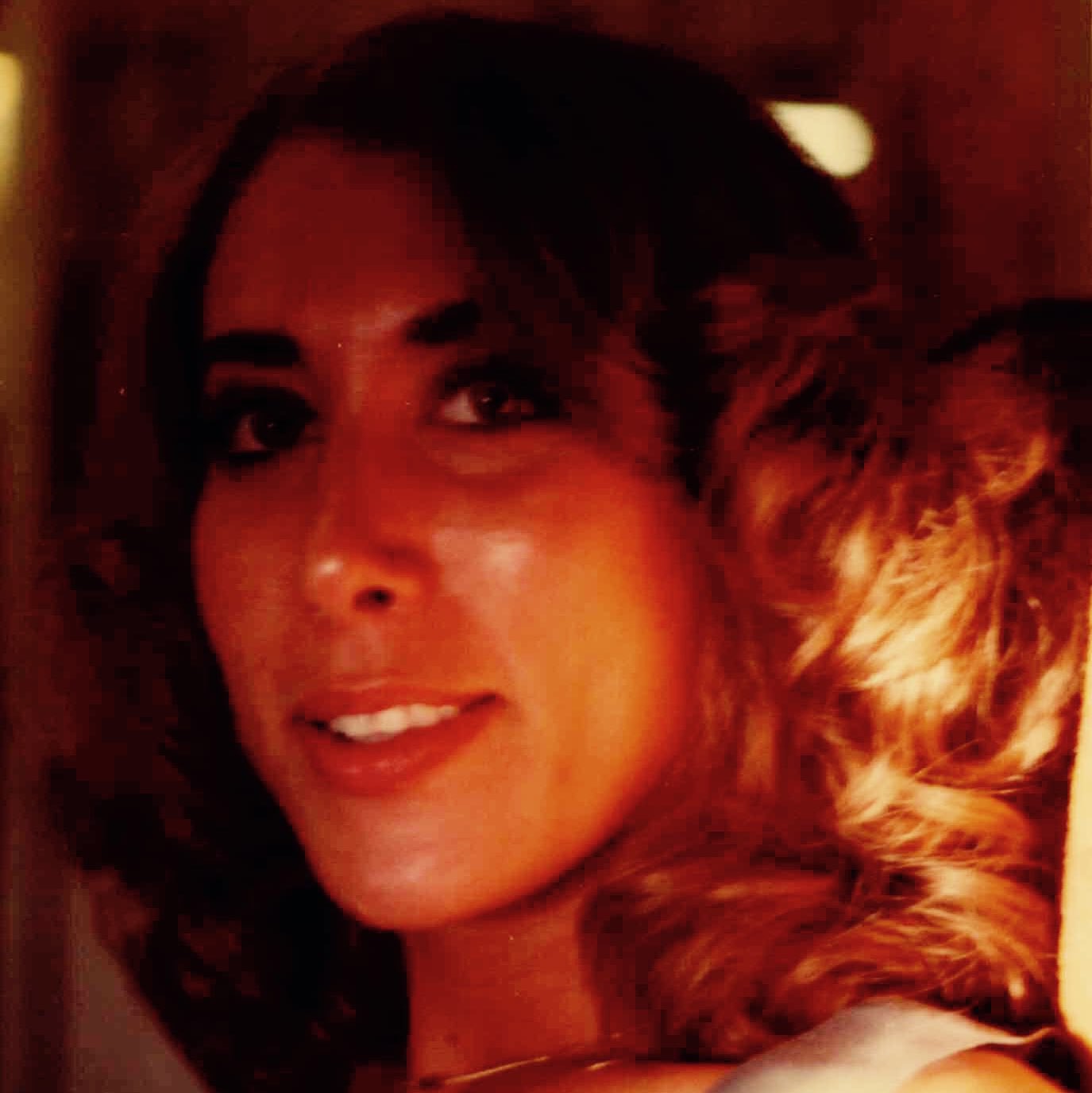
Honeymoon over; in the airport and about to return to Alabama. If I look a little worried, I probably was. As soon as we got back we had to start packing to move to Charlottesville, Virginia, where I was beginning graduate school in just a couple of weeks. I didn’t feel prepared — and indeed I wasn’t.