
excerpt from my Sent folder: poor
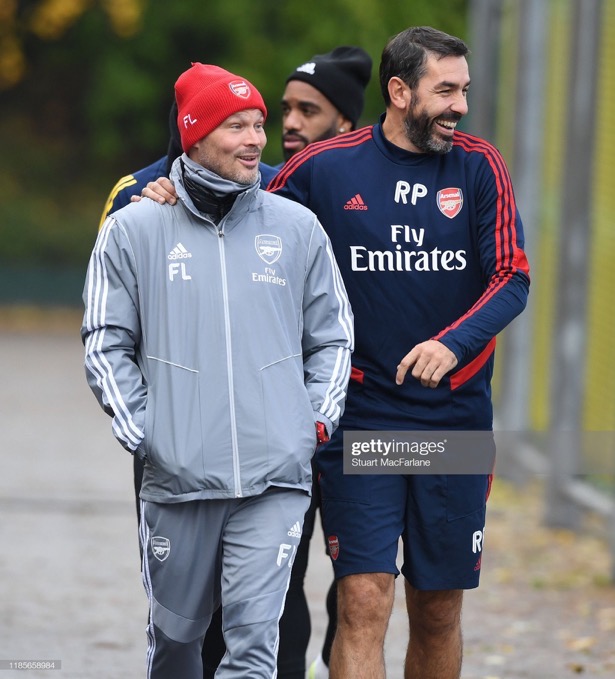
It’s time. International break coming up.
And if it doesn’t work out, bring Rafa Benitez back from China. He’d be excellent for this poor beleaguered confused rudderless spiritless team.
Fish on freedom
Stanley Fish’s new book The First consists largely of repackagings of ideas Fish has already developed: he’s covered free speech in There’s No Such Thing As Free Speech and It’s a Good Thing Too, academic freedom and academic culture in Save the World On Your Own Time and in many essays, religious freedom in a handful of essays, including a brilliant one called “Vicki Frost Objects” that’s far better than anything here. But Fish writes as sharply as ever, and The First could be a nice introduction to his writings on the issues emanating from the First Amendment.
But I want to question something that he writes about academic freedom. His argument here centers on a single crucial distinction, which he develops in response to the Chicago Statement on academic freedom:
My challenge to that popular view (the Chicago statement has been endorsed by a number of other universities) depends on a distinction between freedom of speech and freedom of inquiry. Freedom of speech is a democratic value. It says that in a democracy government should neither anoint nor stigmatize particular forms of speech but act as an honest broker providing a framework and a forum for the competition of ideas and policies. In this vision, every voice has a right to be heard, at least theoretically. (In fact, differences in resources will almost always translate into differences in the size of the audience one can reach.) In the academy, on the other hand, free inquiry, not free speech, is the reigning ethic, and academic inquiry is engaged in only by those who have been certified as competent; not every voice gets to be heard. The right to speak in the scholarly conversation does not come with membership; it is granted only to those who have survived a series of vettings and are left standing after countless others have been sent out of the room.
I think Fish knows that this might not be comforting to people worried about professors and administrators who exclude the ideas they don’t like, so he clarifies:
Academic inquiry, then, is not free in the First Amendment sense; it is free only in a very special sense: the path of inquiry is open and should not be blocked either by putting the stamp of approval on particular points of view in advance or by dismissing other points of view before they are heard and evaluated.
But why not? Why shouldn’t those who ”are left standing after countless others have been sent out of the room,” those ”who have been certified as competent,” decide that some points of view actually may (perhaps must) be dismissed before being heard and evaluated?
Fish argues that a scholar like Charles Murray should be treated differently than a provocateur like Ann Coulter, should be given a hearing in venues where she should not, but what if the certified-competent decline that distinction and treat Murray and Coulter identically? I don’t think Fish can offer them any reasons why they shouldn’t. His longstanding belief that academic life is to be regulated only internally, by people engaged professionally in the practices of that life, provides no means by which academic life can be prevented from growing narrower and narrower and narrower.
I’ve been reading Fish pretty carefully for a long time now, and I think he would reply that no such means could be provided — that you cannot write rules and guidelines in such a way that people in power will be unable to abuse them, twist the rules to their purposes, as long as their power is uncontested. (Note that when power is to some degree distributed, rules can be effective: thus the ability of the American judiciary to constrain some of Donald Trump’s impulses.) If this is indeed his view, he may well be correct. For instance, conservative and religious voices — N.B.: those are not the same thing — may alike be so tenuously present in academia that they can do nothing to soften the tyranny of the certified-competent. Certain ”paths of inquiry” are closed and on Fish’s account of the academy must remain closed, despite his lip service to the phrase.
If so, do we simply accept that state of affairs? Or do we look for broad social forces or institutions to which academic institutions might legitimately be held accountable?
Tim Cook's master plan
One of the fascinating subplots of Kim Stanley Robinson’s great Mars trilogy — though it’s not so much a subplot as an evolving context — relates to the rise of what KSR calls the transnationals: vast international corporations that possess wealth and power exceeding that of all but a few countries. They’ve even taken over the running of many former nations. I’m thinking of the transnationals right now as I contemplate the ongoing crises in California, and the response of certain corporations to them.
Here’s the title of an Apple news release from earlier this week: ”Apple commits $2.5 billion to combat housing crisis in California.” Wow, $2.5 billion! But let’s put this in context: How much cash on hand does Apple have? Not their investments, just the cash on hand, what they’ve tossed into that jar on the bedside table. That would be two hundred and six billion bucks. So $2.5 billion is just a drop in the bucket… or would be it better to think of it as a down payment?
Consider this scenario: At some point in the next couple of years, Tim Cook meets behind closed doors with Governor Gavin Newsom and and a handful of other political leaders. Here’s what he says:
“Friends, you know as well as I that this state is in a mess. The electricity in this part of the state is provided by a company whose idea of dealing with wildfires is to take away people’s power so the old and uninsulated lines won’t shoot out sparks. Many Californians have come to think it perfectly normal to step over homeless people — sometimes sick or even unconscious homeless people — on the way to work each day. Housing costs have forced thousands and thousands of people who work in our cities to live dozens of miles away, increasing the already infamous congestion on our roads.
“And you all have played a role in this. You have constrained the budgets of PG&E because you don’t dare raise people’s taxes. You won’t support affordable-housing initiatives because you fear that the NIMBYs will vote you out of office — and you’re exactly right to fear that. You know what needs to be done to fix things; you also know that the fixes are politically impossible. You have kicked the can down the road again and again and again, but now the road has dead-ended.
“We’re here to help. I’ve been authorized to speak on behalf of some of California’s other major tech companies, including Google, Oracle, and Intel. We’re all famous for getting things done, for innovating our way out of some very tight situations. We have massive resources of data, computing power, engineering expertise, and, above all, creativity. What we don’t have is a free hand to address the problems we see.
“And that’s where you come in. We’re willing to work with the California State Legislature and the Governor’s office to come up with, and then promote, a plan that would turn over much of the responsibility for fixing these problems to us. We will of course need legal authorization that goes beyond what private companies have been allowed to do in the past — authorization of considerable control over the energy grid, for instance, and to, let’s say, cooperate with local police forces. But we’re not going to ask taxpayers to pay any more than they’re already paying: the rest will come out of our pockets. We’re trusted in this state — if I may be honest, trusted more than you are. Your willingness to take advantage of our public-spirited competence will surely reflect well on you. And if anyone complains about the decisions we make, well, we’ll take the heat for that. You have us to insulate you from any anger. I won’t pretend that we’ll get no benefit from this; we will. But what we’ll chiefly get is a better environment in which to live and work — and all Californians will benefit from that.
“It’ll require some careful crafting of laws, and a strong PR campaign. But we’ve been working on all that, and are eager to share our ideas with you. What do you say?”
And thus the reign of the transnationals will begin.
Just remember, I’m busting my hump reading and writing books so y’all can Netflix & chill. I’m not saying that anyone needs to thank me but I’m also not not saying it.

two points about A Hidden Life
- Terrence Malick’s A Hidden Life is a great, great masterpiece, and you must see it. It is his most linear film since The New World — also a masterpiece, and one of the most underrated films ever made, IMO, for reasons explained by John Patterson here — but in the fourteen years since The New World came out Malick has deepened both his vision and his craft. I will have more to say about it, but only after more people have seen it.
- When you see the film — I admit no doubt on this point — and if you sit through the credits, you will see a card titled “Special Thanks” which contains a list of names. One of them is mine. 😉
the call
“I call bullshit.” I used to see that a lot on social media, back when I was on social media. But what does it mean? It means, “I disagree.” That’s all. The statement has no further content. But “I disagree” sounds bland and flat while “I call bullshit” — well, that sounds badass. You must have some powerful Refutation Mojo if you can call bullshit, just like that, right there on the internet in front of everybody.
When we were kids, on some excursion in a parental automobile, and were leaving the mall or the grocery store or the McDonald’s, someone would shout “Shotgun!” And then one of the bigger kids who hadn’t said anything would calmly climb into the shotgun seat, after which a little voice from the middle of the back seat would whine, “But I called it!” — and would simply be ignored. Calling bullshit is like that.

it's official ...
… MacOS is now more stable than iOS/iPadOS. Which I wouldn’t have believed even a couple of months ago. Marco Arment has gone on an appropriate rant about this, concluding, “Your software quality is broken, Apple. Deeply, systemically broken. Get your shit together.”
I’ve had plenty of problems since iOS 13 arrived, but here’s my most recent story: I was using Instapaper and Fantastical in split screen view on my iPad, and then one of them (I think it was Instapaper) crashed, which brought down the other. Tapped on one, both showed up for an instant, then both crashed. Tapped on the other, same result. Used swipe-up-to-quit both apps, tried again, same result. Re-booted the iPad, same result — the two apps are apparently joined in a suicide pact. So if I want to use my iPad I have to do so without using either of those two apps, both of which are longtime daily fixtures to me. I guess I have to wait for an update to one of the apps or for the next point release of iPadOS.
So I’m on my MacBook, whose keyboard I’m not crazy about — though at least it actually registers the keys I type, and does so only once per keystroke, which sets it apart from the Macs of many users.
These persistent Apple problems have been enough to drive longtime Mac user and developer David Heinemeier Hansson to Windows. But that didn’t go so well.