Been around the block with this one a few times.
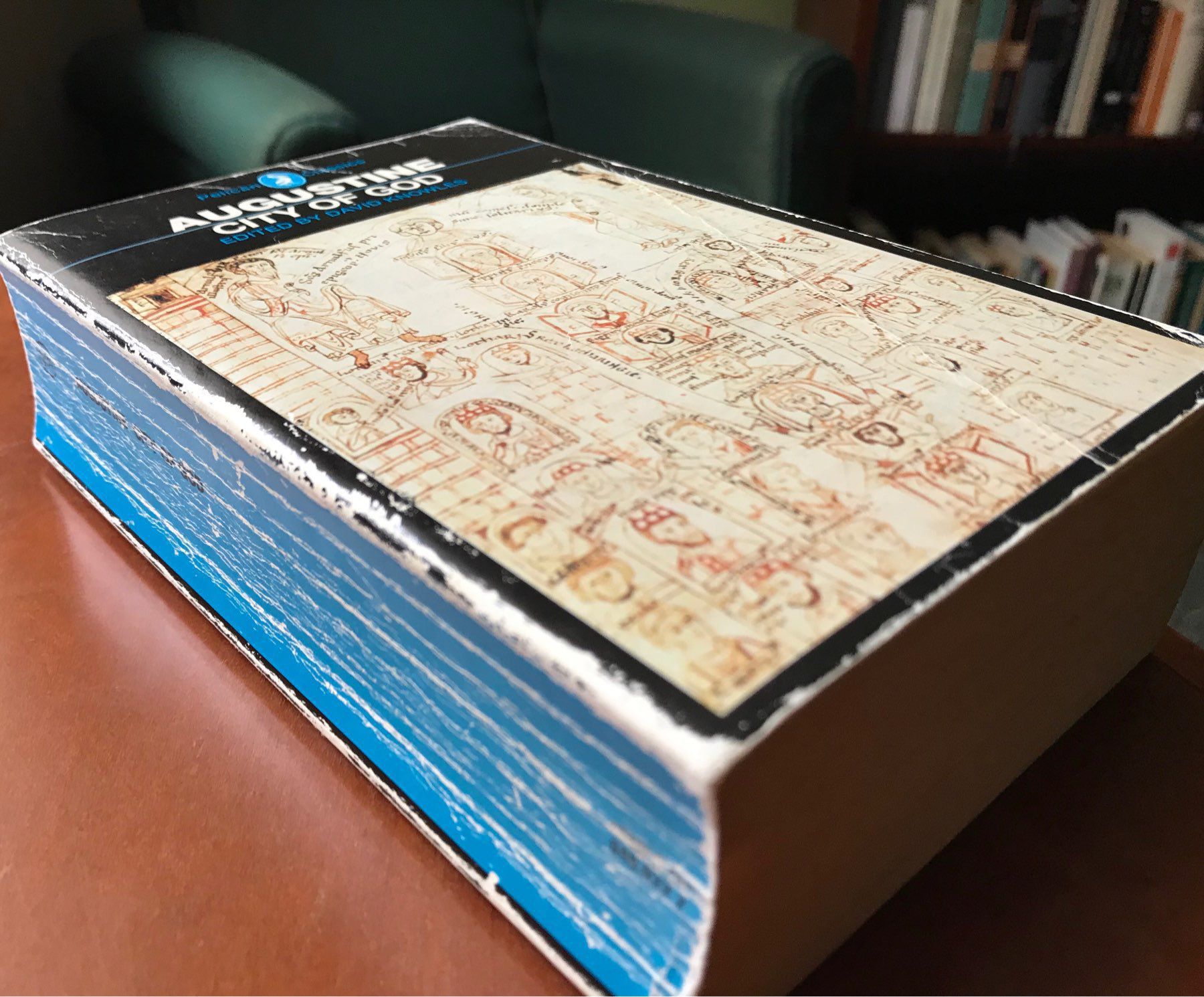
the beginning of the end of the republic of podcasts
For the last couple of years I have been hearing — from Marco Arment quite regularly — that podcasts are great because they’re the last refuge of the truly independent web. Looks like that’s changing. I can’t imagine that Spotify would make this investment without requiring you to sign up for a Spotify account in order to listen to Gimlet Media podcasts. And I’m sure other big media companies will follow suit, buying up popular podcasts and podcast networks. (What’s your price, Radiotopia?) And so back into the silos, and behind the paywalls, we go. There’s nothing about podcasts that makes them intrinsically independent.
Nietzsche and Montaigne
Today I had the privilege of participating in a panel discussion of my friend Rob Miner’s new book Nietzsche and Montaigne. This is the outline of my talk.
On Health
Introductory thoughts
- First of all, what a superb book this is!
- My learning is not comparable to Rob’s, so all you’ll get from me is a kind of riff on a theme that, when I was reading Rob’s book, struck me as especially interesting, and that theme is health.
- The question of what makes for a healthy human life — and I want to stress the importance of this idea of health as opposed to something like Aristotelian eudaimonia, — is an essential one for Montaigne, and Nietzsche picks up on that, at first endorsing but ultimately revising Montaigne’s understanding.
- I’m going to unpack that claim very briefly and suggestively here, and claim (there’s no time today to argue) that insofar as the two thinkers differ, Montaigne has the better of it.
Health in Montaigne
- As Rob writes (p.45):
-
- “Montaigne understands philosophy as a power or virtue that dwells in the soul, making it and the body healthy. It aims to have a certain effect on its practitioner. What is this effect? Philosophy, he writes, ‘should make tranquility and gladness shine out from within, should form in its own mold the outward demeanor, and consequently arm it with graceful pride, an active and joyous bearing, and a contented and good-natured countenance.’ [The anticipation of Nietzsche’s designation of true philosophy as a “gay science” should be obvious. Rob now comments,] Here two aspects of the human person are distinguished: an inward and an outward. Philosophy brings these aspects togerther, so that the outward expresses the inward, resulting in the rare condition that Montaigne calls ‘healthy.’ Health is the condition that philosophy brings about; it is not the default condition."
-
- Rob then quotes a passage from the essay “Of Presumption”: “The body has a great part in our being, it holds a high rank in it; so its structure and composition are well worth consideration."
- Now, I would like to suggest — and I make this suggest under correction by nobler minds — that in his later essays Montaigne shifts this emphasis somewhat. Consider this famous passage from “Of Repentance”:
-
- “Meanwhile I loathe that consequential [or ‘accidental’] repenting which old age brings. That Ancient who said that he was obliged to the passing years for freeing him from sensual pleasures held quite a different opinion from mine: I could never be grateful to infirmity for any good it might do me…. Our appetites are few when we are old: and once they are over we are seized by a profound disgust. I can see nothing of conscience in that: chagrin and feebleness imprint on us a lax and snotty virtue. We must not allow ourselves to be so borne away by natural degeneration that it bastardizes our judgement…. My temptations are so crippled and enfeebled that they are not worth opposing. I can conjure them away by merely stretching out my hands. Confront my reason with my former longings and I fear that that it will show less power of resistance than once it did. I cannot see that, of itself, it judges in any way differently now than it did before, nor that it is freshly enlightened. So if it has recovered it is a botched recovery. A wretched sort of cure, to owe one’s health to sickliness.”
-
- He then argues for a kind of commensurate exchange of virtue between the mind and the body: “Let the mind awaken and quicken the heaviness of the body: let the body arrest the lightness of the mind and fix it fast.”
-
- And at this point Montaigne does something rather unusual, for him — he quotes a Christian authority, St. Augustine, from the City of God: “He who eulogizes the nature of the soul as the sovereign good and who indicts the nature of the flesh as an evil desires the soul with a fleshly desire and flees from the flesh in a fleshly way, since his thought is based on human vanity not on divine truth."
- So I think Montaigne may have reached a position near the end of his life where he might not believe, as he once did, that “philosophy [is] a power or virtue that dwells in the soul, making it and the body healthy.” He might say rather that whether one is capable of philosophy depends as much on the “power or virtue” of the body as to the excellence of the mind — and that, by ignoring this fact, we come to think that we have become true philosophers, fully enacting our philosophical commitments, when in fact we have only suffered debilitation of the body. We interpret bodily disease as mental strength.
- Montaigne does not seem to think that we can do anything about this: we cannot make the body strong again when through old age or some other affliction it begins to fail. But we can at least know our own true condition.
Health in Nietzsche
- In a crucial passage near the end of his book, Rob returns to the matter of health — not for the first time, mind you — and explores the notion of “great health” that Nietzsche introduces late in The Gay Science (#382). There are many things that one could say about this exceptional section of Nietzsche’s great transitional work.
-
- Nietzsche introduces the concept thus: “We who are new, nameless, hard to understand; we premature births of an as yet unproved future - for a new end, we also need a new means, namely, a new health that is stronger, craftier, tougher, bolder, and more cheerful than any previous health.” (Note the persistent emphasis, which wwe see also in Montaigne, on cheerfulness).
-
- And at the end of the section he suggests that only great health can produce a new great seriousness: “the ideal of a human, superhuman well-being and benevolence that will often enough appear inhuman for example, when it places itself next to all earthly seriousness heretofore, all forms of solemnity in gesture, word, tone, look, morality, and task as if it were their most incarnate and involuntary parody - and in spite of all this, it is perhaps only with it that the great seriousness really emerges; that the real question mark is posed for the first time; that the destiny of the soul changes; the hand of the clock moves forward; the tragedy begins.” (Isn’t that last clause rather startling?)
-
- But I want to focus on something else in the section, something almost buried and yet vital: “Anyone who wants to know from the adventures of his own experience how it feels to be the discoverer or conqueror of an ideal, or to be an artist, a saint, a lawmaker, a sage, a pious man, a soothsayer, an old-style divine loner - any such person needs one thing above all - the great health, a health that one doesn’t only have, but also acquires continually and must acquire because one gives it up again and again, and must give it up!”
- Why must one give it up, and what does that mean?
-
- Here we need to turn to Nietzsche’s last book, Ecco Homo, where he quotes the entirety of the section of The Gay Science I have just explored, and connects it to Zarathustra as an ideal type: he says that “great health” is the physiological precondition of Zarathustra, and therefore of what Nietzsche wants to be.
-
- And yet, still in Ecce Homo, immediately after citing this passage Nietzsche writes, "Afterwards” — that is, after writing the first part of Thus Spoke Zarathustra, or as Nietzsche would say after “finding” it — “I lay ill for a few weeks in Genoa. This was followed by a melancholy spring in Rome, when I put up with life — it was not easy.” This does not sound like someone in great health!
-
- But his point here is that the achievement of something great inevitably depletes one’s energies, is costly to one’s health. When walking in the mountains to “find” his book, he says, “my muscular agility has always been at its greatest when my creative energy is flowing most abundantly. The body is inspired: let’s leave the ‘soul’ out of it… I could often be seen dancing; in those days I could be walking around on mountains for seven or eight hours without a trace of tiredness. I slept well and laughed a lot — I was the epitome of sprightliness and patience.”
-
- Then came what he calls the crisis: “everything great, be it a work or a deed, once it has been accomplished, immediately turns against whoever did it. By virtue of having done it, he is now weak — he can no longer endure his deed, can no longer face up to it. To have something behind you that you should never have wanted, something that constitutes a nodal point in the destiny of humanity — and from then on to have it on top of you!… It almost crushes you.”
-
- A little later Nietzsche says of this kind of experience: “This is how a god suffers.” But another way to put the point is: Because I suffer so profoundly, I must be a god.
Concluding thoughts
- So let me now try to draw these threads together.
-
- For Montaigne, it is surely true that health is mens sana in corpore sano, but because we are mortal, because we age and decline, the healthy mind must also be one that accommodates itself to the body’s inevitable changes. This means that a healthy mind in a less-than-healthy body must seek a kind of self-knowledge that is hard for prideful human beings, who always want to give themselves credit they don’t deserve. Montaigne believed that one should always, as the Stoics taught, strive to live “according to nature,” and since it is our nature to grow old and feeble before we die, that Stoic mandate requires a certain ironic acceptance of declining powers. This is the kind of health appropriate to a changeable mortal.
-
- For Nietzsche, by contrast, this might be all well and good for the “higher cattle” — but not for one who aspires to the great seriousness. For one of the Zarathustra type, life is an endless dialectic of boundless, ecstatic energy and exhausted disease. Indeed, this is, I think what great health is: not the energy alone, but the energy and the exhaustion in inevitable exchange.
-
- And this is why it is impossible to conceive of Nietzsche as an old man.
the deviant’s tale
From this article by Kathleen McAuliffe:
Using a far cruder tool for measuring sensitivity to disgust — basically a standardized questionnaire that asks subjects how they would feel about, say, touching a toilet seat in a public restroom or seeing maggots crawling on a piece of meat — numerous studies have found that high levels of sensitivity to disgust tend to go hand in hand with a “conservative ethos.” That ethos is defined by characteristics such as traditionalism, religiosity, support for authority and hierarchy, sexual conservatism, and distrust of outsiders.Now, imagine that the article had said this:
Using a far cruder tool for measuring sensitivity to disgust — basically a standardized questionnaire that asks subjects how they would feel about, say, touching a toilet seat in a public restroom or seeing maggots crawling on a piece of meat — numerous studies have found that low levels of sensitivity to disgust tend to go hand in hand with a “liberal ethos.” That ethos is defined by characteristics such as a dislike of tradition, low religiosity, a lack of support for authority and hierarchy, sexual exploration, and trust of outsiders.Can’t really imagine it being written that way, can you?
In social science and popular writing about social science, liberal views are always the norm and conservative views are always deviations from that norm, deviations in need of explanation. Liberal views don’t need to be explained — after all, they’re so obviously correct.
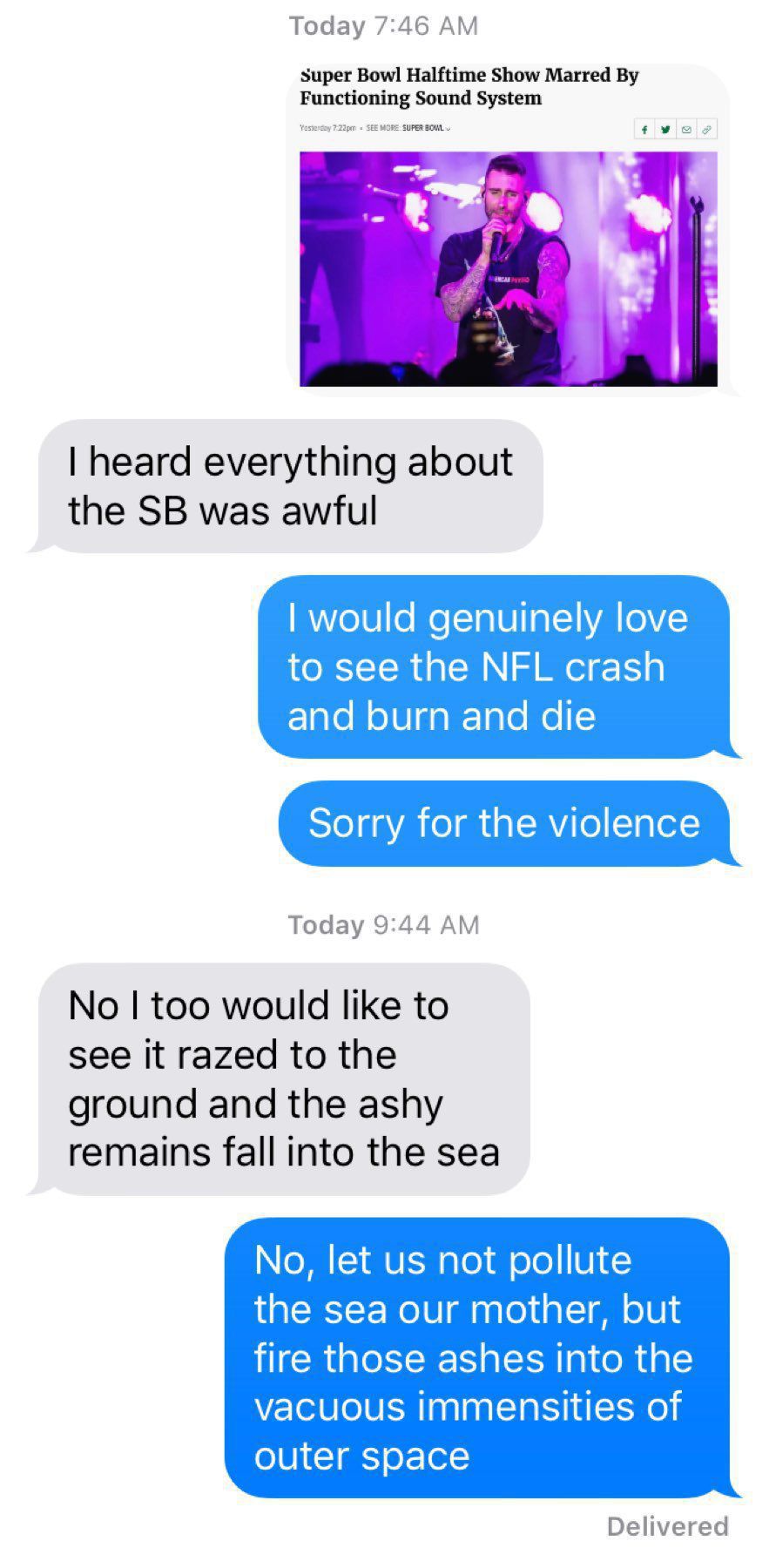
My son and I doing a postmortem.
I’m needing to get back to Rufi’s Cocina for the incredible tacos (especially al pastor and barbacoa) but above all for the many inventions of the Mad Salsa Maker.
![mp-photo-alt[]=](https://cdn.uploads.micro.blog/404/2019/92391cc597.jpg)

Roberts’s Churchill
All my adult life I have had a strong appetite for books about Winston Churchill. It began, I suppose, when I read the first volume of William Manchester’s biography, which was frankly hagiographical but vividly told. I have read much since then, including much work highly critical of the man. I can readily understand people disliking or even hating Churchill; I could never understand someone who doesn’t find him fascinating. So, unsurprisingly, I have very much looked forward to the new biography by Andrew Roberts.
I haven’t finished it yet — so much else to do right now — but I think it’s fair to say that like Manchester’s book it is a very strong narrative, and like Manchester’s, it is largely hagiographical. I have been particularly struck by Roberts’s approach to Churchill’s eventful experience in the Great War: his chief principle seems to be that Churchill’s judgment may be questioned or even condemned, but that his character must be vindicated at all costs. Roberts accepts ungrudgingly Churchill’s many mistakes in advocating for and the overseeing the Gallipoli campaign, but he will not countenance the suggestion that Churchill fell into those mistakes because of his character flaws. Personality flaws, perhaps — impetuousness, for instance — but not flaws of moral character.
Consider this passage:
Lloyd George needed no persuasion to throw over his old friend and ally. The price of the Conservatives joining a national government was that Churchill should be sent to a sinecure post with no executive portfolio attached. ‘It is the Nemesis of the man who has fought for this war for years,’ Lloyd George told Frances Stevenson that day. ‘When the war came he saw in it the chance of glory for himself, and has accordingly entered on a risky campaign without caring a straw for the misery and hardship it would bring to thousands, in the hope that he would be the outstanding man in this war.’ There was bitterness and jealousy in that remark, but little factual accuracy.But Roberts quotes Churchill on many occasions not only expressing excitement for the war, but demonstrating constant awareness of how his performance in it could pave the way for him to become Prime Minister. He told Violet Asquith at a dinner party in early 1915, “I know a curse should rest on me – because I love this war. I know it’s smashing and shattering the lives of thousands every moment – and yet – I can’t help it – I enjoy every second of it.” A man who could not only think this but say it out loud is a man who might legitimately be suspected of pursuing “a risky campaign without caring a straw for the misery and hardship it would bring to thousands.” He said himself that that suffering didn’t disrupt his delight in the war even for a second.
Similarly, Roberts quotes the Prince of Wales — the future King Edward VIII and, after his abdication, Duke of Windsor — saying, “It is a great relief to know that Winston is leaving the Admiralty … one does feel that he launches the country on mad ventures which are fearfully expensive both as regards men and munitions and which don’t attain their object.” To which Roberts comments, “It was for this feckless young man that Churchill would later nearly sacrifice his career.” No doubt the Prince was feckless, and would become still more so, but to describe Gallipoli as a “fearfully expensive” venture “both as regards men and munitions” that did not attain its object is to state the simple, inescapable truth.
One more example of Roberts’s habitual attitude: when the government of the Prime Minister Herbert Asquith was on the verge of collapse, and some kind of coalition had to be formed, the other parties to the coalition made it clear that they would not participate unless Churchill were sacked as First Lord of the Admiralty. Churchill wrote to Asquith to plead that he be kept on anyway, to which Asquith replied, “You must take it as settled that you are not to remain at the Admiralty … I hope to retain your services as a member of the new Cabinet, being, as I am, sincerely grateful for the splendid work you have done both before and since the war.” Roberts’s comment on that letter: “Asquith could treat Churchill harshly partly because the First Lord had so few supporters.” Treat him harshly? In no circumstances could Asquith have kept Churchill on — that had been made perfectly clear to him — so he is refusing to hold out any false hope, but nevertheless offering to keep Churchill in his Cabinet, which the other members of the coalition did not want. Asquith could do that much for Churchill only by spending some valuable political capital, and it would not have been “harsh” had Asquith banished Churchill from the government altogether.
Churchill’s attitude towards the loss of his position? “My conviction that the greatest of my work is still to be done is strong within me: and I ride reposefully along the gale. The hour of Asquith’s punishment and K[itchener]’s exposure draws nearer. The wretched men have nearly wrecked our chances. It may fall to me to strike the blow. I shall do it without compunction.”
Again, Roberts admits that Churchill makes mistakes; but he prefers to identify those mistakes himself, and when he quotes any criticism of Churchill from contemporaries, he tends to (a) dismiss it and (b) indicate his low opinion of the character of the critic. And in all this he faithfully reflects Churchill’s own interpretation of his role in the Great War.
As for me, I am inclined to agree with the journalist A. G. Gardiner, who wrote that Churchill “is always unconsciously playing a part – an heroic part. And he is himself his most astonished spectator.”
insincere controversialists
Genuine controversy, fair cut and thrust before a common audience, has become in our special epoch very rare. For the sincere controversialist is above all things a good listener. The really burning enthusiast never interrupts; he listens to the enemy’s arguments as eagerly as a spy would listen to the enemy’s arrangements. But if you attempt an actual argument with a modern paper of opposite politics, you will find that no medium is admitted between violence and evasion. You will have no answer except slanging or silence. A modern editor must not have that eager ear that goes with the honest tongue. He may be deaf and silent; and that is called dignity. Or he may be deaf and noisy; and that is called slashing journalism. In neither case is there any controversy; for the whole object of modern party combatants is to charge out of earshot.
— G. K. Chesterton, from What’s Wrong with the World (1910)
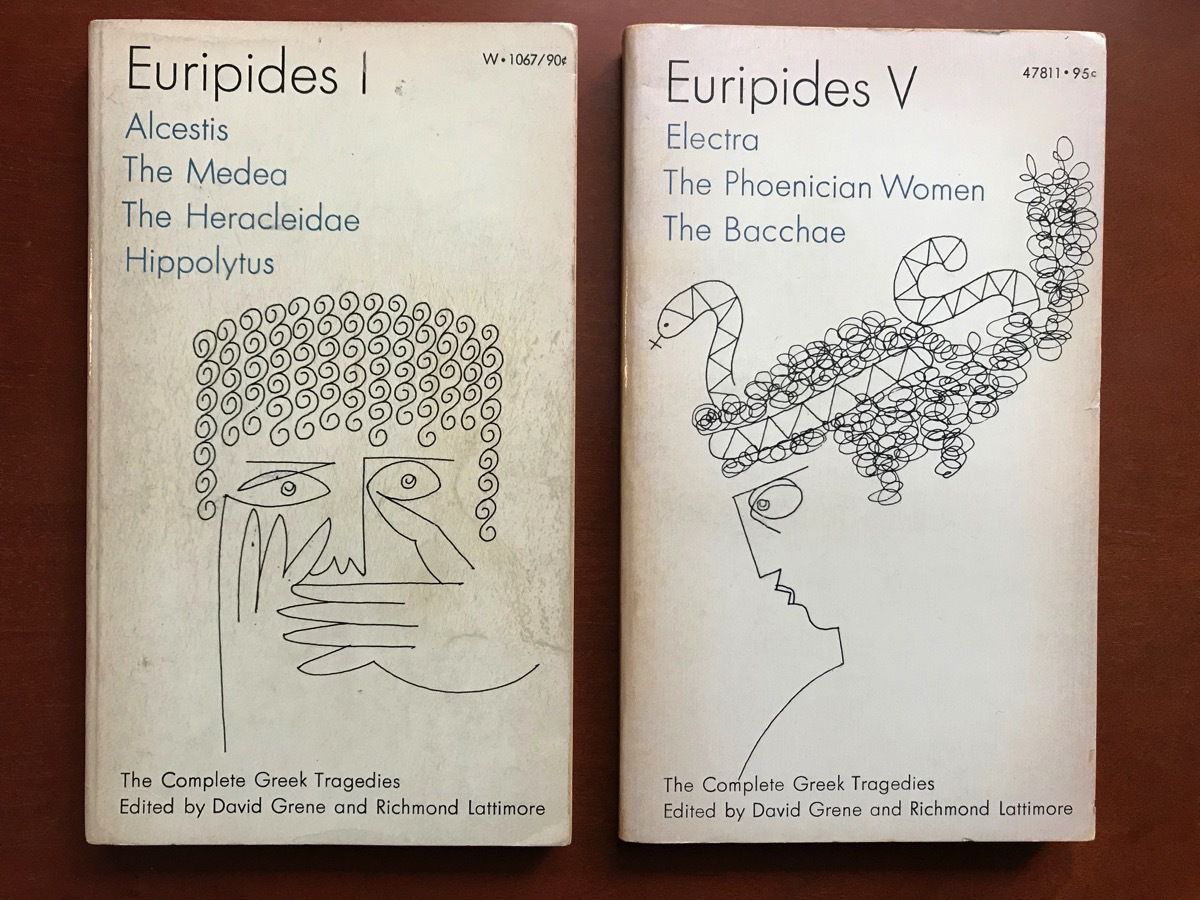
I love these old editions. I don’t really use them any more, but I like to take them out and look at them from time to time.
![mp-photo-alt[]=](https://cdn.uploads.micro.blog/404/2019/d7a9dfe1a4.jpg)
Update: PDFpen is just as good as ScannerPro at OCRing my handwriting.