


why Zadie Smith writes
To speak personally, the very reason I write is so that I might not sleepwalk through my entire life.— in the Guardian, 13 January 2007. This comes closer than anything I have ever seen to describing my own reasons for writing.
Adam Zagajewski, "The Self"
It is small and no more visible than a cricket in August. It likes to dress up, to masquerade, as all dwarfs do. It lodges between granite blocks, between serviceable truths. It even fits under a bandage, under adhesive. Neither customs officers nor their beautiful dogs will find it. Between hymns, between alliances, it hides itself. It camps in the Rocky Mountains of the skull. An eternal refugee. It is I and I, with the fearful hope that I have found at last a friend, am it. But the self is so lonely, so distrustful, it does not accept anyone, even me. It clings to historical events no less tightly than water to a glass. It could fill a Neolithic jar. It is insatiable, it wants to flow in aqueducts, it thirsts for newer and newer vessels. It wants to taste space without walls, diffuse itself, diffuse itself. Then it fades away like desire, and in the silence of an August night you hear only crickets patiently conversing with the stars.
The Paige Compositor
[caption id=“attachment_41392” align=“aligncenter” width=“509”] Patent application for The Paige Compositor[/caption]

gold dust and hero props

Annie Atkins is an immensely talented graphic designer who specializes in work for film — the image above is an example — and I’ve just started subscribing to her newsletter. In the newest installment she writes,
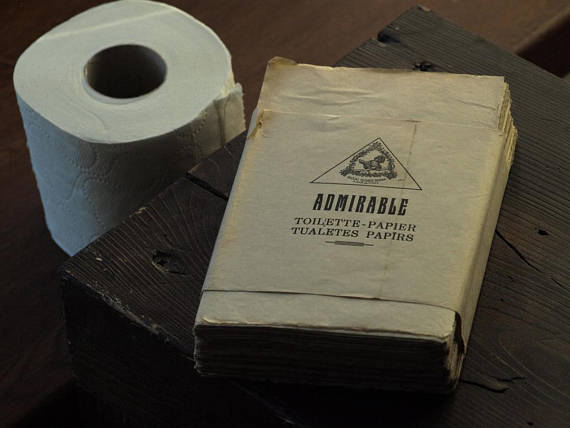
In early December I received a curious email from a Latvian man named Jānis claiming to have a large hoard of perfectly preserved but slightly yellowed paper from his great-grandfather's 1930s stationery shop. Perfectly preserved but slightly yellowed paper is like gold dust in film graphics departments: no amount of tea-staining and ironing can make a paper prop look aged, but not like it was once dropped in a puddle. On The Grand Budapest Hotel the property buyer gave the graphics department three large boxes of paper salvaged from the old German Stasi offices, which felt so precious that we really only used it for making hero props. I only have about 20 sheets left from this haul now, so I ordered some more pieces from Jānis and, like he promised, it's perfect. If you'd like to buy some, too, then you can use the code ATK20 for a 20% discount at his Etsy shop.I had no idea that reproducing the look and feel of old paper was so difficult! Fascinating stuff. Also, check out the vintage toilet paper you can buy from Jānis:
"The Lord is with you"
Sermon by the Rev. Jessica Martin Ely Cathedral, Advent 4 (24th December 2017)
Old Testament: 2 Sam. 7.1-11, 16
New Testament: Rom.16.25-27
Gospel: Luke 1.16-38
‘Greetings, favoured one! The Lord is with you.’
‘The Lord is with you’. Gabriel’s greeting blazes into the life of time and hangs between him and the girl to whom he is speaking. It is not a promise. Promises are about the future. This is now.
The angel who came to Abraham, back near the beginning of God’s story with his people - he uttered a promise. That angel said, ‘I will surely return to you in due season and your wife Sarah shall have a son’. Sarah was not in the room - not standing before the angel but listening from behind the wall of a tent, and she heard his prophecy with the kind of despair which makes people laugh – you will know that rejecting laugh that wards away sorrow, and keeps you safe from pain? – that was Sarah’s response to God’s promise. And the angel heard the despair, and overturned it, saying, ‘Is anything too wonderful for the Lord?’ And in due season she had a son.
But this angel, Gabriel, the messenger of God, speaks no promise. There is no narrative trajectory forward; no future fulfilment. Although Mary converses with him, and although her obedience to the way of God is discovered through what she says, the pinpoint of the present moment seems to spread out over the whole encounter. So that it becomes hard for us, hearing what happened, to say when the moment wasthat God entangled himself into the life of her flesh and became a shining particle of the world he himself had made. Does Gabriel’s greeting itself bring the life of God into her? ‘The Lord is with you’. God has spoken those words across the centuries, the millennia before this moment: ‘I AM with you’ he says to Moses at the burning bush; he speaks his presence through the prophets innumerable times; he affirms it in song and story, the great covenant assurance which yearns for our answering embrace, and which so quickly finds us slipping out from under the everlasting arms and heading perversely into the darkness.
But there is no yearning here. This is a piece of the everlasting joy which Gabriel speaks – not words, but an act which brings the Word that makes all into the little room in which they stand, and fills it with himself.
So Mary’s question asks only to understand what is already with them, already happening. ‘She pondered what sort of greeting this might be’, writes Luke. But the gift is already given, the favour already granted . ‘The Lord is with you’.
It is always possible to draw back from the presence of God. He will never overwhelm. The brightness of his presence is always mercifully shadowed by cloud, and the questions he asks can always meet with refusal. But in this encounter the only mismatch is in understanding, in the faltering of the intellect before the impossible actions of God. ‘How can this be?’ asks Mary. The answer is the same answer as for Sarah: ‘For nothing will be impossible with God’. The difference in the two meetings is not a difference in God, but in the varying kinds of human response he met with – the one almost beyond hope, and the other illuminated with hope’s promise and open to the fulfilment which comes to her in Gabriel’s words.
And, like Sarah, with the joy comes pain – but the completeness of Mary’s embrace accepts the pain with the joy, and rejects nothing of what God brings. She will neither laugh nor turn away, but ponder all that comes to her without defence.
Gabriel goes on to speak to Mary of what shall be. ‘The holy Spirit will come upon you, and the power of the Most High shall overshadow you; therefore the child to be born will be holy; he will be called Son of God’. Even then she could, as anyone could, say ‘not me’. But she would have to push away the delight of what has already been in the nature of God’s greeting. In the actions of love it is very hard to say when fulfilment comes; it is there as much in the moment of understanding, the moment when you know that love speaks in the other’s presence, as ever it can be in the embraces which will follow. And this is a love affair, where God will dare his own diminishment into absolute weakness, and all for love. The immensity of his intention floods his encounter with Mary, and she allows herself to be soaked in its life. It is as if she knows herself fully for the first time, just as in every love affair the heart of it is the sense of being fully known.
‘The Lord is with you’, says Gabriel. Not ‘the Lord be with you’ but ‘the Lord is with you.’ And, hearing that, she knows what to say. ‘Here am I’. Here am I, the person who carries the Lord, because the Lord is with me. And the I that I am shines with his presence because he spoke himself into my frail and ordinary life, until it shone with his light and I saw who I was transformed by it. ‘Here am I, the servant of the Lord: let it be with me according to your word.’
And the word itself was already spoken at the very beginning. ‘The Lord is with you’.
The Lord is with us. His promise is already here and we stand on the edge of Christmas contemplating the birth of God’s helplessness, the solid truth of his speechless presence in our arms. We stand before an everlasting joy, until it spills into our own present, into this now of the end of 2017, reverberating there as it reverberates across all the whole of time, the everlasting in a little room, love who hurries towards us, love who is at the door, love who is already here.
For nothing is impossible with God.
Amen.
Sir Gawain and the Green Knight: 8
[caption id="" align="aligncenter" width="1313"] image from the one surviving manuscript of the poem[/caption]
My friend Adam Roberts has some thoughts about this poem I’ve been considering and if he doesn't commit them to writing at some point I’ll eat me wee woolen cap. But in the meantime I’ll just say that Adam thinks that Sir Gawain and the Green Knight is a poem about circumcision. He wrote to me (and I post this with his permission),
But isn't this the larger structure of Gawain and the Green Knight? First, an as-it-were public symbolic circumcision, in front of the whole court, in which the mighty phallic knight somehow does and doesn't get his top chopped off; and then the second act, in which the struggle is private, internalised, to do with Gawain resisting the temptations of Lady Bertilak, in the private space of a bed rather than the public space of a royal court; a struggle that has to do 'with the heart' in the romantic sense, but also in the sense that it's about a different sort of danger than the sort in which a warrior puts himself in the way of battlefield harm. An inward danger. And it's this latter danger that really defines Gawain's courage. In a similar way Christ has to both put himself physically in the way of bodily pain and death, but also has to overcome his inner struggle, "let this cup pass" and so on. And really the passion marks a shift in emphasis from the former to the latter in the broadest sense, doesn't it? Not that martyrs won't suffer physically, but that physical pain, like physical purification, becomes less important than spiritual suffering and redemption.... Likewise judgement: before, transgression was physically punished, adulterous women stoned to death --- and maybe the Green Knight's axe is an executioner's rather than a warrior's axe --- but after the punishment of transgression gets turned about, made into a focus for self-reflection on one's own transgression, "let him who is without sin chop the first head off" as it were. So the Giant is OT justice, big and obvious and fatal; and Gawain's journey leads him to a NT understanding of justice as forgiveness of sins, and inner fidelity.
How interesting, in light of this argument, that Gawain's decisive encounter with the Green Knight happens on New Year's Day, or, as it is known in the timekeeping of the Church, the Feast of the Circumcision.
When I read Adam's comment I immediately thought of Harold Bloom’s famous early essay on “The Internalization of Quest-Romance”, which sees that internalization as something that happens in the Romantic era, but Adam’s reading shows it already at work in the 14th century, as part of the inevitable outworking of the logic of Pauline Christianity (which moves from external circumcision to the "circumcision of the heart.") Gawain’s real quest is not the one that takes him through a wintery English landscape, but rather one that leads through the darkness of his own inner life.
I think Adam is exactly right to say that the poem is about law and grace, but I may read that relationship somewhat differently than he does. I want to emphasize again that Morgan le Fay accuses the Arthurian court of pride: they really do believe that they perfectly embody Chivalry. But Chivalry is a kind of code, a law, and the Green Knight comes to show that the best of Arthur’s knights is unfaithful to that code. In other words, he functions precisely as Paul says the Law does in Romans 7:
What then should we say? That the law is sin? By no means! Yet, if it had not been for the law, I would not have known sin. I would not have known what it is to covet if the law had not said, “You shall not covet.” But sin, seizing an opportunity in the commandment, produced in me all kinds of covetousness. Apart from the law sin lies dead. I was once alive apart from the law, but when the commandment came, sin revived and I died, and the very commandment that promised life proved to be death to me. For sin, seizing an opportunity in the commandment, deceived me and through it killed me. So the law is holy, and the commandment is holy and just and good. Did what is good, then, bring death to me? By no means! It was sin, working death in me through what is good, in order that sin might be shown to be sin, and through the commandment might become sinful beyond measure.
In order that sin might be shown to be sin — this is the key. Paul was, as he says of himself, “a Pharisee of Pharisees,” a “blameless” man — or so he thought. But eventually the law taught him his own ineradicable sinfulness, and so he died, so the law killed him. Had it not been for the law, that fierce instructor, he would have gone along in self-satisfaction to his grave. But the law that killed him “is holy and just and good”: it killed what had to be killed in him, “in order that sin might be shown to be sin.”
And Gawain too experiences this — because of Bertilak and Morgan le Fay. They, though seeming to be his enemies, have in fact been his best friends, for they have shown him the truth about himself. He therefore wants to make sure he always remembers the lesson he has learned at the Green Chapel, and chooses the green garter the Lady gave him as an emblem of it:
“But the girdle,” he went on, “God bless you for this gift. Not for all its ore will I own it with honor, nor its silks and streamers, and not for the sake of its wonderful workmanship or even its worth, but as a sign of my sin — I’ll see it as such when I swagger in the saddle — a sad reminder that the frailty of his flesh is man’s biggest fault, how the touch of filth taints his tender frame.
What I find especially noteworthy about Gawain’s response is what is absent from it. Paul’s account in Romans 7 of what sin taught him culminates in an outcry: “Wretched man that I am! Who will rescue me from this body of death?” Which is immediately answered with: “Thanks be to God through Jesus Christ our Lord!” Gawain seems to stop with “Wretched man that I am”: if he rejoices in the divine grace extended to him he does not say so.
Thus when he returns to Camelot, he bitterly confesses his failings:
“Regard,” said Gawain, grabbing the girdle, “through this I suffered a scar to my skin — for my loss of faith I was physically defaced; what a coveting coward I became it would seem. I was tainted by untruth and this, its token, I will drape across my chest till the day I die. For man’s crimes can be covered but never made clean; once entwined with sin, man is twinned for all time.”
This doesn't sound good: “never made clean”? “Twinned for all time”? (Note also that, to return to one of Adam's points, the physical "defacement" — a cut on his neck — is nothing compared to Gawain's internal suffering. His martyrdom is happening inside him.) Is there no one to rescue him from this body of death?
But if Gawain is trapped in despair, that can only be made worse by the invincible frivolity of the court:
The king gave comfort, then laughter filled the castle and in friendly accord the company of the court allowed that each lord belonging to their Order — every knight in the brotherhood — should bear such a belt, a bright green belt worn obliquely to the body, crosswise, like a sash, for the sake of this man. So that slanting green stripe was adopted as their sign.
For Gawain that sash marks a profound wound; it is not something to be celebrated, not an element of festivity. “Laughter filled the castle”? Gawain must have been wondering what there is to laugh about.
So if the court does not understand sin, Gawin, it seems, does not (yet) understand forgiveness. Which means that none of them at Camelot has escaped the realm of Law, with its inevitable oscillation between self-satisfaction and self-loathing. Another way to put this point is to say that none of them understands Christmas — and that, I think, is what this poem is all about. Let’s be reminded of the meaning of Christmas by Charles Wesley:
Hail the heav’nly Prince of Peace! Hail the Sun of Righteousness! Light and life to all He brings, Ris’n with healing in His wings. Mild He lays His glory by, Born that man no more may die; Born to raise the sons of earth, Born to give them second birth.
God bless us every one!
Finis.