


To assign unanswered letters their proper weight, to free us from the expectations of others, to give us back to ourselves – there lies the great, the singular power of self-respect.
For obit writers, the whole world is necessarily divided into the dead and the pre-dead. That’s all there is.
[gallery columns=“1” size=“full” ids=“18741,18742,18743,18744”]
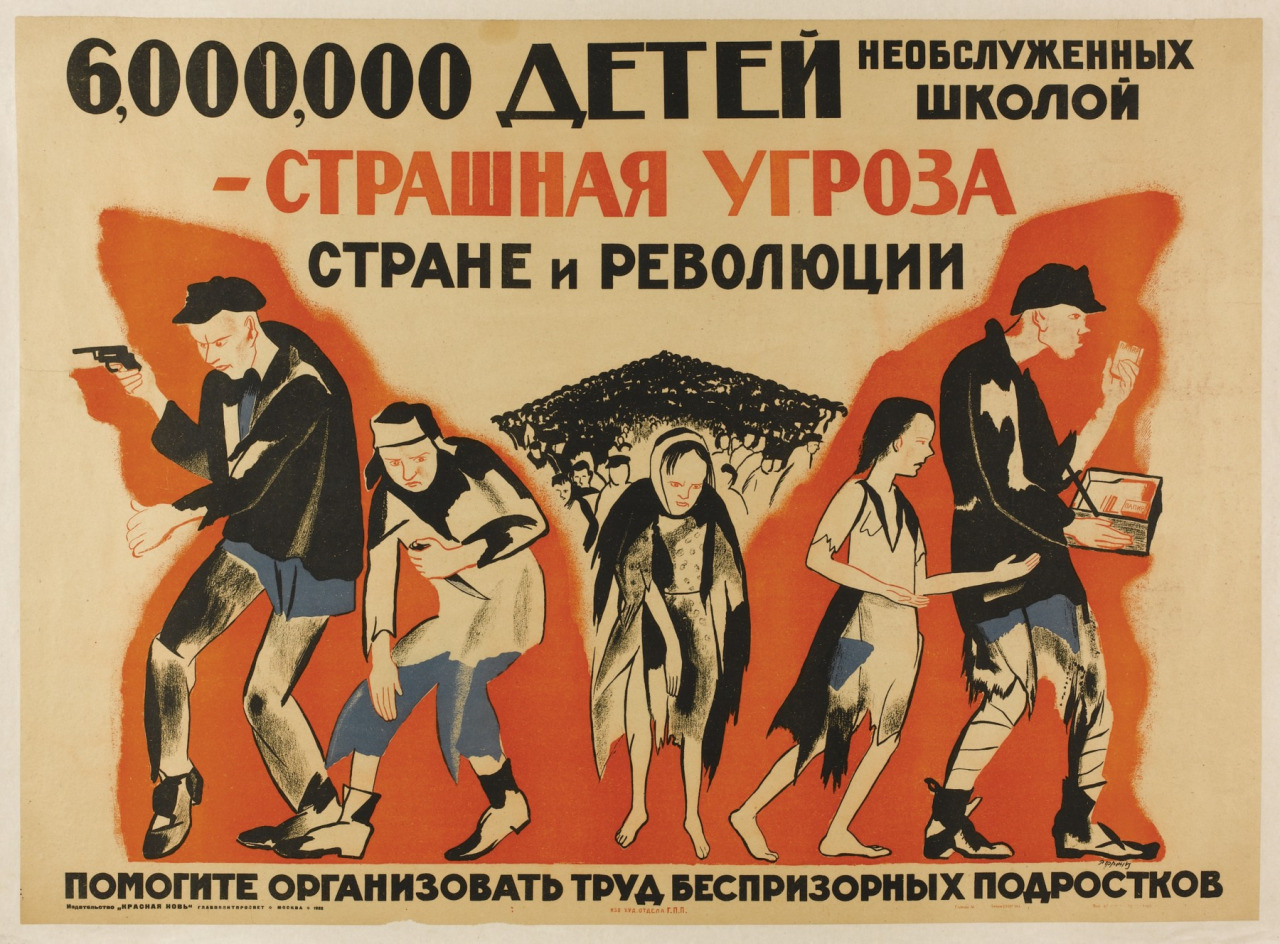
From an auction collection of 28 Soviet posters from 1920s-1940s or thereabouts - *Factories, Agricgulture, Education & Advertisements* that sold a couple of years ago. [source]


a word to those on the journey
Many Christian organizations, as they think about their treatment of gays and lesbians, and their theology of sexuality more generally, are “evolving,” or “in process,” or “on the journey.” And make no mistake, this is a journey on a one-way street: no Christian group is moving from greater to less tolerance of same-sex relationships.
So let’s imagine that a given Christian organization takes its journey from Point One to Point Two. Point One is believing that sexual activity between people of the same sex is wrong because it is forbidden by Scripture and/or by Church teaching; Point Two is believing that such sexual activity is not necessarily forbidden (not “intrinsically disordered”) and can, under the same conditions of faithfulness that have traditionally governed opposite-sex unions, be blessed by the church.
Let’s also assume that God has not changed His mind about sexuality.
So as we try to evaluate this imaginary Christian organization, we can see what has happened in one of three ways:
1) At one point, the organization held views about sexuality that were largely determined by its social environment, but it has now reconsidered those views in light of the Gospel and has come to a more authentically Christian understanding of the matter.
2) At one point, the organization held authentically Christian views about sexuality, but has succumbed to public pressure and fear of being scorned or condemned and now holds views that are determined by its social environment.
3) The organization has always held the views about sexuality that were socially dominant, bending its understanding of Scripture to suit the times; it just changed when (or soon after) the main stream of society changed.
Note that there is no way to read this story as one of consistent faithfulness to a Gospel message that works against the grain of a dominant culture.
And that’s the key issue, it seems to me — that’s what churches and other Christian organizations need to be thinking about. Either throughout your history or at some significant point in your history you let your views on a massively important issue be shaped largely by what was acceptable in the cultural circles within which you hoped to be welcome. How do you plan to keep that from happening again?
Which religion will have the toughest time reconciling aliens with its beliefs?The ones that have decided that we humans are the sole focus of God’s attention. The religions that see the world through that viewpoint tend to be some of the Christian evangelicals. The Eastern Orthodox Church, a branch of Catholicism, also has that view.
Siracusa Shortcuts
Once more, John Siracusa has written a massive review of the newest iteration of the Macintosh operating system — 26,000 words of thoughtful and well-written analysis. Below you’ll find what to me — repeat, to me: your needs may be different — are some of the highlights of the review, and of Yosemite. (I’ve omitted quotation marks, but it’s all Siracusa from here on.)
- Yosemite includes a new “reduce transparency” option in its Accessibility preference pane, aimed at addressing possible usability problems created by the OS’s new look. Enabling this option removes transparency nearly everywhere. The Dock, menu bar, toolbars, sidebars, context menus, sheets, Notification Center—all completely opaque.
- The General preference pane contains a new option to switch the menu bar and Dock to dark backgrounds with light text. The command-tab switcher and Spotlight interface also adopt the darker theme, but window chrome and standard controls remain unchanged.
- Notification Center: The contents of the Today view are almost entirely customizable. The day and date cannot be removed from the top (which is a shame), but every other item can be reordered or removed. Individual widgets can be configured by clicking an easy-to-miss “i”-in-a-circle icon that appears in the upper-right corner of each widget on mouse-over.
- Apple is touting Safari’s ability browse the web for two hours longer than Chrome or Firefox on a single battery charge. Thanks to its “native” support for Netflix playback (i.e., without having to install any plugins), Apple claims Safari has a three-hour advantage over Chrome and Firefox when watching videos from this service.
- The second major feature Apple is promoting as part of Mail in Yosemite is called Markup. It provides a way to annotate attachments directly within the message composition window. Any attached image or PDF can be annotated.
- This year, Apple has decided that renaming files en masse is an important enough task that the Finder ought to be able to do it on its own. In the Yosemite Finder’s context menu, just below the option to compress selected files (and just above the increasingly irrelevant option to burn selected files to an optical disc) is a new “Rename…” option.
- The Mac will use your iPhone as a proxy for SMS communication, sending and receiving non-iMessage text messages through it. Both devices must be signed in to the same iCloud account, and there is a one-time verification process to allow a Mac to use a specific iPhone.
- Using a tethered iPhone as the source of Internet access for a Mac is now a lot easier in Yosemite for the common case of a Mac and an iPhone that are both logged into the same iCloud account. (Like cross-device SMS, Personal Hotspot requires iOS 8.1 or later.)
The University of Chicago Press is pleased to announce the launch of History of Humanities, a new journal devoted to the historical and comparative study of the humanities. The first issue will be published in the spring of 2016.Chicago to Publish New Journal: History of Humanities. I’m quite interested in this journal and look forward to reading it, but NB: of the 49 (!) Editors and Associate Editors, there is only one scholar of religion — a professor of Islamic Intellectual History — and no one in biblical studies or theology. And yet those disciplines have had some role to play in the history of the humanities, I dare say.History of Humanities, along with the newly formed Society for the History of the Humanities, takes as its subject the evolution of a wide variety of disciplines including archaeology, art history, historiography, linguistics, literary studies, musicology, philology, and media studies, tracing these fields from their earliest developments, through their formalization into university disciplines, and to the modern day. By exploring these subjects across time and civilizations and along with their socio-political and epistemic implications, the journal takes a critical look at the concept of humanities itself.