
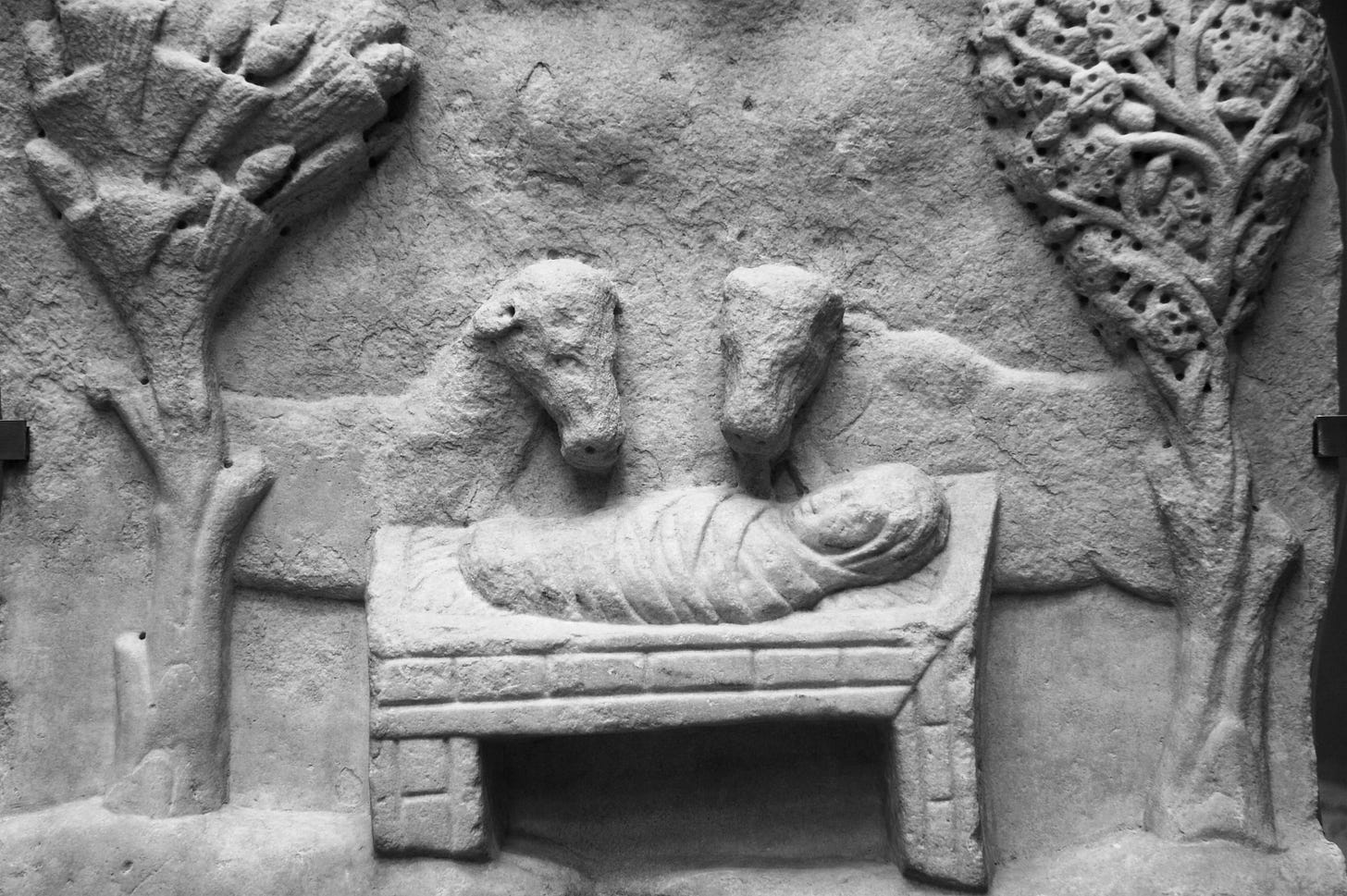
One of the earliest surviving depictions of the Nativity in art, in the Byzantine Museum in Athens, depicts Jesus lying in a manger with the ox and ass and omits any other human figures at all (in fact, there are several early depictions of the infant Christ like this). Christ is here the unmediated Lord of animals, who recognise and adore him. It is easy for us, in a culture that takes a very low view of animals, to dismiss the role of the animals in the Nativity story as sentimental pap; but animals in the Bible are repeatedly endowed with agency.... From Balaam’s ass to the penalties for ‘criminal’ animals laid down in Numbers and Leviticus, the ancient Hebrews clearly did not have a view of animals that sharply divided them from humans in the way we are inclined to do.
Biblical, medieval and folkloric views of animals are challenging to us because, under the influence of the mechanical philosophies of the 17th century and the Theory of Evolution in the 19th century we have convinced ourselves that humans and animals are unbridgeably different in kind. People in the more distant past did not see things this way; animals to them were far closer to being persons than they were to being automata. We have travelled so far in the other direction that any treatment of animals as persons, any suggestion that they too might reverence the Creator, takes on the status of sentimental anthropomorphisation in our culture. We see a depiction of animals kneeling at the crib or the repentance of the Wolf of Gubbio, and our minds leap to Disneyesque talking animals and childish fantasies. But people in ancient Israel and medieval Europe took completely seriously the idea that animals could be held responsible for their actions (at least to some extent) and that they had a duty of reverence to their Creator.