
All
[Richard Zhang] said the members of his group had many questions about how to deploy Al in their lives, such as: “Can I have an Al pastor? Should we have Al-generated worship music? Should I get an Al to read the Bible or pray with me, to judge my spirituality?”
I’m gonna say
(a) Are you out of your mind?
(b) Lord have mercy, no
(c) Absolutely not
(d) Oh HELL no
My suggestion to pastors who are tempted by this stuff: Read Brad East’s book on the screen-free church when it comes out, and read Matt Erickson’s book on The Pastor as Gardener now.
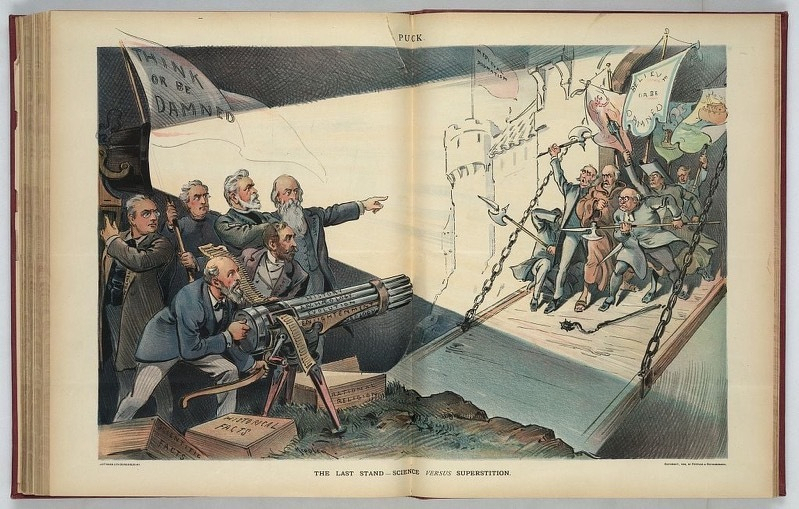
The thing is, once you begin to examine those delusions, you see that one of the most pernicious is the construction of a self-identity. This is necessary to survive in the world, probably, but soon enough it becomes a yoke around the neck. This construction labelled ‘Paul Kingsnorth’, for example, now has a public reputation as a writer with certain opinions and a particular history. His future work, and indeed his income, is in some way reliant on keeping this fiction going. It is not a ‘fiction’ in the sense of it being a deliberate falsehood, but it is a construction, which means it is a story, which means that the actual me has ended up stuck inside it, as we all do with our stories in the end.
Things are particularly bad for this ‘Paul Kingsnorth’ character, because he makes his living writing articles like this one. Not only does he need to do this to eat, but more existentially, he has written for so long that he now sees the world almost entirely through the lens of the written word. Even if he wasn’t getting paid to write things down, he would be writing them down anyway, which would just continue to encrust the artificial world around the artificial self, and make it harder to escape from both.
This is too true to be good.
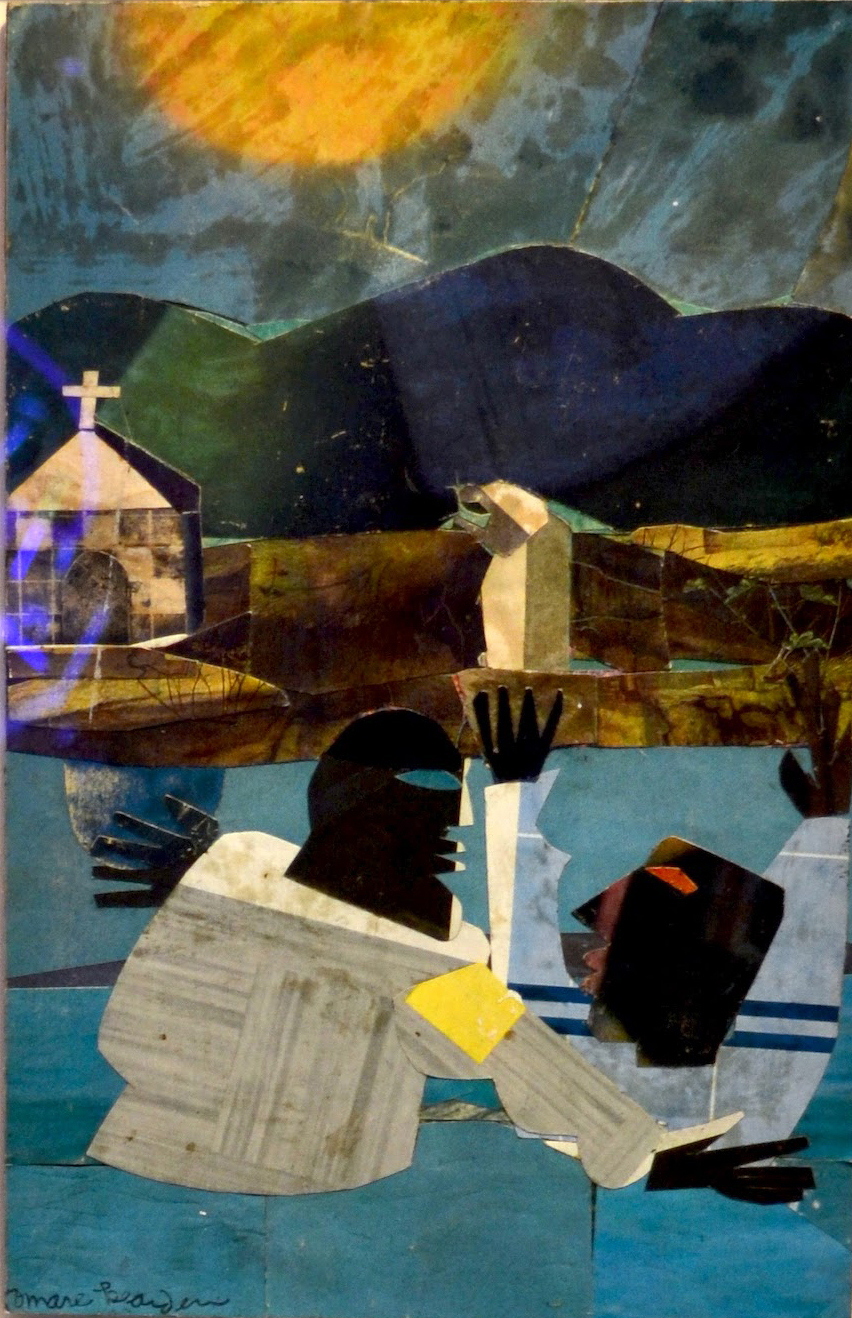
Romare Bearden, The Visitation (1941)
Wanting to find out if money does in fact make everything better, I bought a brand-new, confidently-made, 2026 portable CD player, equipped with all the fixings to make playing a CD as smooth as streaming.
So far so good: yesterday, going to Barbes in Park Slope, SMOKE on the Upper West Side, and back home to Bay Ridge, I listened to Daniel Barenboim and Gervase DePeyer play Brahms’ Clarinet Concerto No. 1 enough times to develop a favorite movement (2nd) and to feel that Barenboim is sometimes just too rubato for me. I just wouldn’t have done this with streaming, where endless novelty is the point. Scarcity and necessity are back.

Christopher Beha, from Why I Am Not an Atheist: The Confessions of a Skeptical Believer :
I could tell that my foundation was sound. I just wanted to know what was underfoot. So I told myself, Suppose you start with love. That was the one clear and certain thing in my life. What would it mean to start there? To begin with the certain reality of that love and build whatever could be built on top of it? If I took this for true, what else would have to be true with it?
To believe in love — not as a physical sensation, a neurochemical process in the brain, an adaptive strategy blindly hit upon by the genes in control of us survival machines, but as a foundational reality — means abandoning strict materialism, for the kind of love I’m talking about simply can’t be reduced to physical processes. It also means abandoning the idealism that says that the world we experience is entirely or even largely our own creation, that we project upon the raw facts whatever meaning and value and order we find there. From this perspective, love is a “mood,” part of the subjective apparatus with which we take in the objects of experience. But to really feel love is to be certain that it is not simply a projection, just as to stand in the warmth and the light of the sun is to be certain that the sun exists outside ourselves.
This reminds me of Auden:
One bubble-brained creature said—
“I am loved, therefore I am” — :
And well by now might the lion
Be lying down with the kid,
Had he stuck to that logic.
Kevin D. Williamson: “Negative partisanship is the third-strongest force in American politics, coming in behind only inertia and stupidity.”
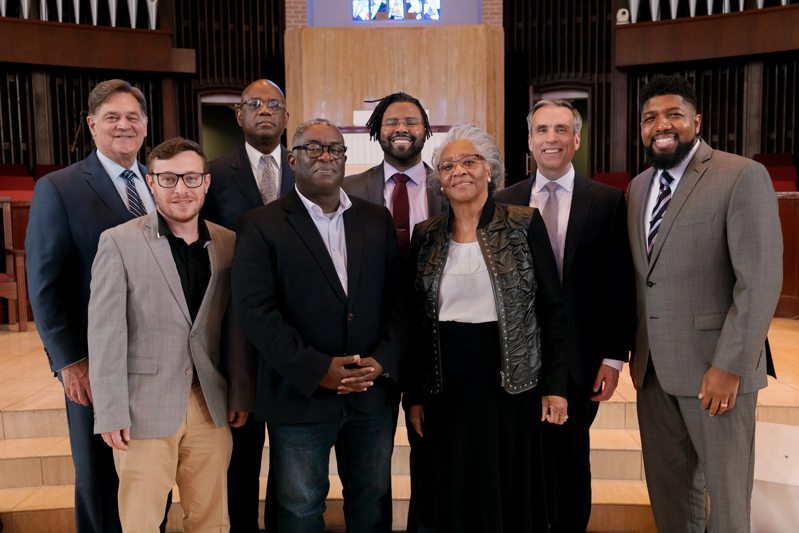
A few years ago I had the honor of writing a little blurb for a wonderful book called Talking About Race: Gospel Hope for Hard Conversations, by Isaac Adams, the pastor of Iron City Church in my home town of Birmingham, Alabama. In the photo above Isaac is right in the middle, surrounded by other pastors in Birmingham who are part of an endeavor called United We Pray. Christians always say that want the unity Jesus promised to them — well, do they gather to pray for it? These folks do. I can’t be there for the gathering on March 15, but how I wish I could. I will pray from a distance but there’s no substitute for praying hand in hand. A meeting like this is a great sign of hope in a dark time; “For I will pour water on the thirsty land, and streams on the dry ground” (Isaiah 44:3).
Then last year something shifted. I kept seeing people express a longing for the old web. Before social media turned every thought into content and every person into a brand. Before the timeline replaced blogs. I felt it too. I started working on an open-source microblogging tool inspired by Jottit, but at some point I thought: why don't I just build Jottit instead?
Ah yes, I remember it well!