
Reading

For the rest of this term I’ll be teaching two books: The Brothers Karamazov by Fyodor Dostoevsky and The Man Born to Be King by Dorothy L. Sayers — I suspect that all my blogging, or almost all, will be about them. 📚

Finished reading: Shadow Ticket by Thomas Pynchon. I’m not yet ready to do a review — that will have to wait for a second reading — but I will say that the people who see this as the third in a detective trilogy, following Inherent Vice (2009) and Bleeding Edge (2013), are mostly wrong. The essential point of this book is to trace a line that links the multiple timelines of Against the Day (2006) to the next-door-to-ours hippiecentric moral universe of Vineland (1990) — a connection made pretty explicit when in the final chapter we see a U-boat (“an encapsulated volume of pre-Fascist space-time”) that travels through an alternate dimension in just the way that the Chums of Chance travel in Against, and then read a letter from Skeet Wheeler, on his way to California, quite obviously the father of Vineland’s Zoyd Wheeler. This alternate history of our world runs from the Chicago World’s Fair to the Tunguska Event to Prohibition to the rise of European fascism and ultimately to Reagan’s America. But passage from one terminus to the other takes us through what the narrator of Mason & Dixon (1997) calls “Worlds alternative to this one” — which is why you need a shadow ticket. 📚
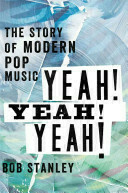
Finished reading: Yeah! Yeah! Yeah! by Bob Stanley. The first half is brilliant; then, starting around 1970, the pace picks up and Stanley’s attention starts to grow variable. There’s a bit of a British tilt: though he knows that country, and later alt-country, are important, he doesn’t have much to say about them — Gram Parsons, one of the most lastingly influential musicians of the last half-century, goes wholly unmentioned. Also, he is quite dismissive of Joni Mitchell; and inexplicably, given his British vantage-point, he has next-to-nothing to say about Led Zeppelin. Reading this book, you’d think that Marc Bolan was far more important than Zep. All that said, I learned a great deal from the first half of the book, and hope soon to make a playlist of cool & unusual songs Stanley mentions. 📚

Finished reading: Why Christians Should Be Leftists by Phil Christman — and I wrote a long rambly post about it here 📚
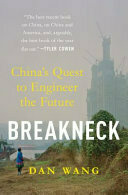
Finished reading: Breakneck by Dan Wang 📚. A really outstanding book, in which we see China’s sometimes thoughtless culture of building for building’s sake contrasted to America’s culture of lawyerly prevention of … well, pretty much everything. Here’s a long representative quotation:
The engineering state is focused mostly on monumentalism. Though there are many public toilets, provision of toilet paper is only a sometimes thing. Nowhere in China is it advisable to drink tap water. Not even Shanghai.
The engineering state has engaged in wild spasms of building over the past four decades. That has achieved considerable wonders and a fair degree of harm. The future would be better if China could learn to build less, while the United States learns to build more.
I’ve come to realize that there are many ways that China and the United States are inversions of each other. Households save a great deal of their earnings in China, while it is really easy to borrow money or spend on credit in America. In terms of national policy, China is much more focused on the supply side of the economy: It suppresses consumption as it favors manufacturers with preferential financing and all manner of policy support. The United States, meanwhile, is focused on regulating demand, for example, by imposing rent control in expensive cities or mailing out checks to consumers during the pandemic.
Both approaches are running into problems. China won’t become the world’s biggest economy by building more tall bridges. It also can’t continue manufacturing more than twice the number of cars it sells at home. And the United States is starting to realize the problems of being too focused on the demand side of the economy.

Stopped reading: The Big Goodbye by Sam Wasson. It’s a very well-written book, but the people involved in the making of Chinatown — one of the truly great American movies — are so horrible that after a while I couldn’t stand to read about them any more. 📚

Finished reading: We Don’t Know Ourselves by Fintan O’Toole. A brilliant, fascinating, disturbing book. It’s marred by its relentless Manichaeanism: in O’Toole’s moral world there’s nothing bad to be said about people like him, the “sophisticated” and “cosmopolitan” — words he uses unironically and even uncritically —, and nothing good to be said about Catholicism. But if like O’Toole (who’s my age) I had grown up amidst the spectacular moral corruption of the Irish Church, I would probably feel just as he feels. 📚

Finished reading: Fritz Lang: The Nature of the Beast by Patrick McGilligan. A fascinating book in many ways but Lang was such a despicable person that I feel I need a palate-cleanser of some kind. 📚

Finished reading: The Magic of Code by Samuel Arbesman 📚. I really enjoyed this book, and may have more to say about it later; it put me in mind of a period in my life when I was first discovering the fascination of code. I wrote about that in a series of essays for Books & Culture, and have re-posted those on my big blog, all 18,000 words: “Computer Control.”

Finished writing: Paradise Lost: A Biography by Alan Jacobs. Joseph Addison said, “We have an actual interest in everything [Adam & Eve] do, and no less than our utmost happiness is concerned and lies at stake in all their behavior.” Virginia Woolf said, “Has any great poem ever let in so little light upon one’s own joys and sorrows?” Thus my book. 📚