I’ve written a kind of mini-manifesto explaining how I’m trying to re-humanize myself, and maybe help a few readers as well.

re-humanization
A couple of years ago I wrote about a shift in my writerly focus from a decade-long inquiry into the enemies of attention to an inquiry into how we might live a human life at a human scale. Those are related themes, of course: identifying and critiquing what Tim Wu calls “the attention merchants” is indeed vital: an ethic and maybe even a theology for our time begins, as I have argued in an essay on Thomas Pynchon, with suspicion of our would-be overlords. But suspicion is only the first step, and a largely useless one unless we’re willing and able to redirect our attention to worthier objects than those being sold to us by the machinery of surveillance capitalism.
But the idea of living “a human life at a human scale” makes sense only if the human is a meaningful category, and therefore one of my related themes in recent years has been the need to recover a belief in the integrity of that category — that is, to help people believe that we have a distinctive bond with, and distinctive obligations to, our fellow humans. (N.B. This is not to say that we have no bond with or obligations to the rest of Creation: the key word in the previous sentence is “distinctive.”)
“A Humanism of the Abyss,” my essay from last year on Oliver Sacks, is one contribution to this cause; my new essay in Harper’s, “Yesterday’s Men: The Death of the Mythical Method,” is another. I’m looking to describe those moments in our experience when the various divisions of our current identity politics fade into the background and something more fundamental forces itself upon us.
Also: my mind continually returns to the Second World War, because I believe it was in that era — starting in the decade preceding the outbreak of hostilities — that our current antihumanism has its roots. That was the period when modern governments, with modern administrative structures and procedures, started building entire socio-political systems based on fundamental oppositions of race or class. That was the period in which we all became habituated to “seeing like a state.” (And, not incidentally, my writing about anarchism is an exercise in countering that panoptic gaze.)
Another clarification: This is not to say that racism and class antagonism did not exist prior to the Second World War, but the intimate connection between race/class/sex and the administrative state is a necessary prerequisite for our identity politics today, and that began in the lead-up to the war, first in Nazi Germany and then elsewhere. I often wonder whether the internment of Japanese-Americans would have been thought of had the Nazis not provided a pre-existing playbook for such action. But then, of course, the Nazi system drew on the principles of Taylorism, which in turn drew on experiments in workplace management pioneered several decades earlier by Robert Owen — nothing in this world is wholly new, wholly without precedent, but I think the Nazis did a lot to show just how far Taylorist principles could go in organizing a whole society and especially in excreting its racial refuse. (And then, of course, in making us all self-Taylorizing, building our entire lives on principles of efficiency and productivity.)
I often meditate on this passage from Antony Beevor’s history of the Second World War:
On 15 December [1944], Hitler and his entourage moved in his personal train to the Adlerhorst (Eagle’s Nest) Führer headquarters at Ziegenberg, near Bad Nauheim. Rundstedt’s headquarters were already in the adjacent Schloss. To the horror of the generals, Martin Bormann’s Nazi Party Chancellery came too, and Bormann complained that the facilities were insufficient for all his typists. Nazi bureaucracy, both in Berlin and at local levels, seemed only to increase as disaster threatened, no doubt to give the impression that the Party was still in control of events. Instructions, directives and regulations cascaded forth on every subject just when the transport and therefore also the postal system were collapsing under the weight of Allied bombing.
Of course, this entire system is built on maniacal hatred — I have heard historians say that the Nazis fought as long as they did in a hopeless cause because that was the only way to keep the trains going to Auschwitz — but I think it’s even more strongly built on a fantasy of perfect control, the channeling of hatred into a flawless System. And the very presence of the ovens, the need for them, is evidence of an imperfect system.
Orwell’s “boot stamping on a human face — forever” is something that will only happen when a system of control has failed. As long as it’s properly functioning it will produce — and produce via documentation — what Foucault called “docile bodies,” and what Auden, some decades earlier, had already envisioned as
An unintelligible multitude,
A million eyes, a million boots in line,
Without expression, waiting for a sign.
Once the degenerates and subhumans have been exterminated, the “unintelligible multitude” remains.
I think we can all agree that such systems, even in imperfect form, are radically dehumanizing — we feel this to some degree even in our most trivial encounters with bureaucratic administrivia — but what acts, what commitments, what beliefs, what loves, are required to begin a rehumanizing movement? That’s the key question I’m asking myself these days. And I believe the answers are to be found largely in the arts, especially works of art that precede the Tayorization of the world and the self. It is not the technological futurists who will show is the way out of this iron cage; it is our artful ancestors.
A final word: this is a question everyone should be asking, I think, but especially my fellow Christians. For what is the Gospel if not a message to human beings? It is a message that concerns the whole of Creation, but human beings are the ones to whom the Good News is addressed. And I don’t know how people can hear that News if they don’t know themselves and their neighbors as fellow humans, under the same Judgment, and offered the same Salvation.
“To be interested in ‘the future’ is a symptom of demoralization and debility.” — T. S. Eliot, 1927
donkey work

John Gregory Dunne, from The Studio:
The Studio was simplicity itself to write. It was mainly a matter of transcribing and rearranging my notes. That there were no surprises—I knew exactly what I was going to do—was for me the problem. Writing is essentially donkey work, manual labor of the mind. What makes it bearable are those moments (which sometimes can last for weeks, months) when the book takes over, takes on a life of its own, goes off in unexpected directions. There were no detours like that in The Studio. My notes were like plans for a bridge. Writing the book was like building that bridge.
This chimes with my experience. The two books I most enjoyed writing are Original Sin and The Year of Our Lord 1943, because they posed serious structural challenges. It was not obvious to me how those stories might best be told.
Ted Gioia: “When I first came to Silicon Valley at age 17, the two leading technologists in the region were named William Hewlett and David Packard. They used their extra cash to fund schools, museums, and hospitals — both my children were born at the Lucile Packard Children’s Hospital — not immortality machines, or rockets to Mars, or a dystopian Internet of brains, or worshiping at the Church of the Singularity. […] Bill Hewlett had more wisdom than ego. He invested in the community where he lived — not the Red Planet. Instead of promulgating social engineering schemes, Hewlett and Packard built a new engineering school at their alma mater, and named it after their favorite teacher. They wouldn’t recognize Silicon Valley today.”
Man Hunt (1941)
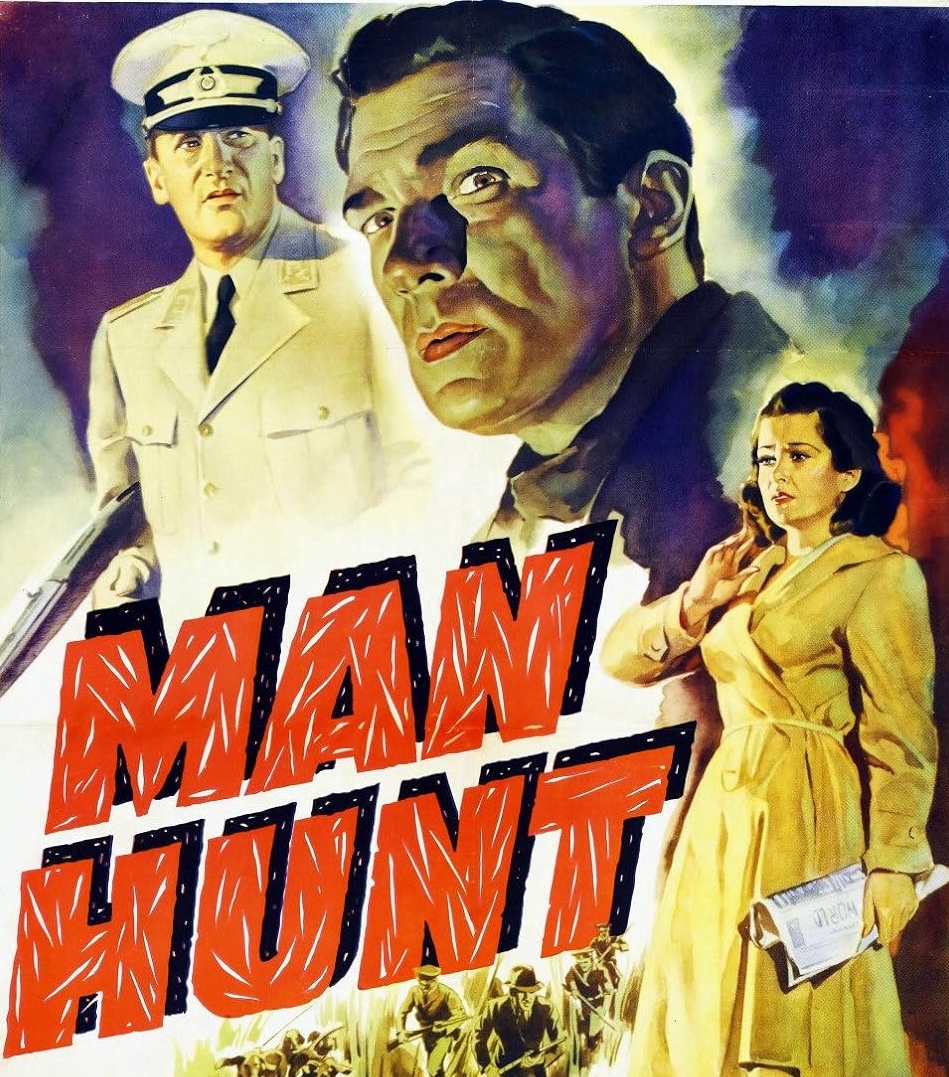
In theory, Fritz Lang’s Man Hunt faced the same problem that many other Hollywood films of the same era (Hitchcock’s Foreign Correspondent, for instance) faced: How to be anti-Nazi while maintaining a fig leaf of objectivity — a necessary fig leaf, given the supposed neutrality of the United States. But this movie is about as anti-Nazi as it’s possible to be. That said, opposition to Nazism isn’t what the movie is about. To explain why I say that, I have to tell the story.
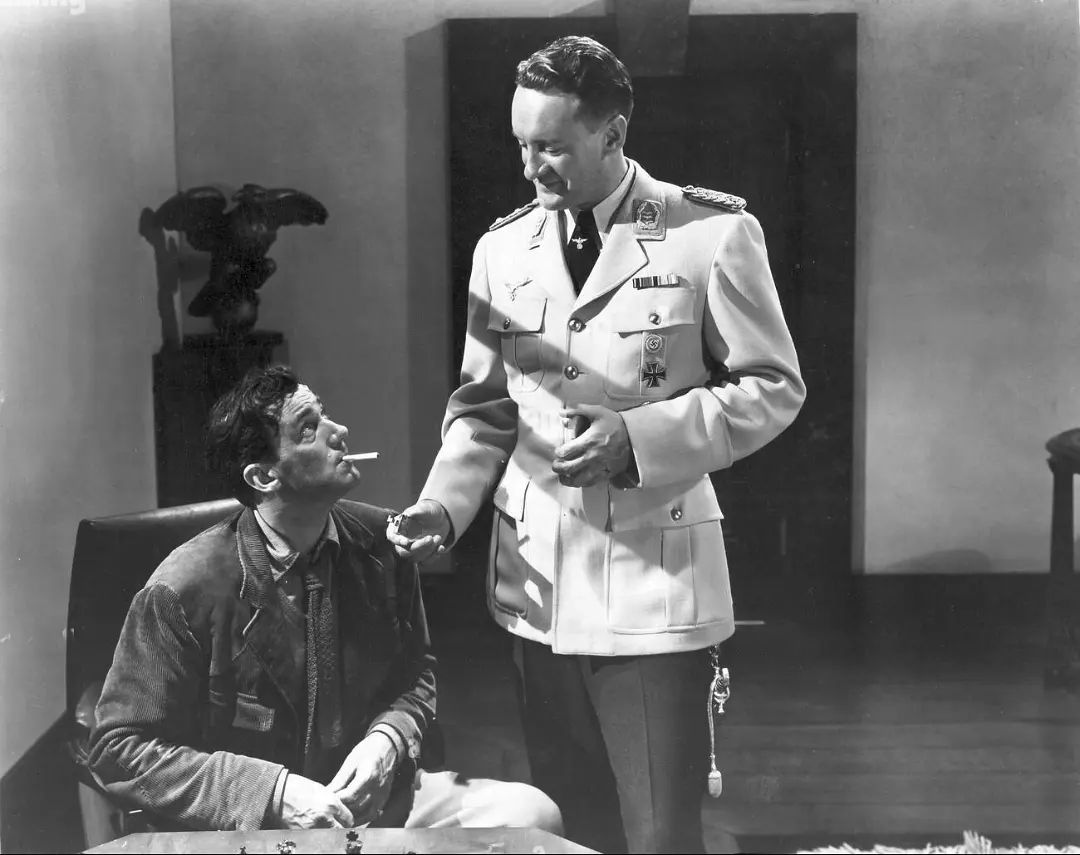
Alan Thorndike (Walter Pidgeon) is a famous English big-game hunter who is caught in the woods near Berchtesgaden and accused of attempting to assassinate Adolf Hitler. Under interrogation by a Nazi official (played with exquisite sliminess by George Sanders) he denies the charge, but is told that he will not be released, indeed will be killed, unless he signs a confession. He refuses, but eventually escapes to London, pursued by Nazis.
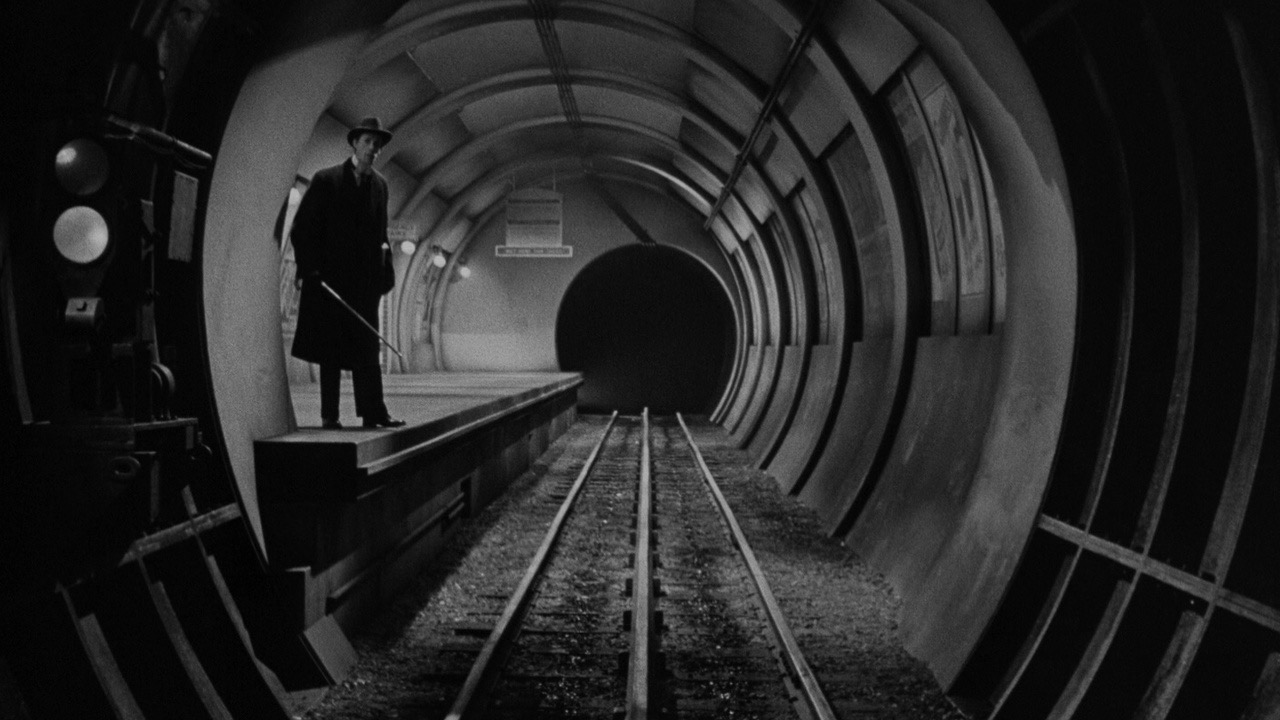
Overall, the movie doesn’t have a very Lang-like look and feel, but there’s a terrific pursuit scene in the Underground that reminds me strongly of M.
In any event: the Nazis chase Thorndike about the city and eventually, though quite accidentally, into the arms of a cockney girl called Jerry (Joan Bennett), whom he charms. She falls hard for him, though the feeling is not quite mutual. He’s attracted to her but not besotted; she’s a kid to him. In the end Thorndike kills his Nazi pursuers, though not before they find Jerry and kill her, because she refused to betray his location. (There’s a strong dose of poetic justice in the way he does this, but that’s one detail I won’t spoil.)
Thorndike is wounded in the final confrontation with his enemy, and two scenes follow. In the first, Thorndike is in the hospital, deliriously replaying in his mind his time with Jerry; in the second, he parachutes out of an airplane — not under orders, but on his own initiative — and into Germany. His descent is accompanied by much bombast. It’s the same kind of pseudo-patriotic noise that defaces the conclusion of Foreign Correspondent.
What the bombast (including a final voiceover) obscures is the real point of the story, which is this: Thorndike is on a suicide mission. At a moment when the Nazis control most of Europe and any meaningful contesting of their continental domination is years away, he floats down to German soil carrying only a high-powered hunting rifle. At the beginning of the film he had told his interrogator that he didn’t enjoy killing any more — he had come to prefer the “sporting stalk” in which he finds and targets his quarry but doesn’t bother to pull the trigger — but now his only thought is killing. He will not come back; he does not want to come back.

It is clear that he has but one goal: atonement. He had stumbled into Jerry’s life, charmed her, allowed her to assist him, and by those means he had led her straight to her death. And the only way he can think to atone is to kill as many Germans as he can and then suffer death himself. Man Hunt isn’t a patriotic drama; it’s an existentialist tragedy.

Still some wildflowers down here in the Hill Country.