Martin Filler

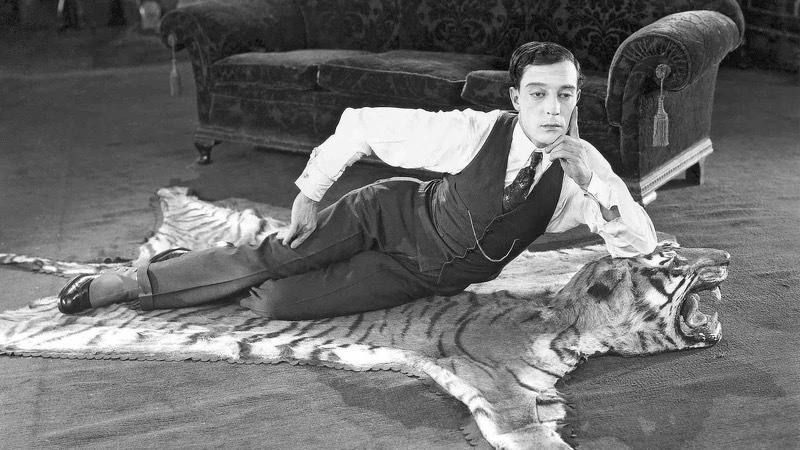
So thorough was [Frank] Gehry’s reorientation of architecture as an art form rather than an adjunct of engineering that it’s hard to recall how the high end of his profession was perceived before him, when technocrats in big architectural firms seemed indistinguishable from any other business executives. In the mid-1970s, as he approached fifty, Gehry resolved to throw over his profitable relationship with one of the most enlightened developers of the day—James Rouse, best known for his humanely planned, racially integrated new town of Columbia, Maryland. There Gehry designed several structures, including the Rouse Company Headquarters of 1969–1974, followed by a number of other Rouse projects on both coasts, including his Pop-inflected Santa Monica Place shopping mall of 1972–1980. He then reinvented himself as an artist who used architecture as his medium, a move as risky as Andy Warhol’s decision a decade earlier to abandon his lucrative practice as a commercial illustrator and take up fine art.

Austin Kleon’s newsletter is one of the best things on the internet. Today’s edition is especially great.

me rolling up to campus

The great Gary Saul Morson on Solzhenitsyn:

Vera realizes that intellectuals profess beliefs that “had been implanted from outside.” In The Gulag Archipelago, Solzhenitsyn used this phrase to describe the moment when he realized that he did not really believe what he thought he believed. Recognizing his convictions were not his own but had been “implanted from outside,” he began the arduous process of rethinking. He asks his readers to understand that once one professes whatever one is supposed to, one has agreed in advance to literally anything. The result was the totalitarianism of the twentieth century, a horror that threatens to return unless people learn to resist the spell of approved opinion. In both The Gulag Archipelago and The Red Wheel, the supreme value is individual conscience.

Francis Young:

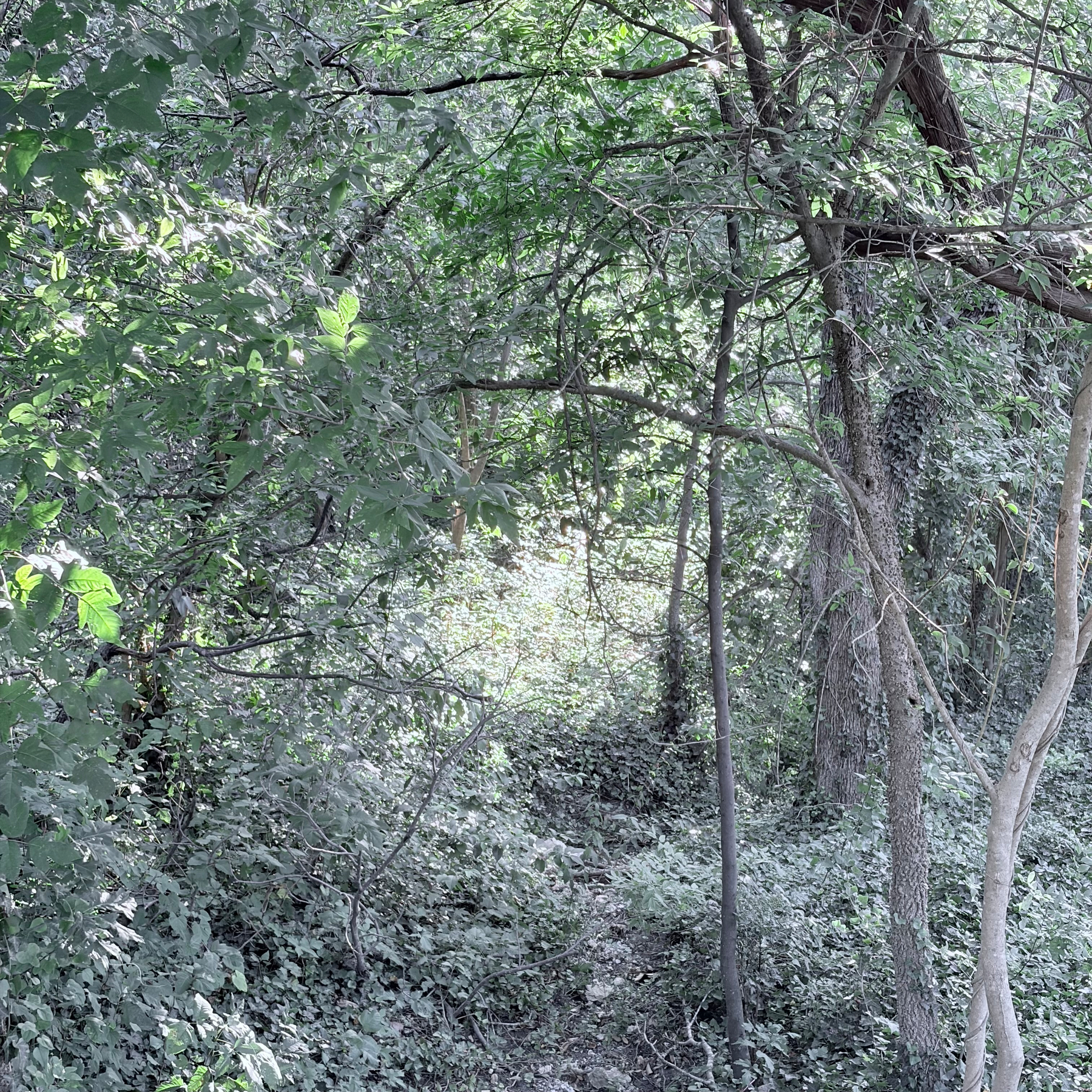
The older I get, the more intensely I feel about old trees. I don’t think it’s just a sentimental love of old things. Nor is it just a reactionary or activist desire to preserve old things from destruction – I feel that about old buildings, but what I feel for trees is different. It’s more personal, in more ways than one – as if at some deep level I carry a conviction that trees are persons. I’m not sure what to make of this conviction. The difference between old buildings and old trees is that trees are not our heritage. They don’t belong to us at all; they belong to themselves, because they’re alive. Their importance doesn’t lie in their cultural value, even if they do have that in abundance. They are surely valuable in and of themselves, and for their own sake. A long-lived tree represents the hard-won triumph of life over time and happenstance, a testament to a creation far older than us. The idea that human beings with their mayfly-lives could assume the right to end that long life, suddenly and artificially, is somehow repugnant; and the idea of re-shaping a landscape by wholesale deforestation is more monstrous by orders of magnitude. It happens, of course; and the serried forests we plant, like the forests I grew up close to in the Suffolk Breckland, feel like parodies of the lost greenwood. But it may be the forest – or, in a phrase I coined for a recent book, the ‘arboreal sacred’ – lies at the heart of the pre-Christian religious history of temperate northern Europe, for the forest was everywhere once. In losing it, I fear we have lost a major part of ourselves.

Pooh Piglet and CR at bridge.

This nice post In Praise of E. H. Shepard’s Illustrations is also a useful reminder that Pooh-sticks is among the very finest of games. I might add that there is no better place to play Pooh-sticks than the Brig o’ Doon. I have played the game there several times and hope to return. 

Auld Brig O'Doon, Ayr, Scotland LOC 3450360176.

This piece on stargazing in the Chihuahuan desert in west Texas is a reminder that there’s nowhere darker in the United States and scarcely anywhere darker in the world. You owe it to yourself to go there, or some similar location, just to see the Milky Way as it was meant to be seen. I wrote a bit about my experience out there in this essay.

Charlie Stross:

Why are executives pushing the use of new and highly questionable tools on their subordinates, even when they reduce productivity? I speculate that to understand this disconnect, you need to look at what executives do.