


re-reading
Categories:
- Books I have read and know well and want to re-read precisely because I know them well.
- Books I have read but feel I haven't fully grasped and so want to re-read to get more out of them.
- Books I have read but don't remember a damn thing about, so I can’t say that I am re-reading them but rather reading them for the first time ... again.






incomprehension
For decades now, James Wood has been writing about his Christian upbringing, but he has gotten progressively worse at it. For instance, compare his 1996 essay in the London Review of Books with his new piece in the New Yorker. Both essays emerge from the same perspective: a kind of bemusement at the world he was raised in, an attempt (one he knows will have limited success) to explain that world to an uninformed and possibly uninterested audience. But in 1996 he certainly knew what Christians think and believe, whereas in 2020 he seems to have forgotten — and doesn’t seem interested in recollecting, either.
Let me draw my examples from a single paragraph:
Modern Christians in the West like to think of themselves as believers who have left behind any cultic relationship with a usable God. Doubtless not a few of them harbor a special disdain for American Evangelicalism, with its gaudy, prosperous instrumentalism. Certainly, if belief were plotted along a spectrum, at one end might lie the austere indescribability of the Jewish or Islamic God (“Silence is prayer to thee,” Maimonides wrote) and at the other the noisy, all-too-knowable God of charismatic worship, happy to be chatted to and apparently happy to chat back. But it is still a spectrum, and, indeed, any kind of petitionary prayer presumes a God onto whom one is projecting local human attributes. In this sense, you could say that Christianity is essentially a form of idolatry.The quote from Maimonides is accurate but scarcely to the point, especially as an intended contrast to “chatty” evangelicals, to what one of E. M. Forster’s characters calls “poor little talkative Christianity.” Does Wood think Jews don’t talk to God, and don’t believe He talks back? Does he think Jews don’t petition God? Has he never heard of the Psalms?
He continues,
The difficult, unspeakable Jewish God becomes the incarnated Jesus, a God made flesh, who lived among us, who resembles us. Theodor Adorno and Max Horkheimer blamed Christian anti-Semitism on just this idolatry of the man-God: “Christ the incarnated spirit is the deified sorcerer.” They called this “the spiritualization of magic.” Evangelicals are hardly the only Christian believers to draw this Jesus, the deified sorcerer, near to them. I’m reminded of that whenever I see professional soccer players crossing themselves as they run onto the field, as if God really cared whether Arsenal beats Manchester United.Again, one has to wonder what Wood is thinking — or rather not thinking. Can he not imagine any other reason for an athlete to pray than to secure victory against his opponents? If he were to ask players why they cross themselves as they come onto the pitch, he would learn that the great majority of them are praying to be protected from injury. Many players pray for everyone on both teams to be so protected. Javier Hernandez, the Mexican striker, kneels and prays on the pitch before each match to thank God for the opportunity to play the game.

At one point, early in the essay, Wood writes of his account of his childhood church experiences, “I know how unbalanced this is. I’m sure I should have seen all the human goodness and decency — there was plenty of that around, too.” He writes as though, having not seen the goodness and decency then, he is somehow forbidden to see it now. He just plows ahead with what seems to me a studied incomprehension, an almost desperate determination to put the least charitable, least human, construal on every manifestation of religious belief and practice. I almost want to ask him what he’s afraid of.

the Qoheleth of Austin
Texas Monthly has a terrific podcast called “One by Willie," each episode of which features a musician talking with the host, John Spong, about one Willie Nelson song. The second episode’s guest is Lyle Lovett, and at one point in the conversation Lyle discuses Willie’s decision in the early 1970s to leave Nashville — which had turned into a quasi-Taylorized songwriting and hit-making factory — in order to return to his native Texas and start a new life in Austin. And that was when Willie became Willie – or, as Willie himself might put it, that was where and when he was able to really be himself. Lyle goes on to say that in his experience Willie’s most consistent and admirable trait is his acceptance of other people — not just his willingness to let you be you but his encouragement to you simply to be you and not what someone else expects you to be. He wants others to feel the freedom that he himself enjoyed when he traded factory life in Nashville for his own life in Austin.
It’s hard to imagine anything more clichéd than the language of “being yourself.” And yet, thanks to our moment’s everyone’s-a-cop policing of every minuscule deviation from every imaginable orthodoxy, as I listened to Lyle Lovett’s praise of Willie Nelson this hoary old cliché felt to me like a breath of cool clean air. I reflected that clichés become clichés for a reason: because they express something true. Of course, the time comes when that true point has been made so many times that it becomes a truism, and further repetition of it feels pointless and tiresome. And yet, like Fortuna’s wheel in the Middle Ages, the social world continues to turn and eventually that worn old nostrum that had become something to roll your eyes at takes on bright new life.
Be yourself. Don’t worry about what other people think. Don’t be terrified by the perceptions of others, by the judgments of others, the demands of others that you conform oh-so-precisely to their way of understanding the world. Just be yourself. I don’t really believe that life works that way. I don’t believe in individualism. I think that our selves, our persons, are made up of our interactions with others, are dialogical all the way down. Yet there’s something in it, something about the value of a life not lived in fear, not determined by the thirst for others’ approval regardless of who the others are. In this tiresome era of relentless policing, the admonition to be yourself suddenly sounds like something from the Bible’s wisdom books, an ancient proverb or the counsel of sagacious old Qoheleth.
It begins.

Coming attractions.
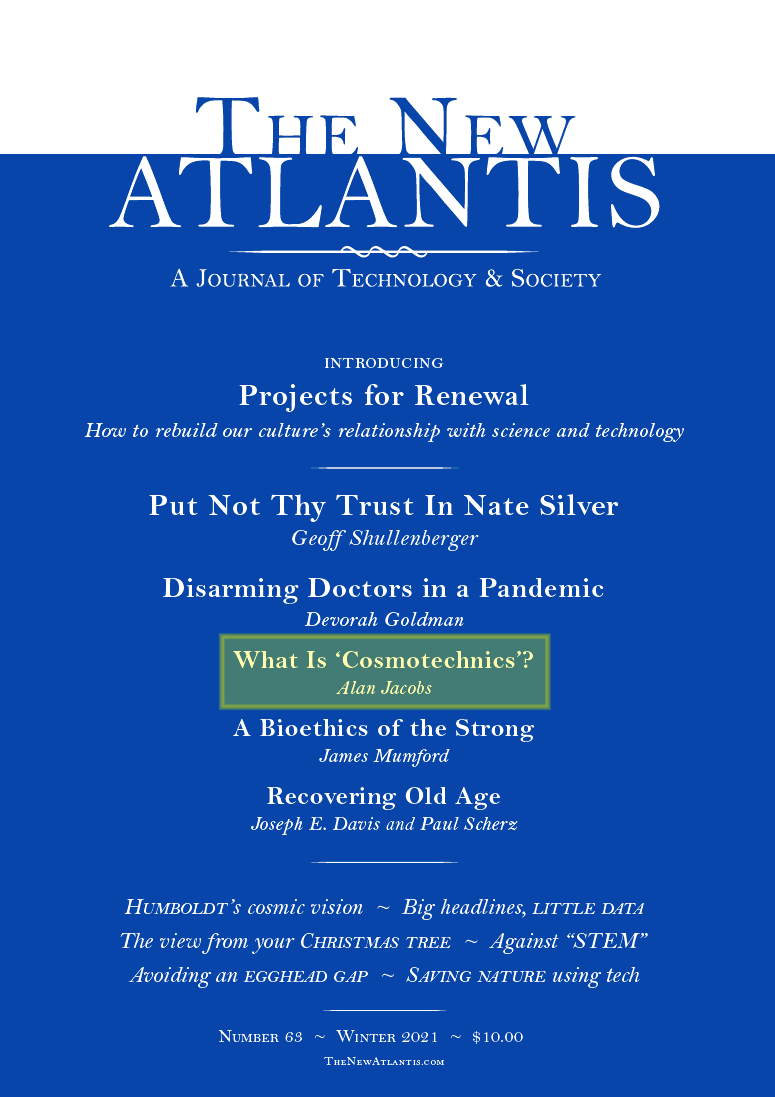
In which I announce Gospel of the Trees 2.0.
I was, am, and will be here for Richard Polt’s Analog College.
Yeah, I’ve been doing this a while.

What I like about this is that it shows that I’ve been working primarily in plain text files for 25 years. I had already largely abandoned word processors by 1995.