
All forms of privilege — including the ones I benefit from — are morally dangerous, but I think the form of privilege that does the greatest social and political damage is that of never having to live among or even talk to people who disagree with you about the Good.

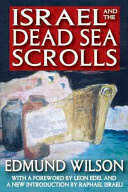
Currently reading: Israel and the Dead Sea Scrolls by Edmund Wilson 📚
I have had with my friend Wes Jackson a number of useful conversations about the necessity of getting out of movements — even movements that have seemed necessary and dear to us — when they have lapsed into self-righteousness and self-betrayal, as movements seem almost invariably to do. People in movements too readily learn to deny to others the rights and privileges they demand for themselves. They too easily become unable to mean their own language, as when a “peace movement” becomes violent. They often become too specialized, as if finally they cannot help taking refuge in the pinhole vision of the institutional intellectuals. They almost always fail to be radical enough, dealing finally in effects rather than causes. Or they deal with single issues or single solutions, as if to assure themselves that they will not be radical enough.
And so I must declare my dissatisfaction with movements to promote soil conservation or clean water or clean air or wilderness preservation or sustainable agriculture or community health or the welfare of children. Worthy as these and other goals may be, they cannot be achieved alone. They cannot be responsibly advocated alone. I am dissatisfied with such efforts because they are too specialized, they are not comprehensive enough, they are not radical enough, they virtually predict their own failure by implying that we can remedy or control effects while leaving causes in place. Ultimately, I think, they are insincere; they propose that the trouble is caused by other people; they would like to change policy but not behavior.
A vital reminder from Berry that all of us who want to recommend significant social change need to think economically and ecologically.

Pablo Auladell’s graphic-novel adaptation of Paradise Lost is quite remarkable.
R.I.P. Bill Russell, one of the greatest Americans of our era — the best team athlete in American history, and an icon of Black Americans’ quest for full civil rights. One not-so-random fact worth remembering: Bill Russell’s father Charlie — raised in Louisiana, as his son would be until age eight — in his childhood knew people who had been enslaved. As I keep saying: The past is not dead etc.
smooth things and rough ground
There are many links in what follows. I would encourage you to read this through without noticing the links, and then go back to them later if you’re so inclined.
Around a year ago I wrote a post in which I said this:
I obviously write about a good many things, but over the last decade my work has been largely devoted to a single overarching theme: what we attend to and what we fail to attend to. This started with the work on my old Text Patterns blog that fed into my 2011 book The Pleasures of Reading in an Age of Distraction, and since then I have pursued the various connected issues and problems down several paths. My set of Theses for Disputation, “Attending to Technology,” is my most explicit articulation of these concerns, but even when I didn’t seem to be thinking about these things I really was. Even my biography of the Book of Common Prayer was an attempt to understand the prayer book as an instrument for the focusing of the attention of wayward Christians on that to which they should primarily attend. As the BCP almost says, “We have attended to those things we should not have attended to, and we have not attended to those things which we should have attended to, and there is no health in us.” The relevance of these questions to How to Think will be obvious to anyone who has read it, but I could say the same about the two books that I published since then, The Year of Our Lord 1943 and Breaking Bread with the Dead. In each case I am concerned with the forces in our culture that inhibit enriching attentiveness, that enforce enervating distraction, that direct our minds always towards the frivolous or the malicious.
I then went on to say that I am shifting towards a new general project, which at that time wasn’t perfectly clear in my mind. And I was fine with that, because as far back as 2014 I understood that it is important for me, as I transition to the final stage of my career, not to know where I am going. “Old men ought to be explorers.”
But matters are coming into a focus a bit. It has recently occurred to me that much of what I am writing these days circles around an imperative that Wittgenstein famously articulated in the Philosophical Investigations: “We have got on to slippery ice where there is no friction and so in a certain sense the conditions are ideal, but also, just because of that, we are unable to walk. We want to walk: so we need friction. Back to the rough ground!”

The goal of the attention merchants is to keep us on the ice, to keep us sliding in the direction they choose, to keep us believing that the frictionlessness of the sliding is a sign that “the conditions are ideal.” But I want to walk — I need to walk, so I can learn to move at the speed of our three-mile-an-hour God.
Repair is harder, rougher, than discarding the replacement; invitation of others to collaborate in repair is rougher than going it alone.
So the quest for a constructive friction is what my work keeps circling around these days. It’s why I seek to practice handmind; it’s why I am interested in anarchism, because anarchism is a determination to achieve through the patient work of negotiation and voluntary association what all the forces of metaphysical capitalism would prefer to sell us. It’s why I want to distinguish between “productivity” and good work. It’s why I seek the messiness of the unfinalizable human world rather than allowing myself to be transformed into a server. To resist mechanization and its monoculture; to practice a cosmopolitanism of difference; to recover piety towards flawed and even broken institutions — these are all ways of finding and exploring the rough ground. Strategies and practices of roughness. Because the rough ground is where walking — a human life on a human scale — is possible.
The Essenes, those fearsome ascetics of the profound desert, denounced their spiritual enemies — probably the Pharisees specifically, certainly all the Jewish leaders who lived and taught others to live in frictionless comfort with the Ruling Powers — as seekers of smooth things. The phrase comes from Isaiah 30:
For they are a rebellious people,
lying children,
children unwilling to hear
the instruction of the Lord;
who say to the seers, “Do not see,”
and to the prophets, “Do not prophesy to us what is right;
speak to us smooth things,
prophesy illusions,
leave the way, turn aside from the path,
let us hear no more about the Holy One of Israel.”
But if you invite your leaders to speak to you only smooth things, you will dwell in illusion; and in a state of illusion you will be vulnerable to powers far greater than yourself; and, as Isaiah goes on to say, all the vessels will be broken, and you will be unable to carry fire from your hearth or draw water from your cistern.
I’m not an Essene; I lack the requisite fierceness. I prefer to walk on that rough ground with what I have called the “peaceable irony” of the Taoist sage (or the Franciscan friar, a similar figure). Or maybe like Les Murray’s apostle of sprawl:
Sprawl leans on things. It is loose-limbed in its mind.
Reprimanded and dismissed
it listens with a grin and one boot up on the rail
of possibility. It may have to leave the Earth.
Being roughly Christian, it scratches the other cheek
and thinks it unlikely. Though people have been shot for sprawl.
Those with ears to hear, let them hear.


Sir Hardy Amies was for decades Dressmaker to Queen Elizabeth, and also, in his spare time, designed costumes for Stanley Kubrick’s 2001: A Space Odyssey. But during World War II he had overseen the exposure of double agents and Nazi collaborators in Belgium — and, later, directed the assassination program called Operation Ratweek. Lord only knows how many deaths Hardy Amies was responsible for; perhaps his ruthless efficiency stood him in good stead when, to the subsequent horror of his superiors, he staged a Vogue photo shoot in Belgium just after D-Day. This is what Phantom Thread should’ve been about.
building what looks right
When I was in college in the mid-1990s—an era that feels quite similar to today—a lot of my activism was around diversity issues. It wasn't called “wokeness” then, but there was a very heightened consciousness around race and gender and sexuality. I think there is a very positive story to tell about bell hooks and Cornel West being read everywhere. But towards the end of college, I realized that religious diversity is never a part of the conversation. I had become, at this point, more inspired by faith-based activists, particularly Dorothy Day and the Catholic Worker Movement. The way I put it is that they loved people more than they hated the system. And it seemed to me that a lot of activists I knew hated the system more than they loved people.
I started going to interfaith conferences looking for the next generation of these great faith-based activists like Bayard Rustin, Dorothy Day, Pauli Murray and Martin Luther King Jr. What I found instead was old theologians talking. So I did what I was taught to do as an activist in college: I stood up, I raised my fist, and I called them out. This was June of 1988. I was probably 22, the firebrand young person on the floor, shouting people down. And a striking thing happened. This woman named Yolanda Trevino walked up to me, and she said, “What you're talking about — a movement of young people from diverse religious traditions, engaging in social action together — is powerful. You should build that.” The scales fell from my eyes. She presented to me two paths: one was to continue yelling at other people for what they were doing wrong; the other was to build what I thought looked right.
Patel, who runs an interfaith organization, reminds us just how often people from various faith traditions have done just that — have built what they thought looked right and needed to be built. “If every institution founded by a faith community in your city disappeared overnight, preschools, hospitals, and universities would be gone. YMCAs would be gone, places where AA groups meet would be gone. Half of your social services would probably be gone. It feels to me that religious identity diversity should be at the center of our national conversation, and I'm curious as to why it’s not.”
In those first three tries, I guessed one letter correctly and twelve incorrectly.
⬜⬜⬜🟨⬜
🟨⬜⬜⬜⬜
⬜⬜🟩⬜⬜
⬜🟩🟩🟩🟩
🟩🟩🟩🟩🟩