
Jamie Zawinski, formerly of Mozilla: “Anyone involved in cryptocurrencies in any way is either a grifter or a mark. It is 100% a con. There is no legitimacy.” Elsewhere he says: “Cryptocurrencies are not only an apocalyptic ecological disaster, and a greater-fool pyramid scheme, but are also incredibly toxic to the open web, another ideal that Mozilla used to support.” Admirable clarity from JWZ.
CD
I’ve always loved CDs, and I never junked my collection, even when the format fell off a cliff in the 2000s. I cherish all noise-making gear, from cassettes to vinyl to streams. But the CD has its unique charms, especially for longer, deeper listening. No format has ever been kinder to music that takes time. It was the CD that turned Pet Sounds and Another Green World and Heart of the Congos and Astral Weeks into widely beloved classics, as opposed to cult items; it was the format that finally made Lee “Scratch” Perry a mainstream hero. An already-famous LP like Kind of Blue became a whole new phenomenon on disc. The quintessential classics of the jewel-box era — D’Angelo’s Voodoo, Radiohead’s Kid A, Missy’s Supa Dupa Fly — would have flopped as streams.
Could not possibly agree more enthusiastically. The last couple of years I have been adding to my CD and Blu-Ray collections, because I want to focus my attention on art that (a) I own and (b) I want to encounter over and over again.
CDs aren’t as cool as vinyl — you miss out on the big beautiful artwork and liner notes, and the ritual of playing isn’t as much fun — but the musical experience, for my money, is significantly better.
runs
In footy (aka soccer) it is possible for players to make the following kinds of run:
- Mazy
- Marauding
- Lung-bursting
- Darting
- Slaloming
The Laws of the Game permit these runs and no others.

albeit
WIRED: Why do you call the metaverse dystopian?
John Hanke: It takes us away from what fundamentally makes us happy as human beings. We’re biologically evolved to be present in our bodies and to be out in the world. The tech world that we’ve been living in, as exacerbated by Covid, is not healthy. We’ve picked up bad habits — kids spending all day playing Roblox or whatever. And we’re extrapolating that, saying, “Hey, this is great. Let’s do this times 10.” That scares the daylights out of me.
Whereas you want people to actually experience daylight, albeit with a phone in their hands.
I really got into this idea of using digital tech to reinvigorate the idea of a public square, to bring people off the couch and out into an environment they can enjoy. There’s a lot of research that supports the positive psychological impact of walking through a park, walking through a forest — just walking. But now we live in a world where we have all this anxiety, amplified by Covid. There’s a lot of unhappiness. There’s a lot of anger. Some of it comes from not doing what our bodies want us to do — to be active and mobile. In our early experiments, we got a lot of feedback from people who were kind of couch potatoes that the game was causing them to walk more. They were saying, “Wow, this is amazing, I feel so much better. I’m physically better, but mentally I’m way more better. I broke out of my depression or met new people in the community.” We said, “Wow, like, this is good we can do in the world.”
How about not having the phone in your hands. Hanke says, "AR is the place where the real metaverse is going to happen.” How about it not happening at all.
covid in four states
| STATE | Cases/100k | Deaths/100k |
|---|---|---|
| California | 18,260 | 198 |
| Texas | 19,466 | 268 |
| Florida | 23,995 | 295 |
| New York | 23,423 | 318 |
Data from the NYT. I chose the four most populous states, in large part because they represent very different ways of dealing with Covid. Choose the state you’re interested in at the top of the linked page.
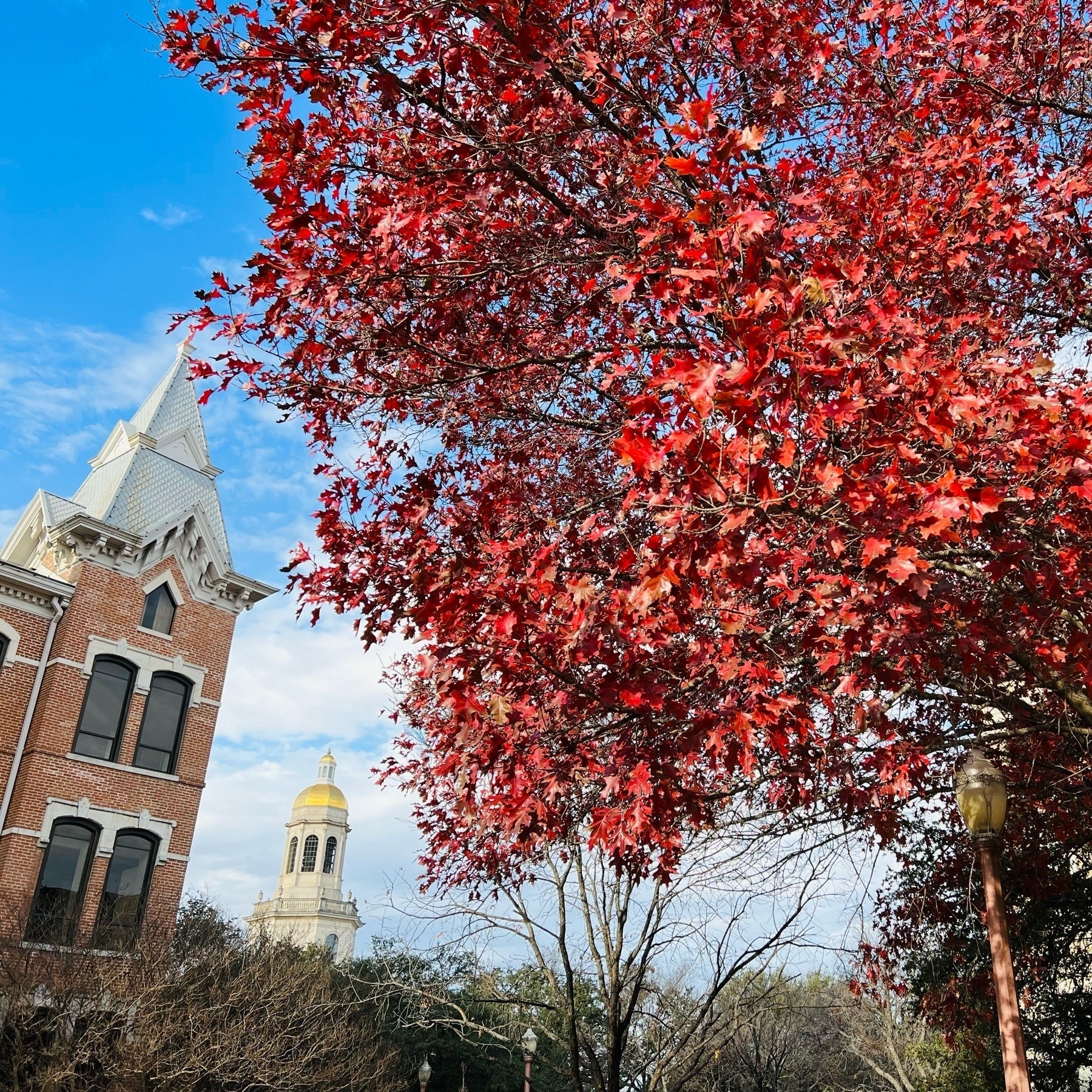
Remember how I said that there are some trees around here that think it’s still autumn? (Photo taken half an hour ago.)
defenseless
Juliette Kayyem, who among other things is a security consultant:
But what if the essence of a place is that it is defenseless? What if its ability to welcome others, to be hospitable to strangers, is its identity? What if vulnerability is its unstated mission? That is the challenge I hadn’t considered….
In security, we view vulnerabilities as inherently bad. We solve the problem with layered defenses: more locks, more surveillance. Deprive strangers of access to your temple, I urged the committee members [at Tree of Life Synagogue in Pittsburgh], and have congregants carry ID. They would have none of it. Access was a vulnerability embedded in the institution, and no security expert could change that — we do logistics, not souls.
The standoff in Colleyville ended with the attacker dead and the hostages unharmed. But all around the country, synagogues are no doubt convening their security committees, wondering what more they can do to defend their members without losing their essential vulnerability. A synagogue is not like an airport or a stadium. When it becomes a fortress, something immeasurable is lost.
drawing a narcissus

Ruskin’s instructions to his students:
Suppose you have to paint the Narcissus of the Alps. First, you must outline its six petals, its central cup, and its bulbed stalk, accurately, in the position you desire. Then you must paint the cup of the yellow which is its yellow, and the stalk of the green which is its green, and the white petals of creamy white, not milky white. Lastly, you must modify these colours so as to make the cup look hollow and the petals bent; but, whatever shade you add must never destroy the impression, which is the first a child would receive from the flower, of its being a yellow, white and green thing, with scarcely any shade in it. And I wish you for some time to aim exclusively at getting the power of seeing every object as a coloured space. Thus for instance, I am sitting, as I write, opposite the fireplace of the old room which I have written much in, and in which, as it chances, after this is finished, I shall write no more. Its worn paper is pale green; the chimney-piece is of white marble; the poker is gray; the grate black; the footstool beside the fender of a deep green. A chair stands in front of it, of brown mahogany, and above that is Turner’s Lake of Geneva, mostly blue. Now these pale green, deep green, white, black, gray, brown and blue spaces, are all just as distinct as the pattern on an inlaid Florentine table. I want you to see everything first so, and represent it so. The shading is quite a subsequent and secondary business. If you never shaded at all, but could outline perfectly, and paint things of their real colours, you would be able to convey a great deal of precious knowledge to any one looking at your drawing; but, with false outline and colour, the finest shading is of no use.
Newsletter: on fakery and Hittites.