
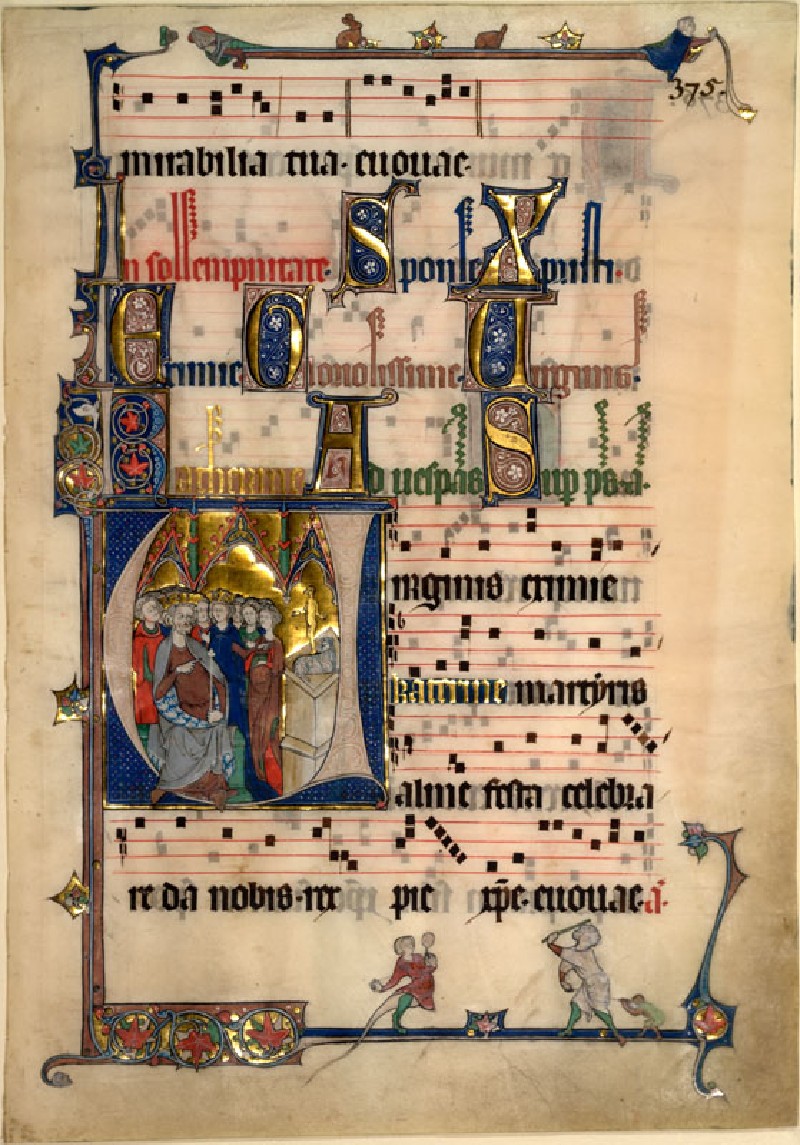

Currently reading: Andrey Tarkovsky: Life and Work: Film by Film, Stills, Polaroids & Writings 📚
the whys and wherefores of humanistic study
Reading Weinstein and Montás, you might conclude that English professors, having spent their entire lives reading and discussing works of literature, must be the wisest and most humane people on earth. Take my word for it, we are not. We are not better or worse than anyone else. I have read and taught hundreds of books, including most of the books in the Columbia Core. I teach a great-books course now. I like my job, and I think I understand many things that are important to me much better than I did when I was seventeen. But I don’t think I’m a better person.Sure, but have you tried to be?
I don’t want to be too flippant here. I have myself, many times, argued against the claim that reading great books is intrinsically ennobling. My argument has been that how we read — with whom, and with what purposes in mind — matters more than what we read. But I think it’s both possible and desirable for students and teachers to read and study together in search of wisdom. And that’s largely what Montás and Weinstein argue for. I do think they are a rather too reverent about the books officially designated as Great, rather too confident in the value of mere exposure to such books. Still, the purposes of education, of teaching and learning, are their chief theme.
They also — Menand complains about this at length — say that in the modern university the practices of reading associated with those true purposes of education are either marginalized or forbidden. Menand actually quotes Montás’s argument that “Too often professional practitioners of liberal education — professors and college administrators — have corrupted their activity by subordinating the fundamental goals of education to specialized academic pursuits that only have meaning within their own institutional and career aspirations.” But isn’t it pretty obvious that someone who thinks this will not, indeed cannot, also think “that English professors, having spent their entire lives reading and discussing works of literature, must be the wisest and most humane people on earth”?
Menand is so transparently impatient with the arguments of Montás and Weinstein that he gets similarly confused at several points in his essay. For instance, to Montás’s claim that Nietzsche is “Satan’s most acute theologian,” Menand replied that “Nietzsche wanted to free people to embrace life, not to send them to Hell. He didn’t believe in Hell. Or theology” — or, presumably, Satan. But maybe Montás believes in Satan, which would, surely, be the point.
Let’s try to focus on the key issue here: Both authors under review couldn’t be clearer that their main argument is not that we should all be reading great books but that we should be reading great books in light of what they believe to be “the fundamental goals of education.” So the proper question to ask is not, “Will reading great literature make me a better person?” The proper question is, “Will reading great literature in company with others who are in search of self-knowledge, meaning, and wisdom make me a better person?” (Answer: Maybe not. And not automatically. But it does give you certain opportunities for becoming wiser if in a disciplined way you choose to take them.)
Why does Menand teach in a university? I read his essay three times looking for evidence, and the only thing I find is this: “The university is a secular institution, and scientific research — more broadly, the production of new knowledge — is what it was designed for.” (He sets this in opposition to the argument of the writers he review that it’s vital to read for self-knowledge.) He says that “Humanists … should not be fighting a war against science. They should be defending their role in the knowledge business.”
With this point I’m in complete agreement. Wissenschaft should not be simply dismissed in favor of Bildung, and there can be real Wissenschaft in the humanities (though I’m not sure many of the critics and theorists Menand defends are interested in either educational tradition). I agree with Tom Stoppard’s A. E. Housman, in The Invention of Love:
A scholar's business is to add to what is known. That is all. But it is capable of giving the very greatest satisfaction, because knowledge is good. It does not have to look good or even sound good or even do good. It is good just by being knowledge. And the only thing that makes it knowledge is that it is true. You can't have too much of it and there is no little too little to be worth having. There is truth and falsehood in a comma.Among my own writing and works, the ones I am proudest of are the ones — like my Auden editions — in which I am clearly if in a small way adding to our store of knowledge.
So two cheers, at least, for Wissenschaft. The chief point I’m wanting to make here is simply this: There’s something rather peculiar about a scholar who proudly disavows using professional teaching and study for personal moral formation and then says, as though he’s clinching a point, that his professional teaching and study have not contributed to his personal moral formation.
Okay, time to get this second career started.
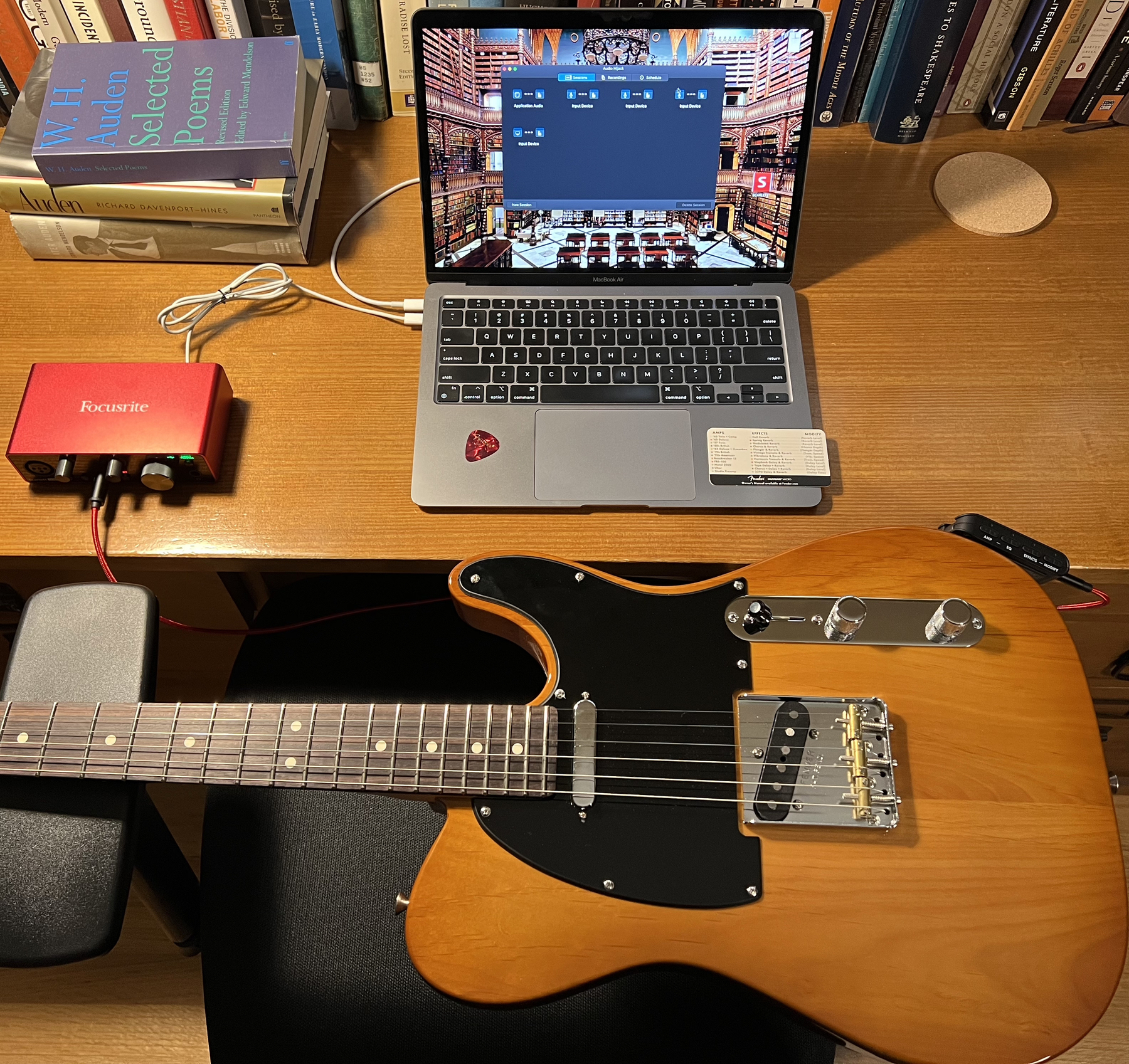
The Homebound Symphony
Much of Emily St. John Mandel’s novel Station Eleven — set largely in Michigan some twenty years after a global pandemic kills 99% of humanity — focuses on the experiences of the Traveling Symphony, led by a man named Dieter:
The Symphony performed music — classical, jazz, orchestral arrangements of pre-collapse pop songs — and Shakespeare. They’d performed more modern plays sometimes in the first few years, but what was startling, what no one would have anticipated, was that audiences seemed to prefer Shakespeare to their other theatrical offerings.
“People want what was best about the world,” Dieter said.
Later we learn that “All three caravans of the Traveling Symphony are labeled as such, THE TRAVELING SYMPHONY lettered in white on both sides, but the lead caravan carries an additional line of text: Because survival is insufficient.” Dieter says, “That quote on the lead caravan would be way more profound if we hadn’t lifted it from Star Trek,” but not everyone agrees that the quote’s origin is a problem. Take wisdom where you find it, is their view.
In his dyspeptic screed of fifty years ago, In Bluebeard’s Castle, George Steiner talks about living in a “post-culture” — a society whose culture has died even if its monuments may remain:
At great pains and cost, Altstädtte, whole cities, have been rebuilt, stone by numbered stone, geranium pot by geranium pot. Photographically there is no way of telling; the patina on the gables is even richer than before. But there is something unmistakably amiss. Go to Dresden or Warsaw, stand in one of the exquisitely recomposed squares in Verona, and you will feel it. The perfection of renewal has a lacquered depth. As if the light at the cornices had not been restored, as if the air were inappropriate and carried still an edge of fire. There is nothing mystical to this impression; it is almost painfully literal. It may be that the coherence of an ancient thing is harmonic with time, that the perspective of a street, of a roof line, that have lived their natural being can be replicated but not re-created (even where it is, ideally, indistinguishable from the original, reproduction is not the vital form). Handsome as it is, the Old City of Warsaw is a stage set; walking through it, the living create no active resonance. It is the image of those precisely restored house fronts, of those managed lights and shadows which I keep in mind when trying to discriminate between what is irretrievable — though it may still be about — and what has in it the pressure of life.
A powerful passage; but, while I agree with Steiner that we are living in a kind of post-culture, I reject his language of the “irretrievable,” or as he says elsewhere in that essay, “irreparable.” I’ll explain why.
First the bad news. I don’t know a statement more indicative of the character of our moment than this by J. D. Vance: “I think our people hate the right people.” It’s what almost everyone believes these days, isn’t it? That they and their people hate the right people. And it seems to me that that is a pretty good definition of a post-culture: a society in which people have no higher ambition than to bring down those they perceive to be their enemies. (I’m setting aside the obvious point that Christians aren’t supposed to hate anyone.) I couldn’t agree more with my friend Yuval Levin that our moment is A Time to Build, but when you’re only concerned with hating the right people, who has time to build anything?
There are a lot of people out there doing good work to expose the absurdities, the hypocrisies, and the sheer destructiveness of both the Left and the Right. I myself did some of that work for several years, but I'm not inclined to keep doing it, largely because that work of critique, however necessary, lacks a constructive dimension. There has to be something better we can do than curse our enemies — or the darkness of the present moment. If I agree with Yuval that this is indeed a time to build, then what can I build?
And as regular readers of this blog know, my particular emphasis is not on building from scratch but on restoring, renewing, and repairing. As Steiner notes, the remnants of Culture Lost surround us -- still more so than when he wrote those words: the great benefit of the Internet is its ability to preserve cultural artifacts that very few people have any use for today. But such preservation is not automatic and inevitable. On the Internet, things get lost, links stop working, even the Wayback Machine is not able to rescue everything, though it rescues a hell of a lot. My task, as I now conceive it, is not to engage in critique but rather to bear a small light and keep it burning for the next generation and maybe the generation after that. I want to find what is wise and good and beautiful and true and pass along to my readers as much of it as I can, in a form that will be accessible and comprehensible to them.
That last point is worth emphasizing. Great works of art and of wisdom cannot always speak clearly for themselves: they often need an interpreter. And sometimes they need to be revised to some degree to make them useful to us. This is why I have talked about vendoring culture: the creative activity of making accessible and vivid what otherwise could be inscrutable and might therefore seem pointless. It is a teacherly thing to do, I suppose, and that makes sense for me, because I have never been able to think of myself primarily as a scholar or a writer but rather as a teacher who writes. Wordsworth famously wrote “what we have loved, others will love, and we will teach them how” – but if we don't teach them how, then there is very little chance that they will indeed love what we have loved.
Station Eleven had the Traveling Symphony: I'm trying to be the Homebound Symphony. Just one person sitting in my study with a computer on my lap, reading and listening and viewing, and recording and sifting and transmitting – sharing the good, the true, and the beautiful, with added commentary. The initial purpose of this work is to repair, not the whole culture, but just my own attention. On a daily basis I retrain my mind to attend to what is worthy. It is the task of a lifetime, especially in an environment which strives constantly to commandeer my attention, to remove it from my control, to make me a passive consumer of what others wish me to look at or listen to.
So first of all I'm doing this work — this blog; my essays; my books; my newsletter, which is all about praise and delight — for myself, but one of the reasons that I can be disciplined in redirecting my attention is that I’ve learned that if I do so it can be helpful to others. That's really been the great lesson for me of the last few weeks — since I started my Buy Me a Coffee page: I've learned that a few people appreciate the ways in which I can help them redirect their own attention.
As David Samuels has said in a memorable essay, “My problem is how to escape from it all in order to continue being me. The aim of any sane person in an age like this one is to be free to love the people you love and secure the freedom of [your] own thoughts, the same way you step out of the way of an oncoming truck.” But it’s not only about continuing to be myself, or even about loving my family and friends (though that love will always be my first priority). Survival is insufficient. I also feel an obligation to cup my hand around a candle to shield its flame in the strong winds. As the book of Proverbs teaches us, “The spirit of man” — including the manifestations of that spirit in art and music and story — “is the candle of the Lord.” My job is to keep that candle burning and pass it along to those who come after me. I don’t think anything that we’ve lost or neglected is irretrievable or irreparable, not even if I fail in my duty. I think often about what Tom Stoppard’s Alexander Herzen says near the end of The Coast of Utopia: “The idea will not perish. What we let fall will be picked up by those behind. I can hear their childish voices on the hill.”
Can't stop? Won't stop.
It's not just Wordle, the App Store is a total mess | Macworld:
It’s would be a trivially small amount of money for Apple to create an internal group dedicated to proactively finding and eliminating scam, copycat, infringing, exploitive apps. But every one it finds costs Apple money. And doing nothing isn’t hurting sales, not when it’s so much cheaper to just market the App Store as so secure and trustworthy. Apple seems to view App Store trust and quality as a marketing activity more than a real technical or service problem.
Jason Cross is absolutely correct. Whenever you hear one of our tech megacompanies say “Our platform is simply too big — we can’t effectively fight abuse” (of whatever kind), what they mean is “Our platform is simply too big — we can’t effectively fight abuse without reducing our profit margins.”

Currently reading: The Complete Works of W. H. Auden: Poems, Volume II: 1940–1973 by W. H. Auden 📚

Currently reading: The Complete Works of W. H. Auden: Poems, Volume I: 1927–1939 by W. H. Auden 📚
summing up and moving forward
What are the key elements of this ongoing project I’m calling Invitation and Repair? And of what I have called The Year of Repair? I’ll proceed by summarizing but also linking to posts and tags in which I have explored these matters more fully.
First of all, I&R is an account of cultural renewal that also strives to articulate a theology of culture. (This articulation will be done in a digressive and improvisatory way, a way that tries to be open to unexpected transmissions, that leans into the possibility of stochastic resonance.)
Second: Michael Oakeshott has said that a culture is, among other things, “a manifold of invitations to look, to listen, and reflect.” This is profoundly true, and it’s important that he said it in a lecture about the character of the university. The American university today is impatient with looking, listening, and reflecting, and instead wants to move immediately to (a) the bureaucratic implementation of some half-baked notion of Justice, or (b) the translation of scientific inquiry into monetizable Product, or (c) the enabling of the fulfillment, according to the logic of metaphysical capitalism, of any given Self. What’s needed, for culture to be renewed, is a turn away from the trinity of Justice, Product, and Self and a return to the holier trinity of looking, listening, and reflecting. It is to these activities that I wish to invite people.
Third: A useful means of promoting this invitation is to suggest that one’s attention might profitably be redirected from the exigencies of the present moment to the rich variety of the past: that we might initiate our project of looking, listening, and reflecting by “breaking bread with the dead.”
Fourth: One of the ways to break bread with the dead — and even to break bread with those who are still around but just older — begins with resisting the temptation to discard and replace. The idea that replacement is better than repair is endemic not just to our economic order but to our entire social order. (People discard and replace friend, spouses — hell, people discard their old selves and replace them with shiny new ones, or simulacra thereof. That’s the hard heart and impoverished soul of metaphysical capitalism.)
So let’s start here, with something basic and self-helpy:
When you can manage it, hit the pause button: look, listen, and reflect.
And when you can’t manage it, when you are positively itching to do something, look for something to fix:
- An old guitar that just needs cleaning and restringing;
- A pair of rusty garden shears (growing things in general — gardens, lawns, houseplants — yield wonderful opportunities for fixing and fixing up);
- A shirt that needs buttons resewn;
- A personal website that has gotten weedy with buggy code and dead links;
- A friendship that (as Samuel Johnson puts it) has fallen into disrepair;
- A favorite book that needs the particular kind of repair that we call attention.
This article by Cal Newport says it’s about “slow productivity,” but as far as I can tell it’s really about “workplaces assigning less work.” Which is, IMO, a totally different thing.