The Uses of Pessimism by Roger Scruton:
Unscrupulous optimists believe that the difficulties and disorders of humankind can be overcome by some large-scale adjustment: it suffices to devise a new arrangement, a new system, and people will be released from their temporary prison into a realm of success. When it comes to helping others, therefore, all their efforts are put into the abstract scheme for human improvement, and none whatsoever into the personal virtue that might enable them to play the small part that it is given to humans to play in bettering the lot of their fellows. Hope, in their frame of mind, ceases to be a personal virtue, tempering griefs and troubles, teaching patience and sacrifice, and preparing the soul for agape. Instead, it becomes a mechanism for turning problems into solutions and grief into exultation, without pausing to study the accumulated evidence of human nature, which tells us that the only improvement that lies within our control is the improvement of ourselves.
📚

“Begin”?
I had decided to suspend, and maybe not resume, writing on my big blog, but it’s my intellectual sandbox, the place where I try out ideas to see how they work out. I have missed that. So gradually I’m resuming, and: here’s a post explaining why Plato’s Republic has the wrong title.
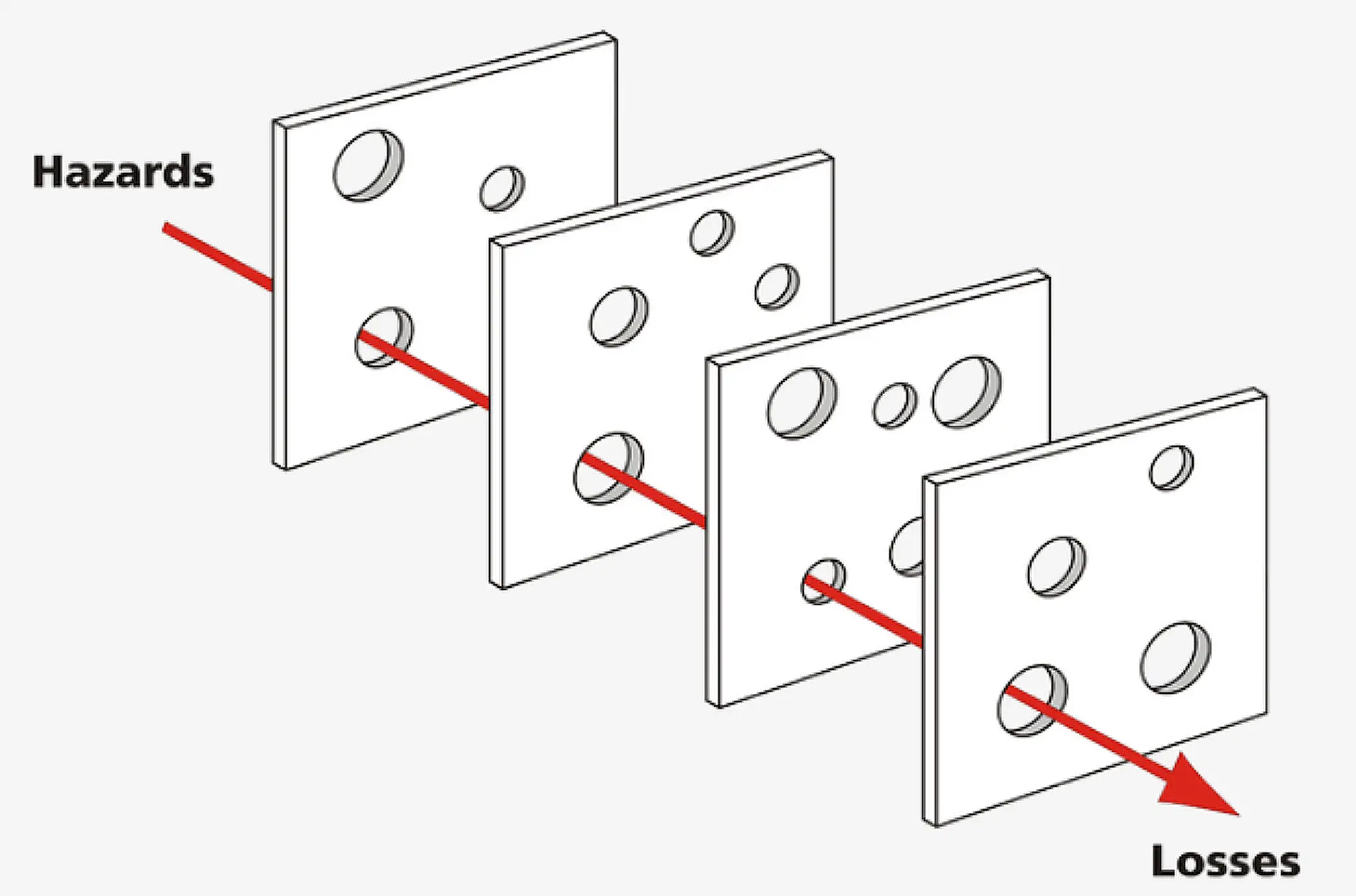
James Reason’s Swiss cheese model of failure, which I learned about from this essay.
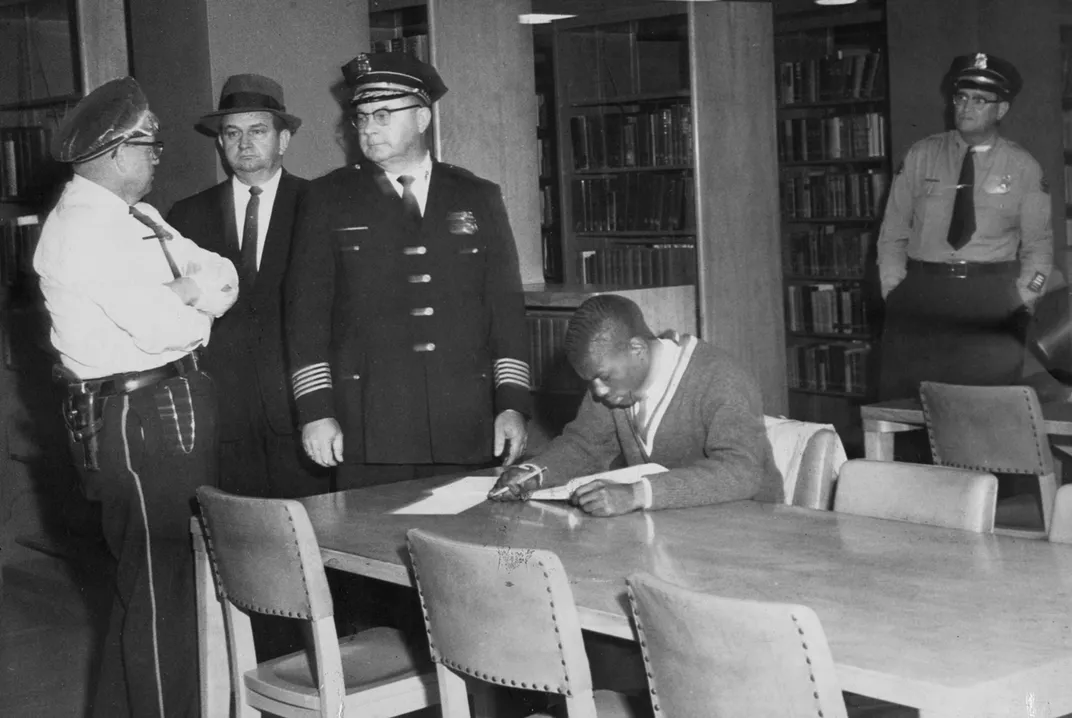
James Bradford, one of nine students arrested for reading in the Jackson, MS public library in 1961.
In societies where freedom is under threat, an informed citizen is countercultural and deep reading is an act of resistance. Just as protest and vigilance are essential, so is the ability to read and think. In a would-be autocracy, the autocrat aims to subsume our society’s particular narratives into his master narrative — in which his name fills the headlines, his voice and image dominate the broadcasts, and his airbrushed visage appears on the facades of government. To read a book, however, is to enter a narrative that stands outside the politics-and-media maelstrom. In a would-be autocracy, even a small bookstore — with hundreds of books, classic, recent, and current — is a space of contrary narratives, where truth is recognized as both essential and complicated.
I remember listening to “Bedtime Stories,” Madonna’s 1994 album, and being surprised by a moony track called “Love Tried to Welcome Me,” which contains the lines “But my soul drew back, / Guilty of lust and sin.” This is an unacknowledged but unmistakable nod to George Herbert, one of the most enduring religious poets of the early seventeenth century, who wrote a magnificent poem that begins “Love bade me welcome: yet my soul drew back, / Guilty of dust and sin.” How Herbert, who was an Anglican priest of surpassing gentleness, might have felt about being quoted, three and a half centuries later, by somebody with a Catholic name and a conical bra we shall, alas, never know. The most gratifying irony is that, in changing the mortally ashen “dust” to the cheaper and more obvious “lust,” Madonna proved only that Herbert wrote better lyrics than she did, and I can’t help wishing that she had turned to him more often for guidance both verbal and spiritual. Papa does preach.
The conclusion of Lane’s essay, which I encourage you to read in context, is one of his finest moments — and that’s saying not a little.
Accidental glamour shot