
Malcolm is very happy after he has played in the garden hose.

James Madison
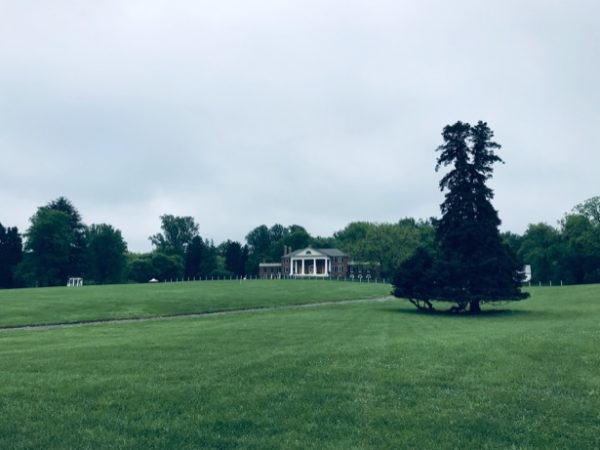
Last week when I was in Virginia I got to visit James Madison’s home Montpelier. Madison has long been my favorite of the Founders, but during my visit I realized that I had never read a complete biography of him. I have now remedied that by reading Richard Brookhiser’s concise and vigorous narrative, and I am moved to contemplate the extraordinary success that Madison had at guiding groups of politicians towards his preferred ends. Though he spent eight years as President and, before that, eight years as Jefferson’s Secretary of State, he belonged by temperament and character to the legislative rather than the executive branch. He was an unprepossessing figure, at just over five feet tall and a hundred pounds, and had a weak voice, but no greater committee man has ever lived. In a later era he would surely have been the greatest of American Senators.
It seems to me that there are three traits that, in combination, set Madison apart from his contemporaries and from almost every leading political figure before since.
First, he simply worked harder than anyone else. When he was chosen a delegate to the Constitutional Convention he arrived several days early to scope out the area and make relevant connections; each day of the convention — and unlike many other delegates who came and went, some of whom took lengthy vacations from the proceedings when the weather got hot, he was there every damned day — he arrived early, got a choice seat and then took incredibly extensive shorthand notes to document every single thing that happened in each of those meetings. (He would even check with other delegates to make sure that he had taken down their words accurately. This gave him a well-earned reputation for scrupulousness, which he later made good use of: he would always quote with absolute faithfulness from his notes — but was also shrewdly selective in what he chose to share. )
Second, Madison made himself the best informed person at every meeting. Even people who hated Madison acknowledged that he always had more information at his disposal than anyone else. Long before before the Convention began he wrote to Jefferson, who was in Paris, to ask him for books on government and political history. Jefferson sent two hundred volumes, which Madison devoted months to reading, annotating, and sifting. This was simply characteristic.
Third, he didn’t care who got credit. Madison was happy to let other people stand up to make noble speeches on behalf of some cause that he advocated, and to receive great applause — as long as he determined the content of those speeches.
These are all lessons worth learning, it seems to me.
Finally, I was taken by this passage from the end of Brookhiser’s biography:
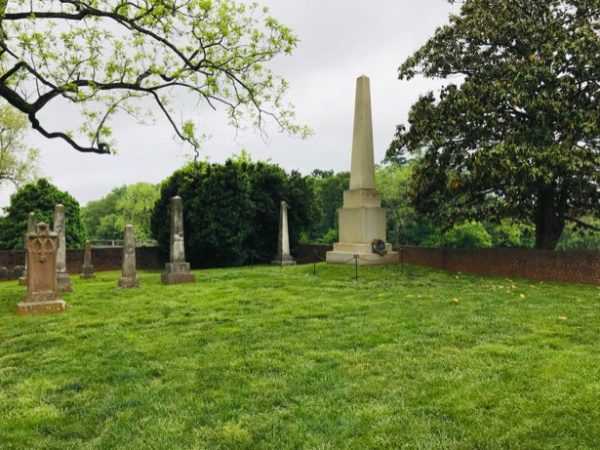
Madison lies in the family cemetery, a five-minute walk from the front door of Montpelier; the graveyard was more convenient to the original house on the property, which the Madisons vacated when he was a boy. His grave is in a corner of the plot, marked by an obelisk; the shaft surmounts a blocky base, simply inscribed MADISON, along with his dates.When it was first shown to me, I learned that the stone was not contemporary with his burial, but had been put up in 1857, twenty-one years later. What was his original marker, I asked. There was none, I was told; your marker was your family plot. Your dead relatives indicated who you were, and your living ones would remember where you were.
advice
Almost everyone knows that one of the great banes of online life is unsolicited advice. The compulsion some people feel to advise strangers is a continual puzzlement to me. You can see it especially vividly when someone says online that she really likes X or is very much enjoying Y, where X and Y can be anything from moisturizer to a typeface. Immediately someone will hop up and say, “Have you tried Z?” — or, worse, “You should try Z.” Why should she try Z? She just told you that she’s happy with X. Leave her to her enjoyment, you obnoxious person.
But as Agnes Callard points out in this excellent essay, the giving of advice is as fraught an activity when you’re being asked for it.
When starry-eyed students come to my office to ask for tips and strategies for becoming a philosopher, I find myself cringing in anticipation of the drivel I am about to spout. My advice isn’t “bad” in the sense that it will lead them astray, but it is bad nonetheless, in that it won’t lead them anywhere. It’s as though right before I give the advice, I push a button that sucks all the informational content out of what I’m about to say, and I end up saying basically nothing at all.
And then, later in the essay:
I do not have tips or tricks for becoming a philosopher to hand over to my students; my wisdom is contained in the slog of philosophical argument — the daily grind of reading old books, picking out the premises, tearing them apart. I can make you better at that, by showing you how to do more of this and less of that. I can’t help you become a philosopher without being your philosophy teacher, any more than I can massage you without touching you. Someone who wiggles her fingers and pretends she has magical powers isn’t actually getting you anywhere.
I think this is right, and what it suggests to me is something along these lines: Useful advice can only be given in response to a very specific question. “How can I become a philosopher?” (or, as I often hear, “How can I become a writer?”) is so vague and abstract a question that no meaningful answer is possible. But if you ask me “Does this sentence make sense?” or “How am I supposed to read this article?” or “Is this a good letter of application?” then perhaps I can help.

These pictures are from the eastern side of the Skyline Drive this morning. The air was clear because the morning sun had burned off the mist. On the western side, just a few hunded yards away, the fog was so thick you couldn’t see anything.



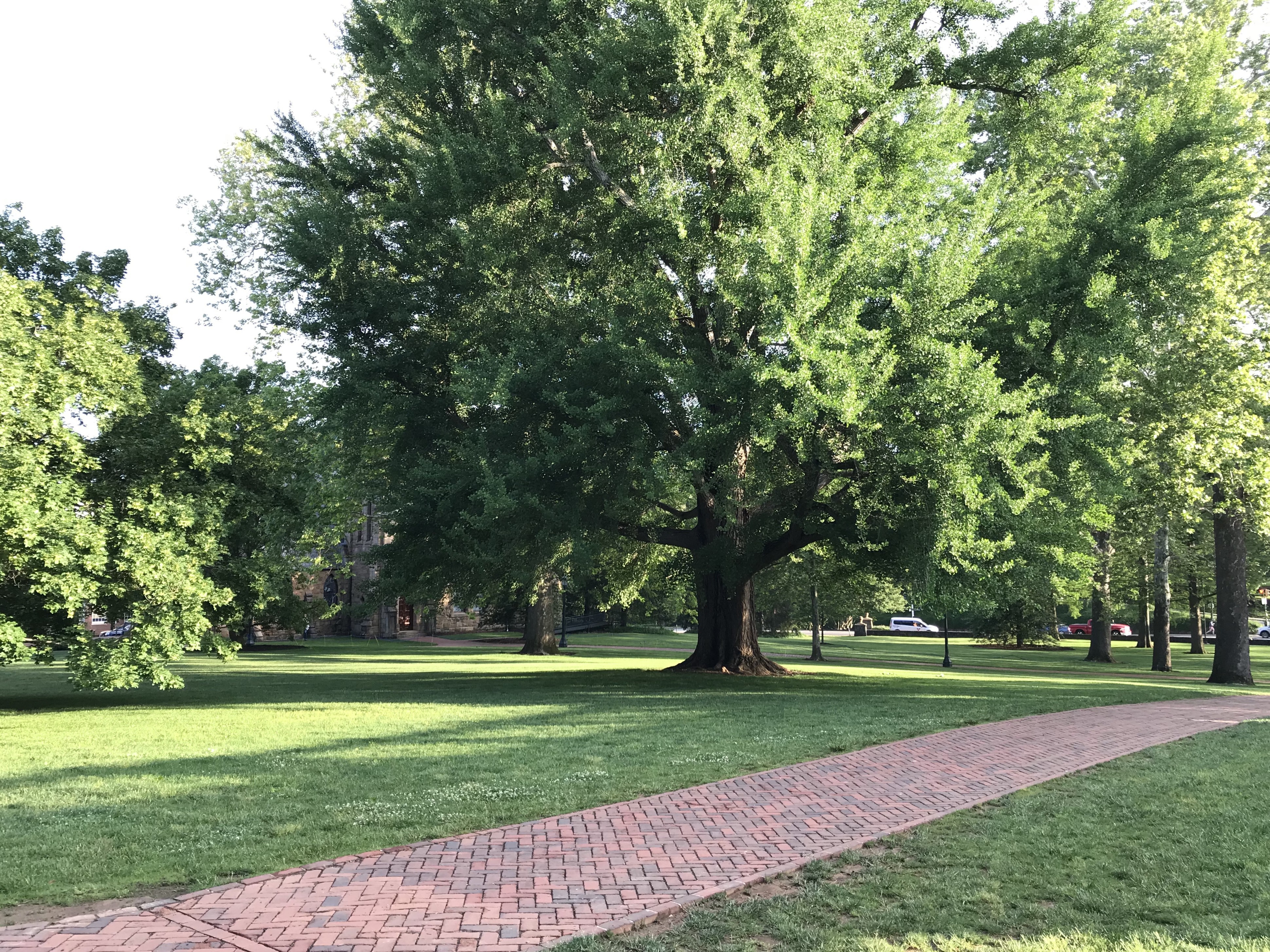
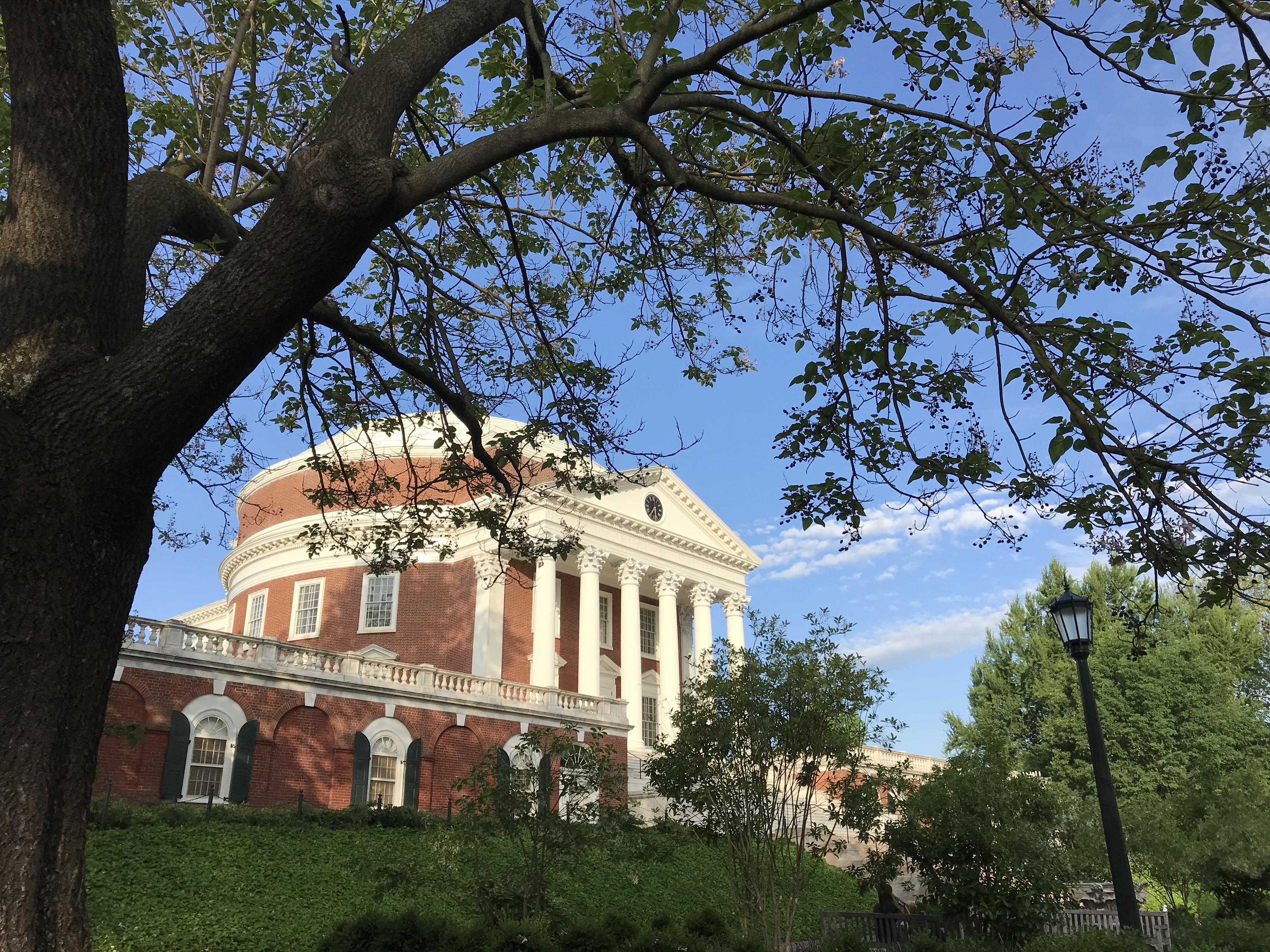
Back to my old stomping grounds. Those Grounds haven’t become less beautiful.
ways books go awry
When you publish a book and look back over it later, you will find that some things are wrong. Those wrongnesses come in three varieties:
- Mechanical glitches: typos and malformatting.
- Genuine factual inaccuracies.
- Brain farts.
People who have not published books are often appalled at typos, because they think their presence means that the book has been proofread carelessly or not at all. And sometimes proofreading can indeed be careless. But no reputable publisher wants books to go out with typos, so typescripts get read by several people — the author, the proofreader and/or copy editor, the book editor — and each of them pores over the typescript (and later the typeset text) several times. And yet some typos, and similar errors, always remain.
On the first page of Gabriel Garcia Marquez’s One Hundred Years of Solitude the gypsy Melquiades comes to Macondo carrying powerful magnets, which pull all sorts of metal things along behind them, and “even objects that had been lost for a long time appeared from where they had been searched for most.” Typos are like that: they appear from where they had been searched for most. At times you’re tempted to attribute them to poltergeists. When you see them you make a note to correct them in future editions (should you be so fortunate as to have a future edition), shrug, and move on with your life.
I think of typos as mechanical problems: glitches in the mechanics of typing. These can happen in formatting too. One of the most peculiar problems I have experienced happened in the printing of my Theology of Reading, where the last two pages of the footnotes got flipped. They’re accurate but out of order. Once someone wrote to me in high dudgeon, claiming that some footnotes in the last chapter were missing and that that demonstrated my carelessness as a scholar. When I explained what had happened he wrote back in still higher dudgeon that it was outrageous that I had “allowed” so gross an error to get through. I replied that I had not been present when the book was printed.
Then, sometimes you just don’t have the facts. Maybe you get your notes mixed up and attribute a quotation to the wrong person, maybe you rely on an unreliable source, maybe you think you know something you do not in fact know. A lady once asked Dr. Johnson why in his great Dictionary he had defined “pastern” as “the knee of a horse,” and he replied: “Ignorance, madam, pure ignorance.” When such inaccuracies are called to my attention, I smile a grim smile, make a note to correct the mistake in a future printing, and inwardly pledge to do better the next time.
But brain farts are the worst. A brain fart happens when you know the right thing but somehow write the wrong thing. One reviewer of my biography of the Book of Common Prayer declared that I was clearly out of my depth because I thought that Thomas Cranmer had studied at Jesus College Oxford, rather than Jesus College Cambridge. Of course I knew that Cranmer was a Cambridge man! He spent nearly thirty years at Cambridge! How could I not know that? I just had a brain fart! Thinks the skeptical reviewer: Sure you did, buddy.
And that’s why brain farts are the worst.
But sometimes they’re funny. Also in my BCP book, I mention priests bearing thurifers. In fact they bear thuribles. The thurifer is the guy who carries the thurible. So thanks to my brain fart I inadvertently conjured up an image of a priest entering the nave staggering under the weight of an altar server who, in turn, is presumably striving gamely to swing the thurible to disperse the smoke of the incense.
It strikes me that the dismissal of whole books on the basis of a few typos, or brain farts, or even factual errors is characteristic of our cultural moment, in which people tend to be categorized and defined by the worst thing they are known to have done, and often accordingly expelled from polite society. And if people, why not books? But a book is an enormously complicated project that it is simply impossible to carry out perfectly. As is life.